12 Dark Cottagecore Kitchen Ideas for a Moody, Lived-In Space
Dark cottagecore kitchens are surprisingly easy to get wrong. Too many dark surfaces and the room feels gloomy. Too many tiny bottles, dried flowers and vintage signs, and it starts looking like a themed café. The sweet spot sits somewhere in between: deep nature-inspired color, warm practical light, honest materials and objects that earn their place.
That last part matters. A kitchen still has to survive wet hands, hot pans, rushed breakfasts and the cupboard where every food container lid goes to disappear.
The dark cottagecore kitchen ideas below are designed for real homes, including small kitchens and rentals. You can use one or two for a gentle mood change or combine several during a larger renovation. Either way, begin with the room you have rather than the fantasy kitchen saved on your phone.
What Is a Dark Cottagecore Kitchen?
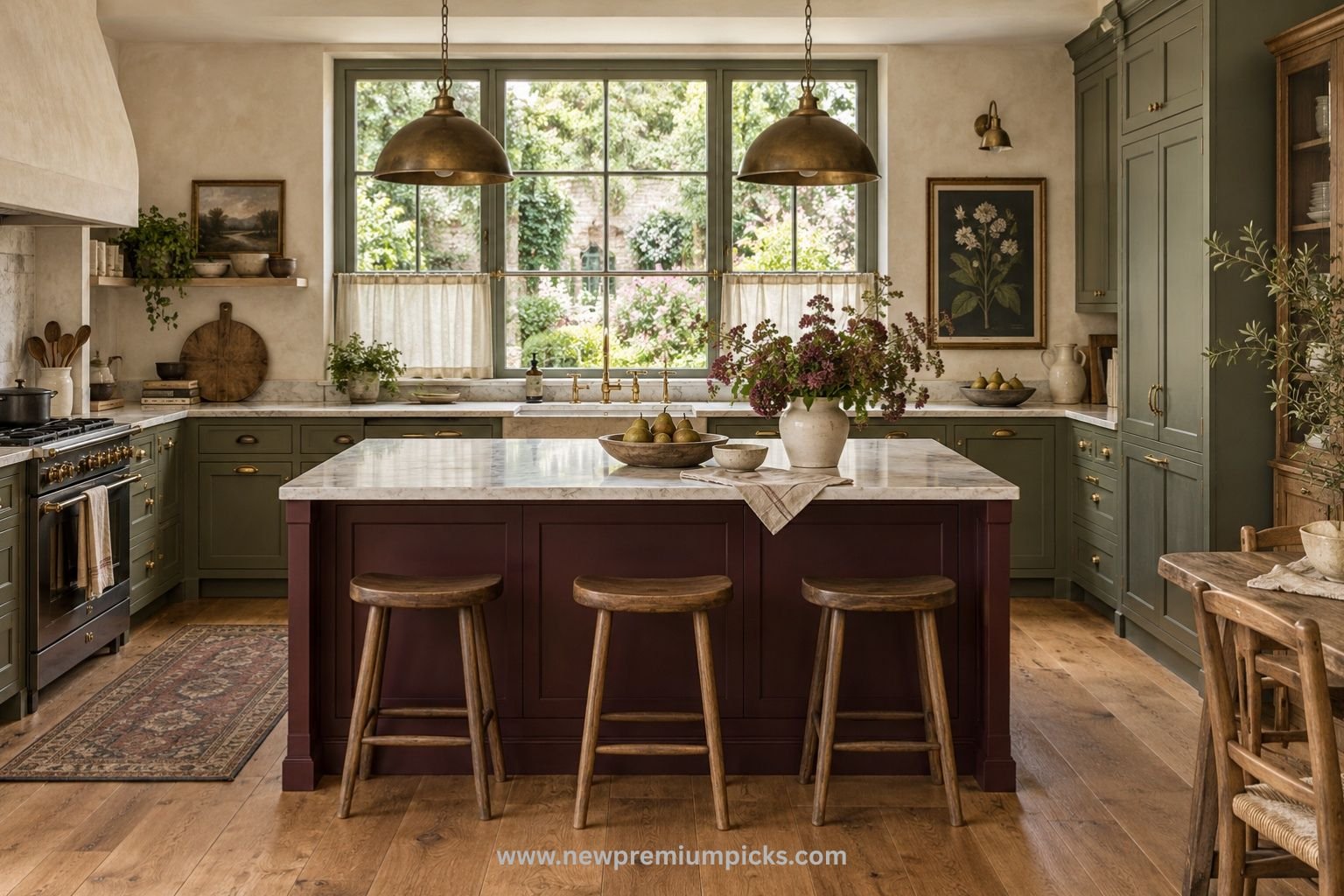
Picture a traditional cottage kitchen after sunset. The palette is deeper, the wood looks older, the metal has a soft patina and the lighting feels golden rather than stark. You may see forest green cabinets, aged brass handles, worn chopping boards, botanical patterns, stoneware and a few useful herbs by the window.
It is not the same as an all-black gothic kitchen. Dark cottagecore is softer and more connected to nature. Cream pottery, warm timber, linen and plants keep the darker colors from becoming severe.
It is also not an excuse for clutter. Here is the honest design rule: three useful, beautiful objects beat ten decorative ones every time.
Choose Your Best Starting Point
| If your kitchen has… | Start here | Avoid for now |
|---|---|---|
| White cabinets in a rental | A vintage runner, framed botanical art and dark textiles | Painting or drilling without permission |
| Little natural light | One dark lower section plus warm task lighting | Painting every wall and cabinet black |
| A small footprint | Deep color below eye level and lighter walls above | Bulky displays on the worktop |
| Plenty of daylight | Dark cabinets or a full moody wall color | Choosing paint from an online photo alone |
| A tight budget | Handles, lighting, art and secondhand wood | Replacing sound countertops for appearance |
| Busy family use | Washable fabrics and closed storage | Fragile displays beside the cooking zone |
1. Let the Light Decide How Dark You Go
Before choosing paint, switch off the ceiling light and look at the kitchen in the morning, afternoon and evening. A room that feels bright at noon may lose most of its character after sunset. Dark paint also changes dramatically between natural and artificial light.
Bring home large paint samples and place them on more than one wall. Check them beside the floor, countertop and cabinets you are keeping. Forest green can lean blue beside a cool gray counter; burgundy may turn brown under a very warm bulb. A sample is cheaper than repainting an entire kitchen because the color behaved differently than expected.
If daylight is limited, put the deepest shade on the lower cabinets or one feature wall. Keep the ceiling and upper walls in a warm cream, mushroom or muted parchment. You still get the moody cottage look without asking a small room to absorb every scrap of light.
2. Build a Palette, Not a Pile of Dark Colors
A convincing moody cottagecore kitchen usually needs four parts: one deep anchor color, one warm pale color, one natural wood tone and one aged metal. That is enough. Adding navy, black, burgundy, emerald and purple to the same small room rarely makes it richer; it usually makes it confused.
Try one of these simple combinations:
| Mood | Deep anchor | Light balance | Wood and metal |
|---|---|---|---|
| Woodland | Forest green | Warm cream | Dark oak + aged brass |
| Quiet and classic | Inky navy | Soft parchment | Walnut + antique bronze |
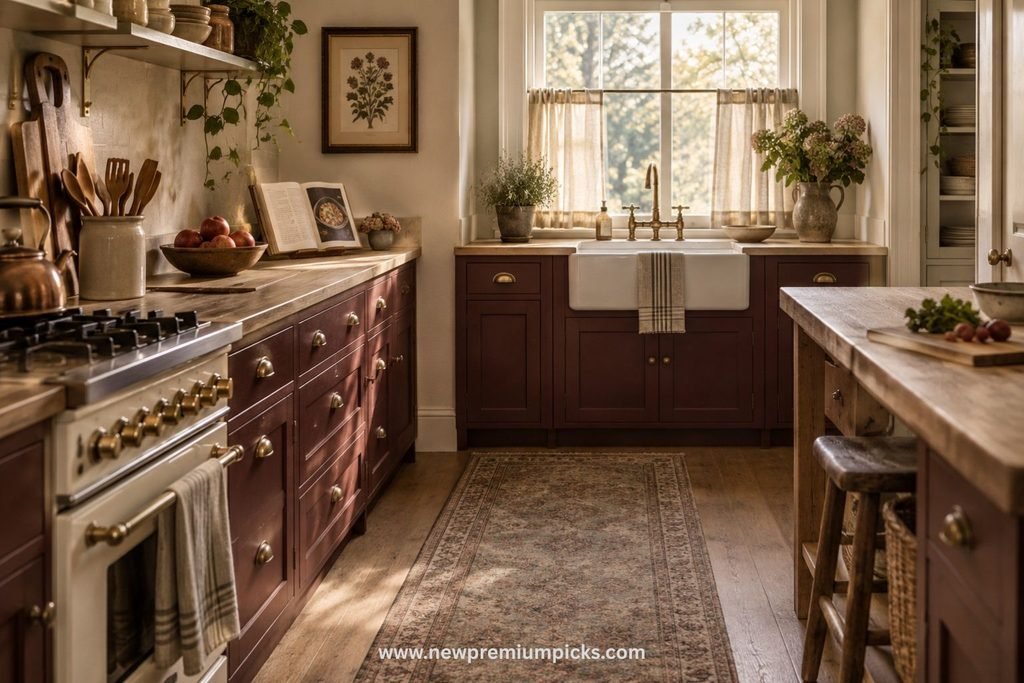
| Romantic | Muted burgundy | Dusty blush or cream | Medium oak + copper |
| Earthy | Deep olive | Mushroom | Reclaimed pine + blackened iron |
Repeat the anchor color two or three times around the room, perhaps on the cabinets, a stripe in the runner and a framed print. Repetition makes the space feel intentional without requiring matching sets.
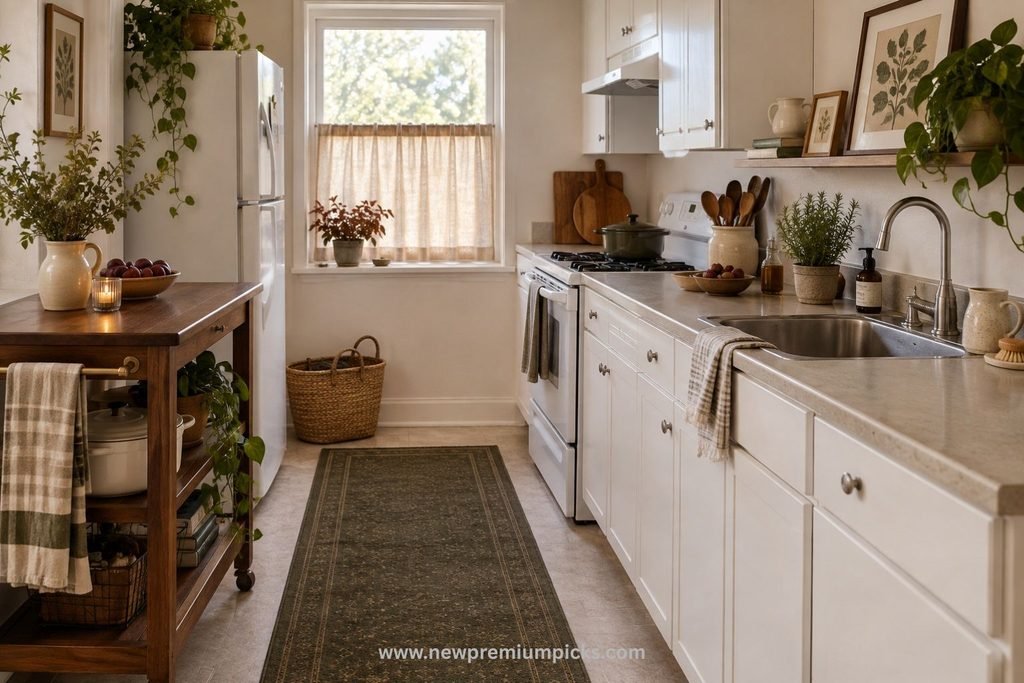
3. Use One Dark Anchor in a Rental
You do not need to repaint the cabinets to create a dark cottagecore kitchen in a rental. Give the eye one large, removable dark element instead.
A washable olive or burgundy runner can do it. So can a deep brown Roman blind, a large botanical print in a dark wooden frame or a freestanding cart stained walnut. Once that anchor is in place, smaller details such as tea towels, pottery and wood utensils stop looking random.
Before using peel-and-stick paper or tiles, check the lease, test a hidden area and follow the manufacturer’s surface instructions. “Removable” is not a promise that every painted wall or laminate cabinet will come away undamaged.
For more non-permanent changes, use the ideas in this renter-friendly apartment decor guide, but always confirm weight limits and removal instructions for adhesive products.
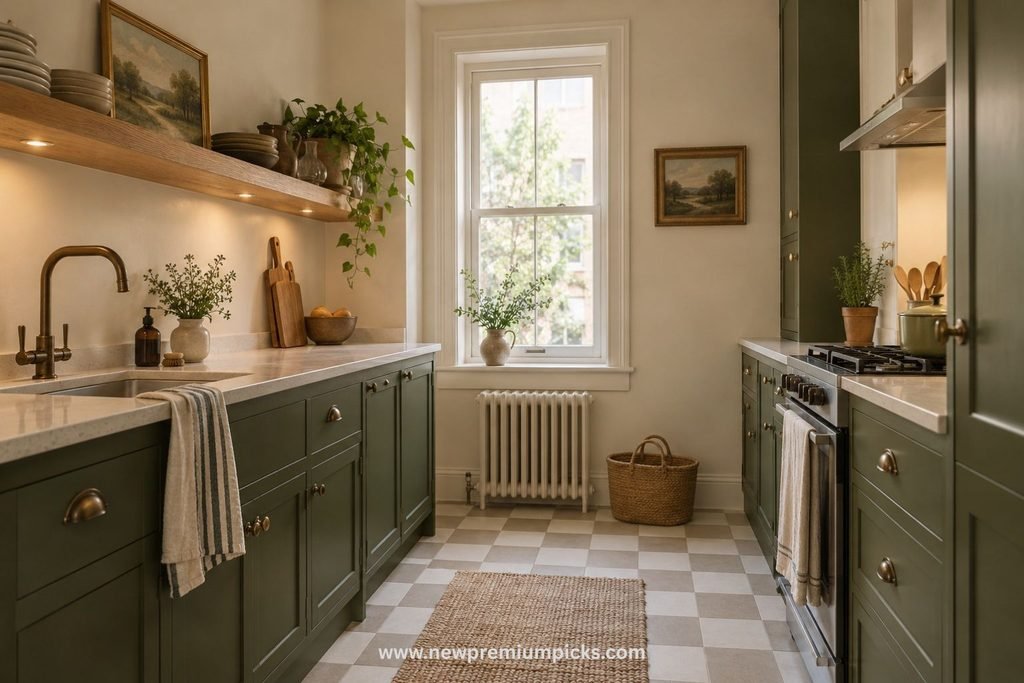
4. Warm the Room With Wood That Looks Useful
Dark color needs warmth, and wood does that job without making a kitchen feel overly decorated. The best pieces are ordinary ones you can actually use: a thick chopping board, a wooden fruit bowl, a stool, a plate rack or a narrow shelf.
Mixing two wood tones is perfectly fine. Mixing five in a tiny kitchen can look restless. Choose one dominant tone and let a second appear in smaller amounts. Medium oak keeps forest green fresh; walnut gives navy or burgundy more depth.
Secondhand wood is especially good here because a few marks make sense in a cottage-inspired room. Clean it properly, check for cracks or loose joints and reserve unknown finishes for display rather than direct food contact. Old does not automatically mean food-safe.
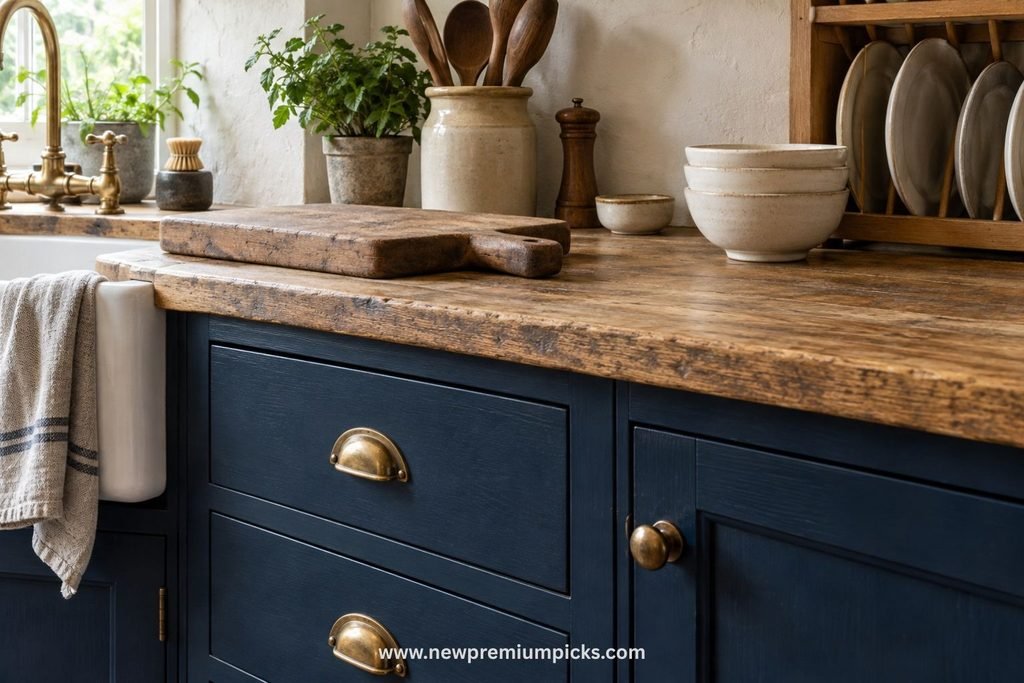
5. Change the Hardware, but Measure First
Aged brass, antique bronze and blackened iron all suit dark cottagecore kitchen decor. The finish matters less than consistency. Choose one main metal and, if needed, one quieter supporting finish.
Before ordering handles, remove one existing pull and measure the distance between the screw holes from center to center. Matching that measurement can turn the change into a quick screwdriver job. Ignoring it may leave you filling holes in every cabinet door, which is a miserable surprise disguised as a simple DIY.
Keep the old hardware in a labeled bag if you rent. You can reinstall it before moving and take your chosen handles with you.
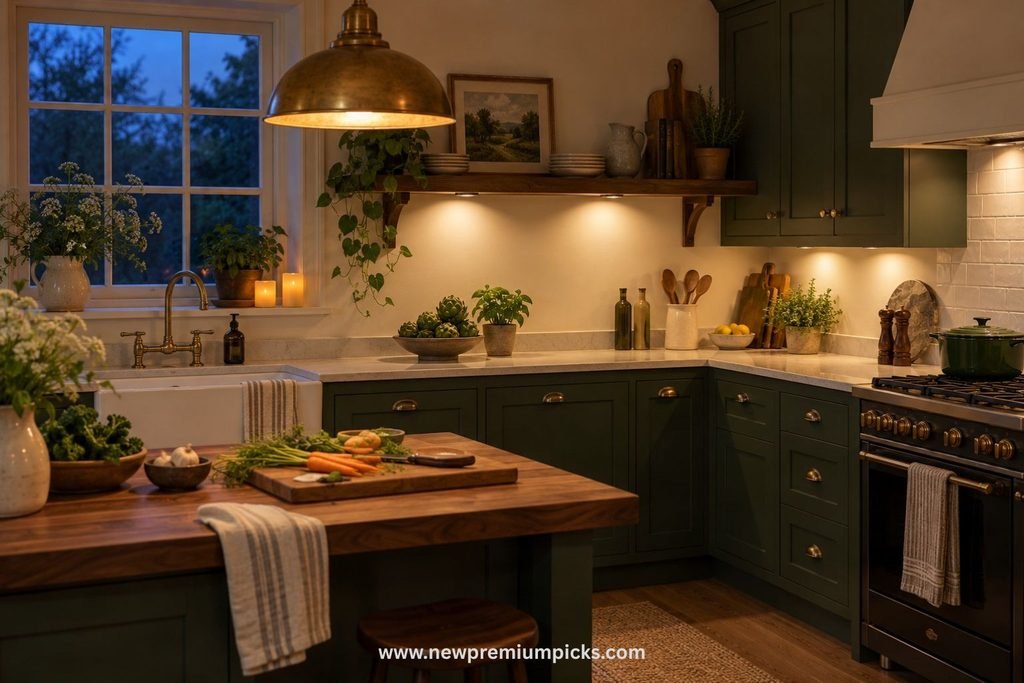
6. Layer Warm Light Without Sacrificing Task Light
Mood lighting is lovely until you cannot see the onion you are chopping. A functional cottage kitchen needs both atmosphere and clear light on the work surface.
Use the ceiling fixture for general light, under-cabinet LEDs for preparation areas and a small accent light only where it can sit safely away from water, heat and trailing cords. ENERGY STAR explains that lower Kelvin numbers appear warmer, while higher numbers look whiter or bluer. Bulbs around 2700K to 3000K usually give a warm residential feel without turning the room orange.
Do not improvise electrical changes for the sake of an aesthetic. Use fixtures rated for their location, follow the product instructions and hire a qualified electrician for new hardwired lighting.
Candles deserve an extra note in a kitchen. The National Fire Protection Association recommends keeping them at least 12 inches (30 cm) from anything that can burn and never leaving them unattended. Flameless candles give a similar evening glow with far less worry, especially around children or pets.
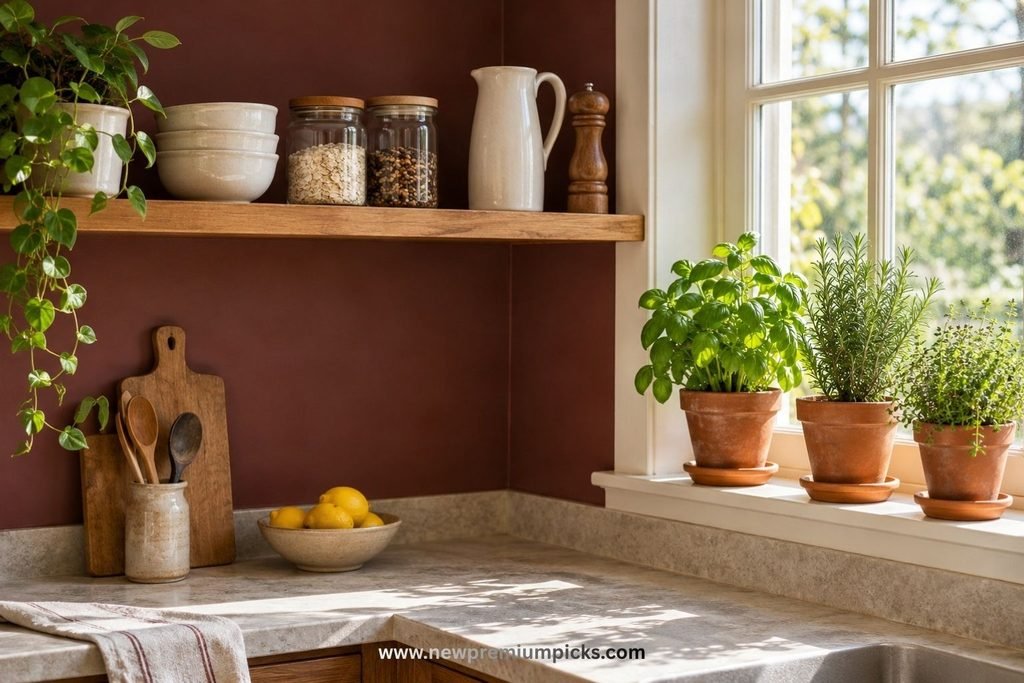
7. Make One Shelf Feel Collected, Not Crowded
Open shelving is often shown as a wall full of tiny jars. It photographs well for five minutes and then asks you to dust around twenty objects. One working shelf is usually enough.
Try this easy arrangement:
- A stack of everyday bowls or plates
- Two glass jars holding ingredients you genuinely use
- One taller item, such as a ceramic jug or pepper mill
- A small framed print or trailing plant away from the cooking heat
Leave some empty space. Cottagecore can be layered without being packed. Keep rarely used decor away from the hob, where grease and steam make open storage harder to maintain.
If visible storage tends to become visual noise in your home, choose glass-front cabinets, a plate rack or a narrow rail instead. You are allowed to like the mood and dislike the dusting.
8. Add Pattern in One Controlled Place
Dark floral wallpaper, checked fabric, small-scale botanical prints and faded stripes all belong in this style. They should not all compete in the same view.
Choose one pattern hero: a café curtain, a wallpapered breakfast nook, a vintage-style runner or a fabric skirt on a freestanding piece. Then let the other textiles stay quieter. A small floral print feels softer and easier to live with than an oversized pattern in a compact kitchen.
Use kitchen-suitable, cleanable materials and keep fabric away from open flames and hot cooking surfaces. Pretty still has to be practical.
9. Bring in Vintage Character Through Art
One slightly odd piece of art often gives a room more personality than an entire set of “farmhouse kitchen” signs. Look for a botanical study, a small landscape, an old recipe illustration or a still life with fruit. The frame can be imperfect; the glass and backing should be clean and secure.
Hang art away from direct steam, splashes and intense heat. If wall space is limited, place a small framed print on a shelf and secure it so it cannot slide onto the worktop.
This is also an easy place to make the kitchen feel like yours without inventing a backstory. Choose an image because the colors work or because it makes you smile. It does not need to pretend it came from a centuries-old cottage.
10. Use Herbs Only Where They Can Actually Grow
Fresh herbs bring the right green texture and can be useful at dinner. They are not, however, accessories that will tolerate any dark corner.
The Royal Horticultural Society notes that most herbs grow best with plenty of sun and well-drained soil. Put basil, rosemary or thyme near a suitable bright window and use pots with drainage holes plus a waterproof saucer. If the sill receives weak light, choose a proper grow light or use dried culinary herbs in labeled jars instead.
Do not crowd plants beside the hob, kettle or toaster. Heat, steam and sudden temperature changes are unhelpful to the plant, and loose foliage does not belong near flames.
For homes with pets, verify each plant through a reliable source such as the ASPCA toxic and non-toxic plant database before bringing it indoors.
11. Soften the Floor, Safely
A faded-style runner can connect all the colors in the room and make a hard kitchen feel less clinical. Choose a low-pile, washable design with a non-slip backing or suitable rug pad. The edges should lie flat, and the rug should not block doors or create a trip point along the main route.
Measure the clear floor area before shopping. In a narrow galley kitchen, leave enough space around the runner for doors and appliances to open freely. If the floor gets wet often or anyone in the household has limited mobility, skipping the rug may be the better design decision. Safety is not an aesthetic failure.
12. Finish With Objects That Already Belong in a Kitchen
This is where the room starts to feel lived in rather than styled for a photograph. A bowl of apples, the cookbook currently in use, a linen towel, a crock of wooden spoons and a kettle can all contribute to the look.
The trick is editing. Keep the objects that support a real routine and remove the ones that only occupy preparation space. Nobody needs to decant salt into a mysterious bottle if the original container works better.
If the counters still feel busy, use one tray to contain the tea or coffee items and return everything else to a cupboard. The home organization ideas in this guide can help create storage that is easier to maintain.
The room should look warm. It should also leave you somewhere to make toast.
A No-Renovation Dark Cottagecore Shopping List
Start with what you own, then look secondhand before buying a complete matching collection.
- One dark anchor: runner, blind, artwork or freestanding cart
- One warm light source with an appropriate bulb
- Two or three useful wooden pieces
- Coordinated cabinet handles, if permitted
- Everyday pottery in cream, brown or muted green
- One botanical or landscape print
- One washable patterned textile
- A plant or herb only if the light suits it
You do not need all eight. Pick the two changes that solve something as well as looking good. Better light and a washable runner will improve daily life; six decorative bottles probably will not.
For a broader refresh without construction, see these kitchen decor ideas that do not require a renovation.
Common Dark Cottagecore Kitchen Mistakes
Painting everything dark before testing the light
Deep color can feel intimate, but it also absorbs light. Test large samples and keep some lighter surfaces if the kitchen is naturally dim.
Buying a complete “vintage” set
Matching can flatten the collected feeling. Mix new practical pieces with a small number of older objects instead.
Confusing clutter with character
Character comes from material, color and meaningful objects. Clutter is simply stuff that makes cooking harder.
Using candlelight as task lighting
It is decorative, not adequate for safe food preparation. Keep work surfaces clearly lit.
Choosing materials only for the photograph
A pale unsealed rug, fragile pottery beside the sink or hard-to-clean paper near the hob will become annoying quickly. The best dark cottagecore kitchen is still easy to use on a Monday morning.
Frequently Asked Questions
Can a small kitchen handle dark cottagecore style?
Yes. Use deep color below eye level, keep the upper walls lighter and add good task lighting. One dark anchor and repeated warm materials can create the mood without closing in the room.
What colors work best in a dark cottagecore kitchen?
Forest green, deep olive, inky navy, muted burgundy and warm charcoal are strong anchor colors. Balance them with cream, parchment, mushroom, natural wood and softly aged metal.
How can I create the look in a rental?
Use removable pieces such as a runner, curtains, artwork, countertop wood, freestanding storage and hardware that fits the existing holes. Check your lease and test adhesive products before covering a large area.
Does dark cottagecore have to look cluttered?
No. A restrained version can be more convincing. Keep useful pottery, wood and textiles visible, but protect clear work surfaces and leave breathing room on shelves.
Are black countertops necessary?
Not at all. Replacing a sound countertop only to follow a look is expensive and wasteful. Wood boards, a dark tray, warm lighting and a coherent palette can pull an existing light countertop into the design.
What is the fastest way to change the mood?
Start with lighting and one large color element. A warm bulb plus an olive runner, dark blind or deep-toned artwork will make a bigger difference than a collection of small accessories.
Final Thoughts
A dark cottagecore kitchen should not feel like a room assembled in one shopping trip. It should feel warm, slightly imperfect and ready to be used.
Begin with the light. Choose one deep color. Add wood, pattern and aged metal slowly, keeping only what helps the kitchen work or makes it feel more personal. If the result leaves you with a beautiful shelf but nowhere to put down a chopping board, edit again.
The goal is not darkness for its own sake. It is a kitchen with depth, comfort and enough character that even the ordinary parts of the day feel a little less ordinary.
Save this guide on Pinterest for your next kitchen refresh, and explore New Premium Picks for more practical, budget-conscious home decor ideas.