Apartment Decor Ideas for Renters (2026): The No-Regret Rental Edit
Most rental makeovers are judged on the first day, when the cushions are straight, the peel-and-stick finish is fresh and nobody has tried to remove anything yet.
Moving day gives the more honest review.
That is when the “damage-free” hook meets old paint, the replacement cabinet handles have lost their original screws and the beautiful floor lamp reveals a cable that has been living beneath the rug. A rental can look personal without creating that kind of final-week panic, but only if decorating and undoing are treated as parts of the same plan.
So these apartment decor ideas are not arranged as fifteen objects to buy. They are organised by permission: what can usually change without touching the building, what deserves a lease check and a patch test, and what should wait for written approval.
The language differs across the Atlantic apartment or flat, lease or tenancy agreement, security deposit or tenancy deposit but the useful question is the same:
Will this choice still feel clever when it has to come down?
This is decorating advice, not legal advice. Rental agreements, building rules and local laws vary, so the document you signed and written guidance from your landlord or property manager take priority.
Before You Decorate the Rental, Make a Move-Out Box
The first item in a renter-friendly makeover is not photogenic. It is a small box or envelope labelled with the address.
Put the original cabinet handles, spare screws, fixture instructions and any written permissions inside it. Add a note showing which item belongs in which room. Save dated photographs of the walls, floors, doors and existing marks in a clearly named digital folder too, following any check-in or inventory process required by your agreement.
Nobody saves a picture of a labelled zip bag to a mood board. It can still be more valuable than a new vase eighteen months later.
Now take four measurements that will prevent most expensive mistakes:
- the narrowest doorway on the delivery route;
- the usable wall width, excluding doors, radiators, vents and sockets;
- the space needed to open cupboards, wardrobes and drawers;
- the lift, stair or hallway turn a larger piece must pass through again when you leave.
Do not clean the apartment into a showroom before planning it. Notice where shoes actually stop, where bags are dropped, where the evening light is missing and which route feels awkward when two people use it. Those small annoyances are a better brief than a folder of unrelated rooms.
Use This Lease-Safe Test for Apartment Decor Ideas
“Renter-friendly” is not a material. It is a result, and the result depends on the surface, product, installation, removal and rental agreement.
Use three permission levels instead of trusting a label:
| Permission level | Typical examples | Before making the change | Moving-day responsibility |
|---|---|---|---|
| Green: changes that leave with you | Freestanding furniture, rugs, cushions, portable lamps, trays and unmounted art | Measure the room, protect floors and keep doors, vents, heaters and exits clear | Clean, pack and remove |
| Amber: changes that touch a finish or fitting | Adhesive hooks, tension rods, removable film, swapped cabinet handles and temporary backsplash panels | Check the agreement and product instructions; inspect the surface; test discreetly; photograph the result | Remove correctly, reinstall originals and deal with any residue or damage |
| Red: changes to the building | Painting, drilling, hard-wired lighting, plumbing work, mounted televisions and heavy wall storage | Get the required written permission and use a qualified professional where appropriate | Restore only as agreed and retain the approval record |
The categories are deliberately cautious. A hook can move from amber to red if it is carrying a heavy mirror. A freestanding bookcase can require wall anchoring for safety. A tension rod can still mark a delicate reveal. The method matters as much as the object.
One sentence is worth remembering throughout the project: removable describes an intention, not a guarantee.
Green-Layer Apartment Decor: Change the Room Before the Building
The strongest rental apartment decorating ideas usually sit in the green layer because they solve the room without asking the walls to cooperate.
Move the room before buying for it
Empty one problem area rather than the whole apartment. In the living room, move the smallest chair or side table first and watch what happens to the route between the door, sofa and window. In a studio, use painter’s tape on the floor to test the outline of a shelf or table before ordering it.
Furniture does not have to form a border around the walls. Pulling every piece outward can leave an empty centre and make conversation feel oddly distant. Let one activity lead instead: talking around the sofa, eating at the table, reading beside the window or working near the best outlet.
The layout is successful when a person can enter, sit, open storage and cross the room without performing a small sideways dance. It does not need to be symmetrical.
For a bedroom where the layout is the real problem, use the more detailed small bedroom guide before spending on decoration.
Let a rug draw the room that the architecture forgot
Open-plan rentals often feel unfinished because the living, dining and work areas share one floor with no visual pause. A rug can create that missing boundary without constructing anything.
Choose its size from the furniture arrangement, not from the amount of exposed floor you want to cover. In a living area, the rug should visibly belong to the seating group; a tiny rectangle isolated beneath the coffee table tends to look like another object rather than part of the layout. In a dining area, test whether chair legs remain stable when someone pulls a chair back.
Use an appropriate non-slip layer where the floor and rug require one, keep edges away from door swings and correct any curling corner that becomes a trip point. If the apartment already has carpet, a rug still needs enough weight and grip not to creep across it.
The color does not have to “match” every room. Repeating one tone already present in the sofa, curtains or artwork is enough to make the zone feel related.
Put light where the evening actually happens
Overhead lighting often illuminates the centre of a rental while leaving the sofa, desk and bedside areas less comfortable. Add light at the point of use: a floor lamp beside the reading seat, a table lamp near the sofa or a task lamp at the desk.
Move an existing lamp before buying another. Its new position may solve the problem, especially if the shade was directing light into a wall instead of toward the activity.
Electrical safety is not a styling detail. Use compatible lamps and bulbs, keep cables out of walking routes and never hide a cord beneath a rug. The U.S. Consumer Product Safety Commission says extension cords should be temporary and warns against running them under carpets, through doorways or under furniture. UK readers can check Electrical Safety First’s socket-overload guidance, including extension ratings and the danger of connecting one extension lead to another.
If a lamp needs a permanent extension cord to reach the layout, the layout has not solved the electrical problem. Choose another location or ask a qualified professional about an approved solution.
Add height without building a false wall
A tall visual line can make a plain apartment feel more composed: full-length curtains on an existing approved fitting, a high-backed chair, a narrow floor lamp, a tree-like sculptural object or a bookcase.
Choose only one or two vertical moments. A tall object in every corner turns a small room into an obstacle course.
Safety can change the plan. Tall furniture and televisions may need anti-tip restraints, especially in homes with children. The CPSC recommends securing furniture and televisions with appropriate anti-tip devices. If the lease limits wall fixing, ask for permission rather than leaving a risky piece unsecured; a lower, stable alternative may be the better purchase.
Repeat a material, not an entire furniture set
A rental filled over several moves rarely contains matching furniture. That is not automatically a design problem.
Give unlike pieces one visible relationship. A warm timber tray can connect a darker dining table to a lighter media unit. Two lamps can share similar shades without sharing bases. Black can repeat in a frame, a chair leg and one small kitchen object rather than arriving as a complete matching set.
Three quiet repetitions usually look more collected than buying a coordinated range in one afternoon. They also let the useful furniture stay.
If the apartment needs a calmer overall palette rather than more objects, the logic in the quiet luxury bedroom edit can be borrowed without copying its finished colors.
Amber-Layer Decor: Test the Claim Before Trusting the Product
Amber changes can be worthwhile. They simply deserve more evidence than a social-media caption normally provides.
Treat adhesive hooks as hardware with instructions
Do not buy one large pack and assume it suits every wall and object. Match the exact product to the item’s weight, surface and room conditions. Clean, apply, wait and remove it exactly as the manufacturer directs.
Command’s own surface and removal guidance says its products work best on specified smooth surfaces, warns against wallpaper and heavily textured walls, requires paint to be fully cured for at least seven days, and acknowledges that weak, old, uncured or damaged paint can pull away.
That is more useful than the phrase “damage-free.”
Test a discreet area when the lease and instructions allow it. Do not hang sentimental, breakable or heavy items where a fall could injure someone especially above a bed or seat. Keep the removal tab accessible; a tab hidden behind an oversized frame cannot be stretched in the intended direction later.
Move peel-and-stick pattern off the wall when the wall is uncertain
Removable wallpaper and tile can behave differently on fresh paint, old paint, repaired plaster, textured surfaces and humid rooms. A product that released cleanly from one creator’s wall may not repeat that performance in another building.
If the wall is uncertain, move the pattern onto something you own. Cover a lightweight removable panel, the back of a freestanding bookcase or the inside of a display cabinet. You still get color and scale, but removal no longer depends entirely on the landlord’s paint layer.
Around cookers, sinks, heaters and showers, use only materials specifically rated for the location and keep required clearances and ventilation unobstructed. A decorative film is not a substitute for a heat-, fire- or water-safe building finish.
Swap cabinet handles only when the holes already agree
Kitchen hardware can make a visible difference because it repeats across the room, but the useful measurement is the distance between the existing screw holes not the overall length of the new handle.
Choose a compatible fitting that does not require drilling. Work one door or drawer at a time so the original piece always has a reference position. Place each original handle with its screws in a labelled bag inside the move-out box.
Stop if a screw is seized, a finish begins to split or the fitting is part of an integrated appliance. A tiny cosmetic upgrade is not worth damaging a door that does not belong to you.
Use the window treatment the room can support
Before buying curtains, identify what is already fitted: track, pole, blind, recess or nothing at all. Existing approved hardware is usually the simplest starting point.
A tension rod can work for a light treatment in a suitable recess, but it is not universal. Check its span and weight rating, protect delicate surfaces and test whether opening the window loosens it. Do not obstruct ventilation, heaters or required exits. In homes with young children, follow current safety guidance for window coverings and avoid accessible cords.
Privacy comes first. A beautiful sheer panel that exposes the room after dark has failed its main job.
Use bathroom products made for bathroom conditions
Ordinary adhesive may fail in steam and humidity. If a hook or caddy is approved by both the rental agreement and the manufacturer, use the version designed for wet or humid areas and only on a listed surface.
Keep extractor fans and air paths clear. Give towels enough room to dry rather than folding several damp layers onto one decorative ladder. The bathroom feels more considered when its wet things can actually recover between uses.
Red-Layer Changes: Make Written Permission Part of the Design
Paint, drilling, wall-mounted storage, hard-wired lighting and plumbing changes can transform a space. They can also affect the building, safety and deposit, so verbal reassurance is not enough.
A useful permission request is specific. It says what will change, where it will happen, who will do the work and what restoration has been agreed. For example:
Hello [name], I would like permission to [describe the exact change] in [room/location]. The proposed method is [method/product], and [qualified person, if relevant] will carry out the work. Please confirm whether this is approved and what restoration, color or documentation you require when the tenancy ends.
Keep the reply with the move-out records. If the answer is unclear, ask again before work begins.
Do not open electrical fittings, move plumbing, disable alarms or alter building safety equipment as a decor project. Hard-wired work belongs with an appropriately qualified professional and the permissions required for the property.
Written approval does not make every idea sensible. A mounted shelf above a busy walkway, a television fixed to an unsuitable wall or paint that fights the existing floor can still be a poor design decision. Permission removes one uncertainty; it does not replace judgment.
Fix the Sentence Each Room Keeps Repeating
Once the permission level is clear, walk through the apartment and listen for the complaint each area repeats. Solve that sentence instead of decorating the room by category.
The entry keeps asking, “Where does this go?”
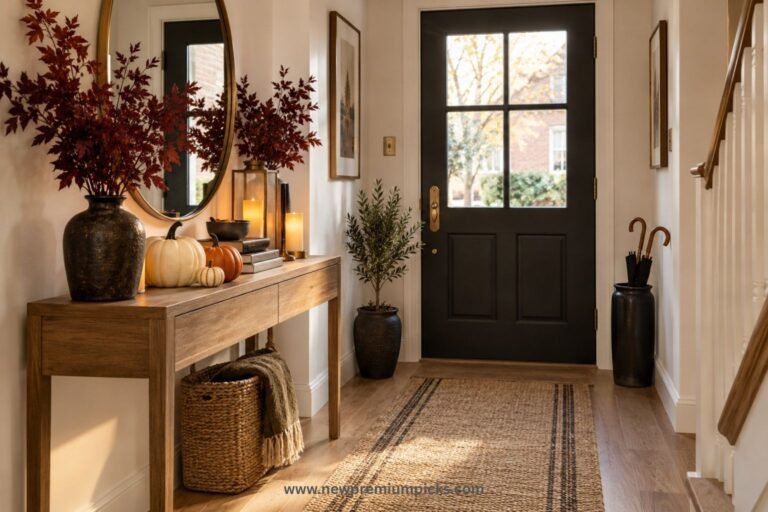
Give daily arrivals one compact landing point. A narrow freestanding table, stable shoe cabinet or tray on an existing surface can collect keys, post and sunglasses. Bags need a hook approved for its surface and weight, or a free-standing alternative. Shoes need a limit, not necessarily a larger rack.
Keep the door, lock, viewer, alarm controls and exit route fully accessible. The entry should make leaving easier, not create a styled bottleneck.
If keys, post, shoes and bags keep travelling beyond the entry, the problem is larger than one console. Use these home organization ideas to give the wandering categories a practical home without filling the apartment with extra bins.
The living room keeps asking, “Why is everything floating?”
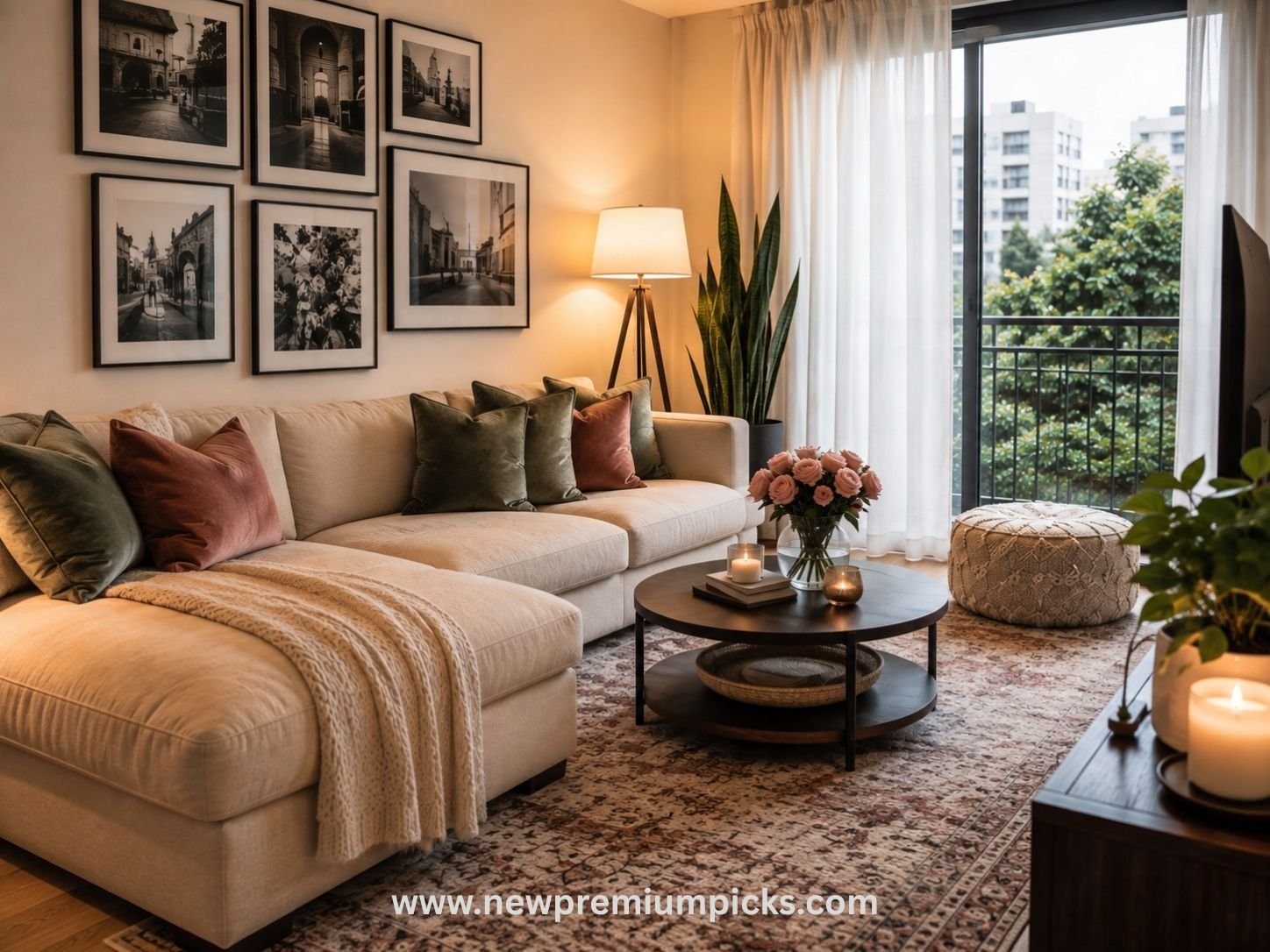
Choose one anchor: the seating group, rug, media unit or window. Align the other large pieces with it. A coffee table should be reachable without blocking the main route; test the distance by sitting down rather than copying a universal measurement.
Use one closed container for the category that creates the most visual noise children’s toys, cables, work equipment or exercise gear. Hiding everything is unnecessary. Containing the one category that spreads fastest often makes the room feel finished.
The kitchen keeps asking, “Why does the counter never stay clear?”
Do not decant every ingredient merely to create matching jars. Original packaging carries dates, ingredients, allergens and cooking instructions. Instead, group the objects that genuinely live on the counter: oils on a washable tray, tea or coffee near the kettle, and daily tools in one container away from heat.
Move occasional appliances into accessible storage only if they are easy to lift and likely to be returned after use. A clear counter created by making breakfast inconvenient will not remain clear.
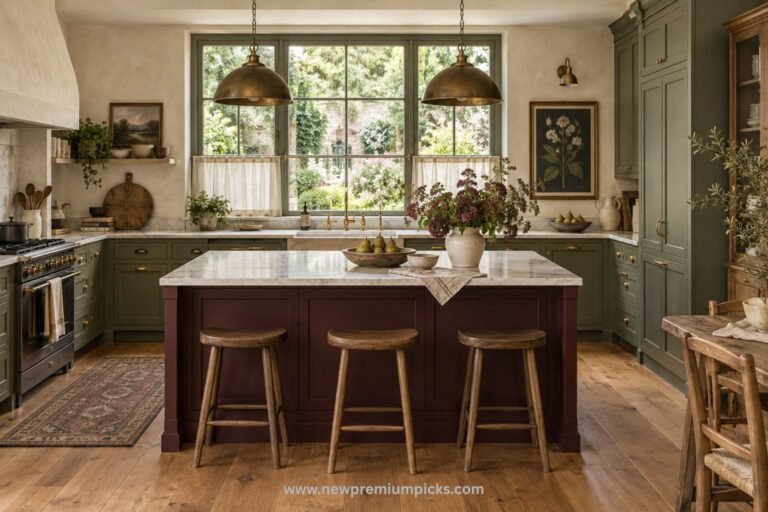
For styling that does not pretend to be a renovation, continue with these kitchen decor ideas.
The bedroom keeps asking, “Why does this feel unfinished at night?”
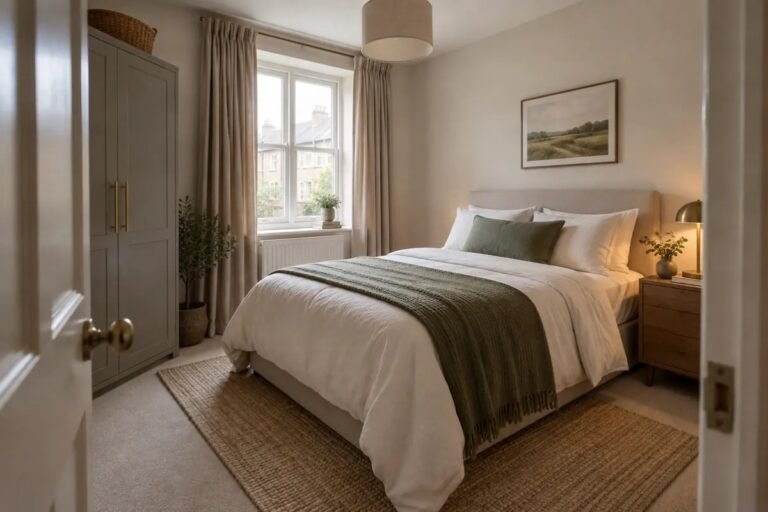
Judge the bedroom after sunset. The missing piece may be a reachable lamp, a controlled charging point, curtains that provide real privacy or bedding whose colors stop arguing under the bulb.
Give the bed one clear visual shape. That may mean removing three decorative cushions rather than buying two more. Keep the route to the door and storage clear, and do not hang heavy or fragile decor above the pillow simply because the wall is empty.
The bathroom keeps asking, “Where can wet things dry?”
Assign space for the damp towel before adding baskets and countertop decor. Use the existing rail, an approved humidity-rated hook or a stable free-standing rack that does not crowd the exit.
Then edit the sink area around actual routines. A tray can gather daily items, but products that need a dry, cool location should not be displayed beside a hot shower for appearance. Keep medicines and cleaning products stored according to their instructions and away from children or pets.
Make a Budget Apartment Decor Plan That Can Move House
A low price is not the same as good value. An inexpensive object that creates clutter, damages a finish or cannot fit through the next doorway is still expensive in the end.
Divide the budget by certainty instead of by room.
Spend nothing first: test the layout, move lamps, group scattered objects, clear one route and borrow a textile from another room to check a color. These changes reveal whether the room needs a purchase or simply a decision.
If the first spending cap is roughly $100 in the US or £80 in the UK, do not scatter it across ten accessories. Put it toward the friction repeated every day: a properly sized washable rug, a useful lamp, privacy curtains, one closed storage piece or the correct hardware for an item already owned. Prices vary by retailer and date, so the numbers are planning limits—not promises about what every product should cost.
For a larger purchase, use the next-home test:
- Does it have a standard enough size to work in another room?
- Can it turn through the hall and stairs?
- Can one or two people move it safely?
- Does it perform a job beyond filling an empty corner?
- Would you choose it again without this exact wall color?
Rugs, lamps, art, curtains and compact storage often travel more easily than treatments cut precisely for one temporary surface. Custom fit can be worthwhile, but only when the expected time in the property and permission justify it.
Rehearse Moving Day While the Apartment Still Looks Good
When the room feels finished, do not buy the final accessory. Spend twenty minutes checking the exit version instead.
Open the move-out box. Make sure each changed fitting has its original parts. Confirm that instructions and written approvals are readable. Photograph the finished apartment while surfaces are visible, not hidden behind furniture.
Then check the choices that photographs tend to ignore:
- doors, windows and drawers open fully;
- vents, radiators, sprinklers, alarms and exits remain clear;
- cables are visible enough to inspect and protected from damage;
- rugs lie flat and stable;
- tall or heavy furniture is secured appropriately;
- adhesive tabs and removable edges will still be reachable;
- nothing depends on a permanent extension lead.
If one feature makes you nervous to remove, repair or explain, it is not finished. Resolve it now, while time and patience are still available.
The Best Apartment Decor Does Not Pretend You Own the Walls
A rental does not need to imitate an owned home before it can feel personal. Ownership is not the source of personality; decisions are.
The chair beside the window says someone reads there. The tray near the door says mornings are busy. The lamp beside the sofa says the room is used after dark. A framed print leaning on a cabinet can matter more than a perfect gallery wall because it was chosen for the person living there, not for the wall behind it.
Good apartment decor ideas improve ordinary life now and leave a clear path back later. They do not rely on a promise that every adhesive is harmless, every DIY is simple or every landlord will approve the same change.
Make the green-layer decisions confidently. Treat the amber ones with evidence. Put the red ones in writing.
Then stop apologising for the fact that the home is rented. It is still where life is happening.
Save this guide for the next time a “renter-friendly” product makes a very confident promise, and follow New Premium Picks on Pinterest for practical apartment layouts, color ideas and visual references.