
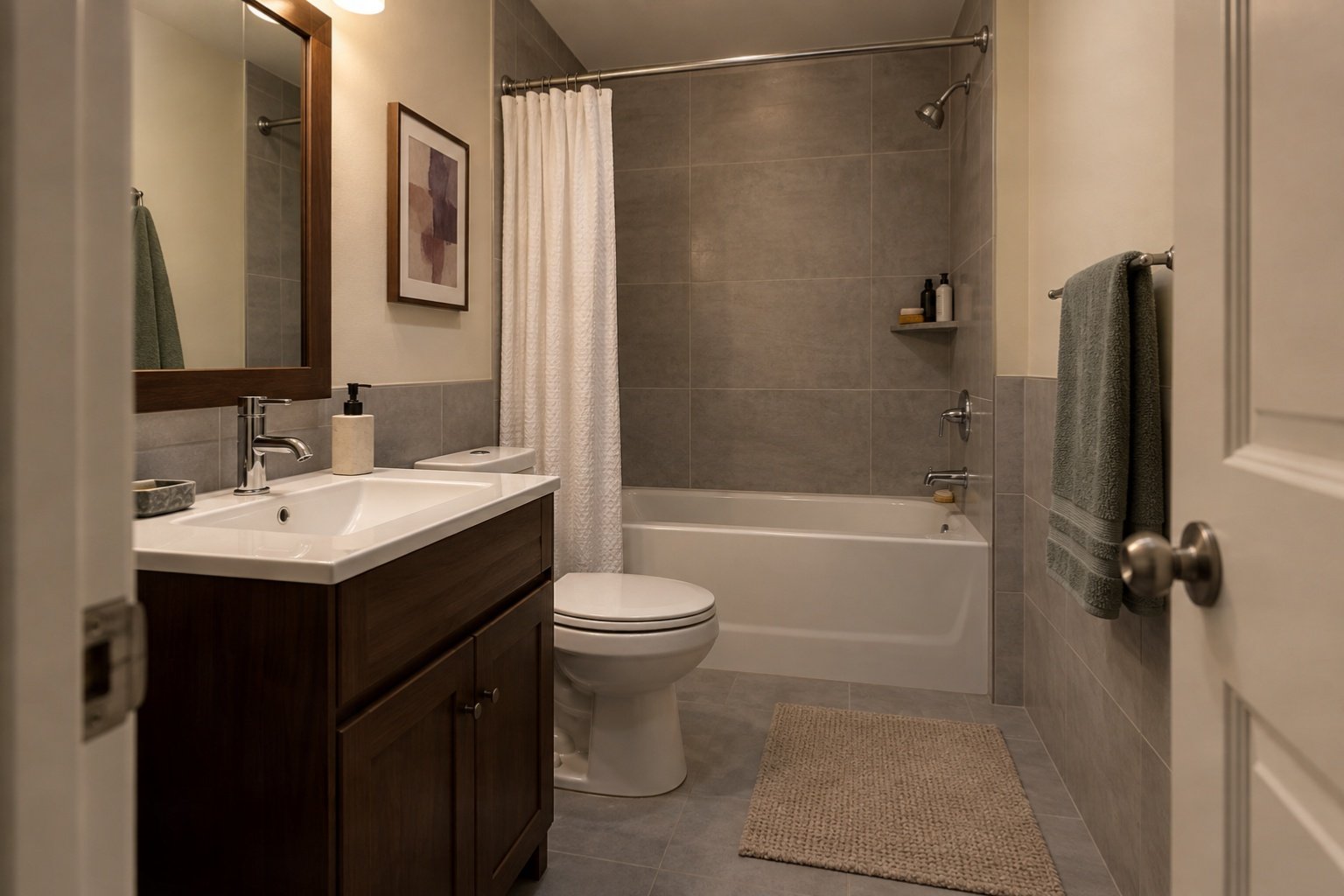
Cozy Bathroom Ideas for Small Rooms: The After-Shower Edit
A bathroom can look beautifully finished at 6:45 a.m. The oatmeal bath mat lies flat, the towels are folded and the warm light softens every hard edge.
The more revealing version appears after the first shower.
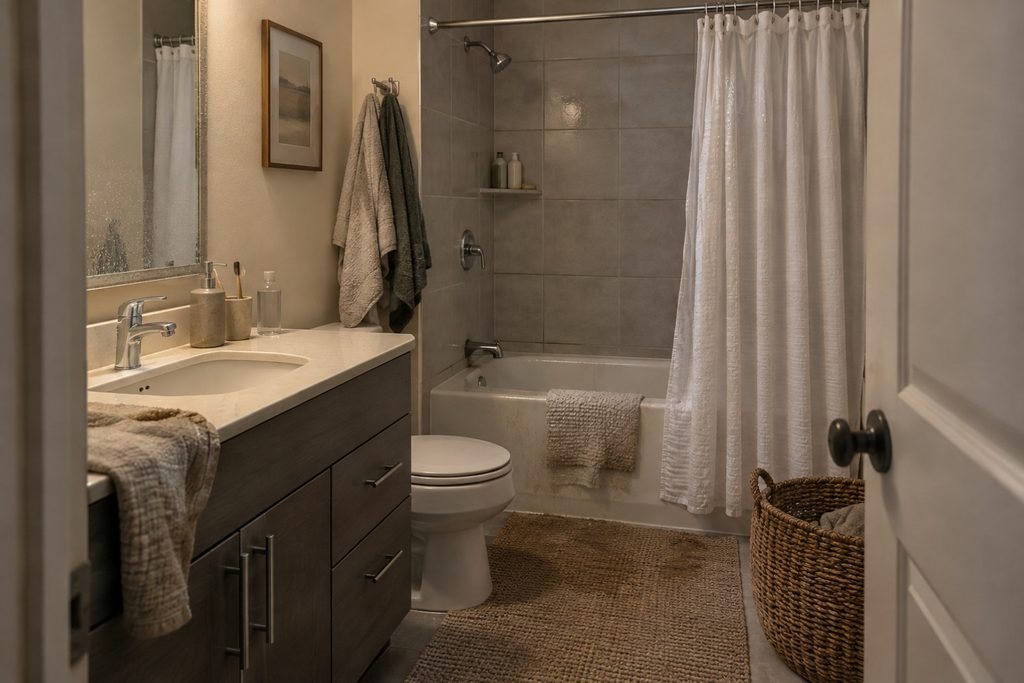
Now the mat feels damp underneath. Two towels are folded over the same hook. Bottles have left wet rings beside the sink, and the woven basket on the floor is beginning to absorb water that nobody noticed.
Most cozy bathroom ideas are created for the first version of the room. This edit begins with the second.
That timing matters as mornings and evenings become darker. In 2026, UK clocks go back on October 25, while daylight saving time ends across most of the United States on November 1. Warm light, deeper color and softer materials naturally become more appealing.
The bathroom, however, still has to deal with steam, wet towels and a weekday morning when nobody has time to arrange a decorative tray.
Before buying another basket, runner or matching dispenser, look at the room once after it has been used normally. The parts that remain wet will tell you where softness belongs and where it will simply become extra laundry.
Cozy Bathroom Ideas Begin After the Shower
Use the bathroom exactly as you normally would. Run the existing exhaust or extractor fan, or open the window if that is your usual safe routine. Hang the towel in its normal place and leave everything else alone.
Return approximately 20 minutes later.
The bathroom does not need to be completely dry. Climate, ventilation, room size and shower habits vary too much for 20 minutes to be treated as a universal drying target. This is an observation rather than a moisture test.
Once the floor is safe, lift one edge of the bath mat. Notice whether the shower curtain has been left tightly bunched. Look at the towel and check whether it has enough open surface to dry. Wet rings beneath containers, condensation around the window and water collecting beside a floor basket are useful clues.
The US Environmental Protection Agency’s guidance on moisture and mold explains that moisture control is central to mold control and recommends addressing water problems and ventilation.
Recurring mold, persistent condensation, damaged surfaces or an unidentified leak belongs on the maintenance list. Homeowners should investigate the source, while renters should report it to the landlord or property manager. Decoration should never be used to disguise an unresolved moisture problem.
Once those issues are separated from ordinary styling decisions, the room becomes much easier to edit.
A Small Rental Bathroom at 7:10 A.M.
Consider a common small rental bathroom measuring approximately 5 by 8 feet, or 1.5 by 2.4 metres. It has cool gray tile, a white bath or shower, chrome fittings, one ceiling light and no window.
This is a planning example, not a claimed renovation or personally tested room.
When dry, the bathroom appears reasonably tidy. It contains a wide woven runner, two matching towels on one hook, backup toiletries on an open shelf and a small basket beside the bath.
After the shower, the weaknesses become visible.
The runner extends beneath the dampest part of the room and cannot be lifted without moving the bin. The towels remain pressed together. The basket sits where water reaches the floor, while the open shelf carries more products than the household uses each morning.
None of these problems requires a complete bathroom makeover. The first version of the room asked for more decoration. The after-shower version asks for less obstruction.
Remove the runner temporarily. Separate the towels. Move backup products into the existing cabinet and lift the basket away from the wet floor.
No shopping yet.
Use the bathroom again before deciding what is genuinely missing.
The Mat and Towels Decide the Floor Plan
Textiles create warmth quickly, which is why so many cozy small bathroom ideas begin with rugs and stacked towels. In a slow-drying room, textiles also reveal whether the layout actually works.
Replace the oversized runner only if the bathroom needs a softer landing point. One washable bath mat placed where wet feet normally land is usually more useful than fabric covering most of the floor.
The mat should clear the door, stay away from the toilet base and lift without requiring other objects to be moved. A lighter or lower-pile construction may suit a humid room better than an oversized plush style, although the care label and the room’s actual drying behaviour matter more than a marketing description.
Damp towels need enough space to open. A towel bar normally exposes more material than a crowded hook. Where hooks are the only practical option, give each wet towel its own position rather than placing two together.
Fresh display towels do not have to live in the bathroom if the room cannot keep them dry. Store them elsewhere and bring them in when needed.
After showering, arrange the curtain or screen according to its care instructions so wet surfaces are not trapped in dense folds. If a textile repeatedly smells stale, remains wet or makes the floor harder to clean, it is not making the bathroom cozier. It is giving the room another job.
Warmth Belongs Above the Splash Line
Once the floor is easier to clear, color can do more of the decorative work.
Start with the existing tile because it is usually the largest and most expensive color field in the room. There is no need to pretend it does not exist.
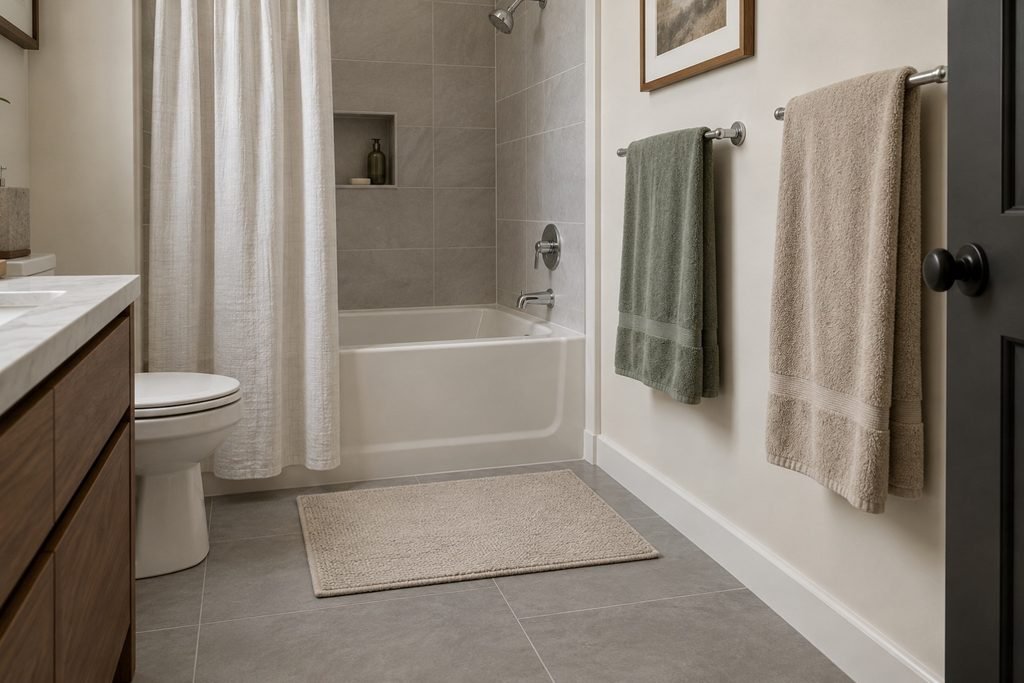
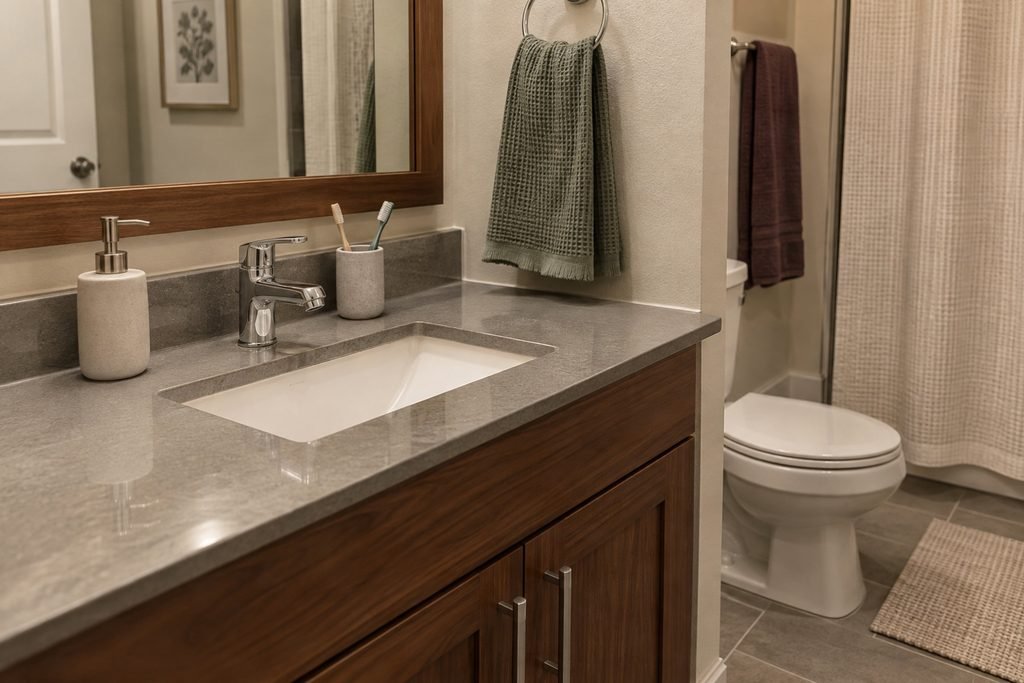
Cool white or blue-gray tile can be softened with oatmeal, muted olive and tobacco brown. Cream or beige tile has enough warmth already, so walnut, warm white and a controlled plum accent can provide contrast. Charcoal tile benefits from flax, mushroom and one clearer note such as ochre or muted jade.
No matching accessory set is required. Slight differences between the towel, mat and frame make the bathroom look collected rather than purchased in one click.
The official Pinterest Palette for 2026 includes Jade and Plum Noir. Both colors can enter a bathroom through movable pieces instead of permanent tile or expensive fittings. A jade hand towel can sharpen a gray-and-white room, while a small plum print can add depth to beige tile.
Use the trend once or twice. Repeating it across the mat, towels, shower curtain, containers and wall art turns an accent into a costume.
Visual versions of these palettes can be saved from New Premium Picks on Pinterest. Compare them with a photograph of your existing tile rather than copying an entire bathroom whose flooring, lighting and fixtures bear no resemblance to yours.
Wood can also warm the upper part of the room. Choose an item designed or appropriately finished for its intended bathroom location, such as a mirror frame or properly installed shelf outside direct spray. Water should not collect along an unfinished edge or beneath its base.
Natural-fibre baskets are better kept away from regularly wet floors. Chrome fittings can stay. Oatmeal textiles, walnut and jade can make existing chrome look deliberate without creating the cost and waste of replacing every metal finish.
Light the Face Before Chasing Atmosphere
Bathroom lighting has two jobs. It should soften the room at night without making the mirror useless in the morning.
Where a suitable fixed fitting accepts a replaceable bulb, warm white around 2700K to 3000K can be a useful starting point. Check the fixture requirements and buy one bulb before changing every light in the room.
Look at it beside the actual tile after dark. Some warm bulbs make cool white surfaces appear pleasantly softer; others turn them an unhelpful yellow.
The mirror still needs clear, even light for grooming, reading labels and spotting water or dirt. If the ceiling light creates heavy facial shadows, the long-term solution may be appropriately installed mirror lighting rather than an even dimmer bulb.
Do not bring a portable mains lamp or trailing extension lead into a bathroom. Electrical Safety First advises against extension leads in bathrooms and recommends suitable professional installation for electrical work. US readers should follow local electrical requirements and use a qualified electrician for hard-wired changes.
Atmosphere should never depend on placing ordinary living-room electrical equipment beside water.
Keep One Surface Deliberately Dry
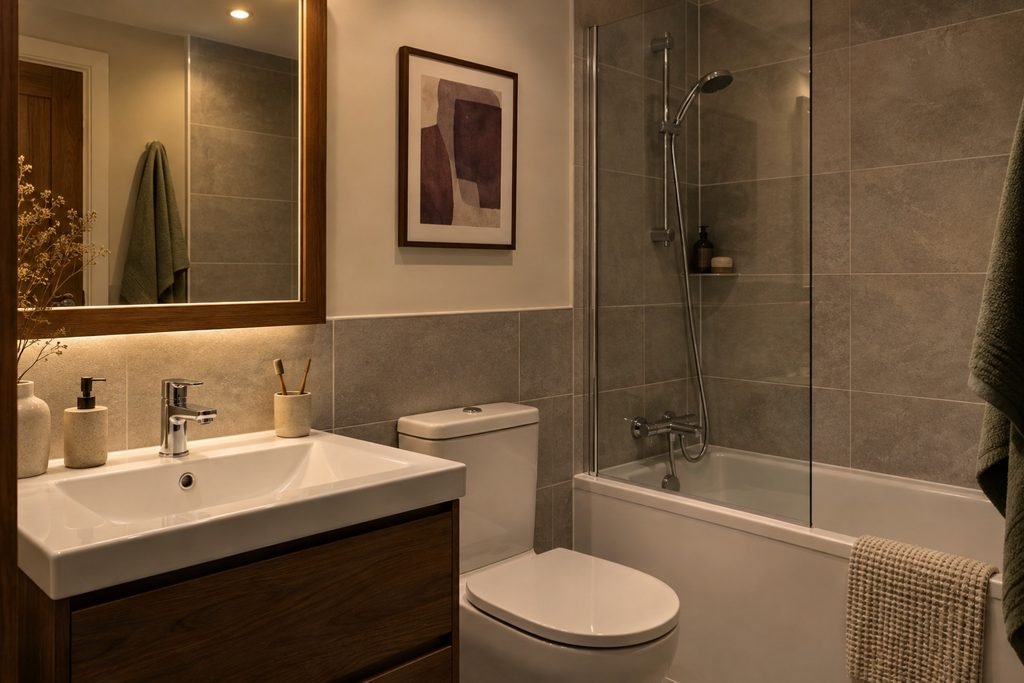
The vanity often becomes a parking place for everything used in the shower. Bottles remain open, containers leave wet rings and a decorative tray makes the entire arrangement slower to wipe.
Choose one drawer, shelf or section of the vanity as the dry zone.
Backup products can live there, stored according to their original instructions. Beside the sink, keep only the items used every day and leave enough space to wipe around them. Remove any decorative tray that regularly collects water underneath and see whether the counter becomes easier to maintain.
This follows the same behaviour-first principle used in our home organization guide: storage works better when it follows the route of the object.
Soap belongs where hands are washed. A daily towel needs reachable drying space. Unopened supplies do not require the best position beside the mirror.
Do not remove original labels from medicines, cleaning products or anything carrying dosage, hazard or storage information simply to create matching containers.
One clear surface makes a small bathroom appear calmer because it remains usable not because it has been filled with coordinated accessories.
The Windowless Version Needs Honesty
Windowless bathroom ideas often attempt to imitate daylight with a very bright, cold ceiling bulb. The result can make gray tile look flatter rather than fresher.
Allow the main light to reach vertical surfaces, including the face, walls and front of storage. A properly positioned mirror can return some of that light into the room. A warm shower curtain or wall color can reduce the blue cast created by a cool gray-and-white scheme.
Keep the upper half of a small room relatively quiet when shelves, mirrors and door frames already divide the walls.
Plants should not be treated as substitutes for a window or functioning ventilation. A plant marketed as low-light still needs suitable growing conditions, and tolerance for humidity does not mean it can remain in a waterlogged pot.
If the room cannot support a plant, use a botanical print outside the splash zone or introduce green through a washable towel.
A windowless bathroom may need more careful maintenance than decoration. If an installed fan appears blocked, ineffective or unusually noisy, report or investigate the system rather than expecting a new mat or plant to compensate for it.
A Rental Bathroom Needs an Exit Plan
Renter-friendly bathroom decor works best when the building itself remains untouched.
A shower curtain, washable mat, towels and artwork positioned outside the splash zone can give the room a clear identity without altering plumbing, waterproofing or fixed electrics.
Treat adhesive products carefully. “Removable” does not guarantee mark-free removal from every painted or tiled surface. Compatibility depends on the wall finish, moisture, weight, preparation and removal method. Read the product instructions, check the lease or tenancy agreement and test only where appropriate.
If permitted hardware is replaced, label and store every original component. Avoid drilling into tile, shower enclosures or waterproofed surfaces without the required permission and competent installation.
Our apartment decor guide for renters explains how to separate genuinely reversible styling from changes that deserve written approval.
The bathroom can still look intentional. Let textiles and color carry the seasonal update while the landlord’s fittings remain exactly where they belong.
Run the After-Shower Edit Again
Return to the bathroom approximately 20 minutes after the next normal shower.
The mirror may still be misted and the air may still feel humid. The useful question is not whether the room has reached a perfect drying time. Look instead at whether the decoration is making its ordinary recovery easier or harder.
The mat should be easy to lift. Towels should remain open rather than pressed together. The curtain should not be trapped in a wet bundle, and the vanity should be simple to wipe. Floor space around the bath or shower should remain visible.
Reposition or remove any object that repeatedly stays needlessly wet before introducing another decorative layer.
Take one photograph of the dry room and another from the same safe doorway position after use. The difference between those two images is more valuable than another online photograph of a bathroom designed for somebody else’s home.
The small gray rental bathroom now contains one oatmeal mat, separately hung towels, a muted jade accent and perhaps a walnut-toned frame outside the wet zone. Existing chrome remains. There is no damp floor basket, crowded display shelf or oversized runner waiting to be washed again.
If the bathroom still looks considered at 7:10 a.m. when the mirror is misted and somebody is late for work the edit has done its job.