Color Drenching in Small Rooms: Paint, Permission and a Plan B
A color-drenched room looks deceptively simple in a photo. Its walls, ceiling, and baseboards run together in one shade. Then you look at your own small room: a rental-white ceiling, a built-in closet, and a lease that does not clearly say what you can paint.
That is where a useful plan starts. Color drenching in small rooms is as much a decision about fixed surfaces and permission as it is about choosing a color. If you can paint everything, the real technique is available to you. If you can only change a few things, you can still create a strong tonal effect, but it is more honest to call that a color-led room than a full drench.
This guide shows how to make either version look deliberate, test it in a small space, and avoid spending money on a finish that will be difficult to live with or remove.
In This Guide
What Counts as Color Drenching in Small Rooms?
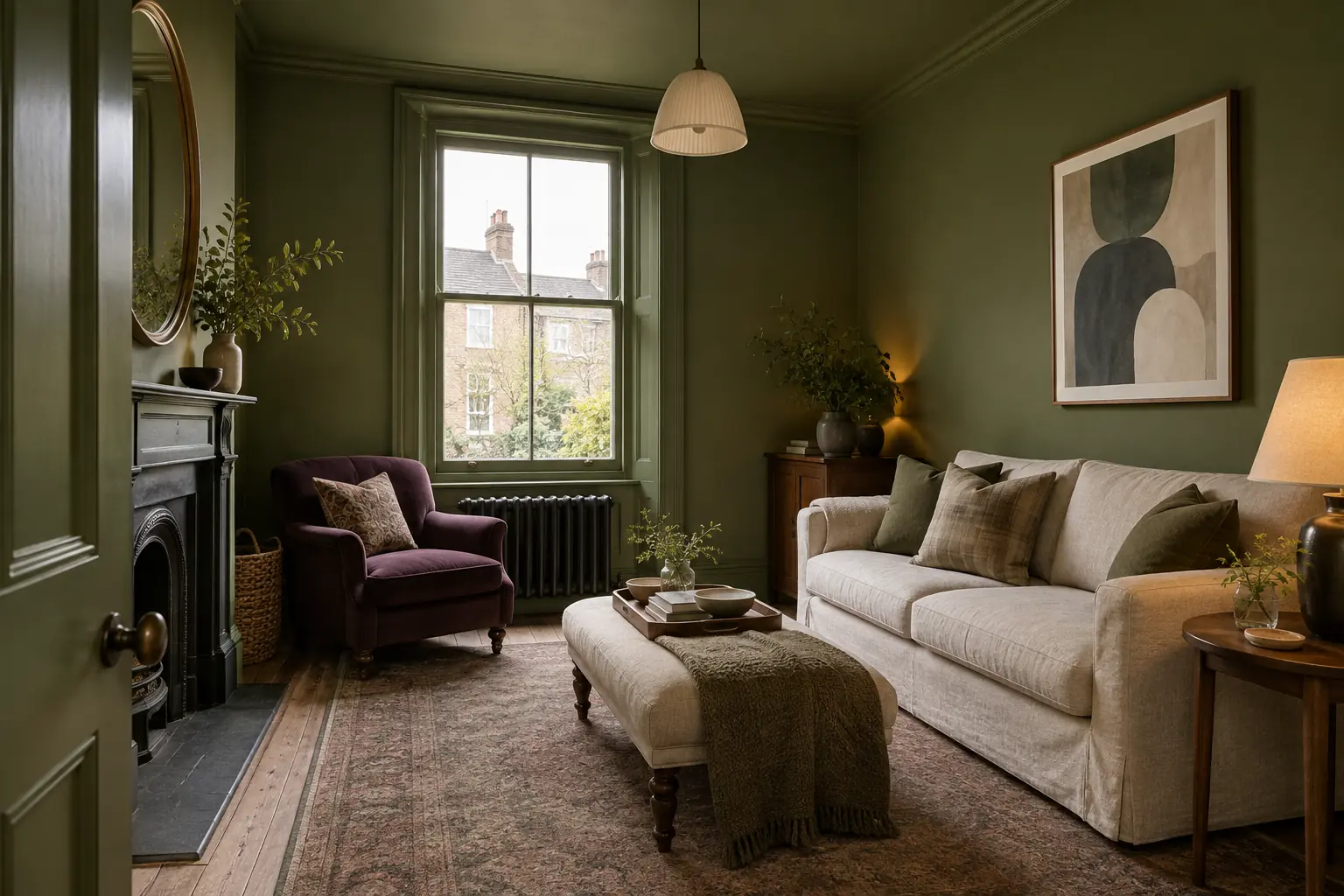
Farrow & Ball describes color drenching as carrying one shade across walls, trim and ceiling, sometimes onto radiators or furniture too. Matching those boundaries reduces the sharp white lines that normally divide a room into separate surfaces.
An accent wall with white trim is not a full drench. Neither is a green sofa against a white wall. Both can look good, but the paint stops at a visible boundary. That distinction matters in a rental where you are allowed to paint a wall but not the ceiling or doors.
Nor does the technique guarantee a bigger-looking room. A light or middle-tone shade can soften the wall-to-ceiling break; a deeper shade may make the same room feel more enclosed and restful. Choose the effect you want at the time you actually use the room, rather than assuming one shade will both expand and cocoon it.
Begin With the Surface You Cannot Change
Start with the largest surface you cannot change: a white ceiling, warm wood floor, tiled fireplace, built-in closet, or broad white window frames. Those existing surfaces set the limits of your palette. Note which one dominates the room before choosing a swatch.
If the ceiling and trim have to stay white, they will outline the room no matter how closely the bedding and cushions match. If the floor is a strong orange-toned wood, it will influence the way a cool gray-blue reads. The practical question is not ‘What color is trending?’ but ‘Which surface will still be here when the new color arrives?’
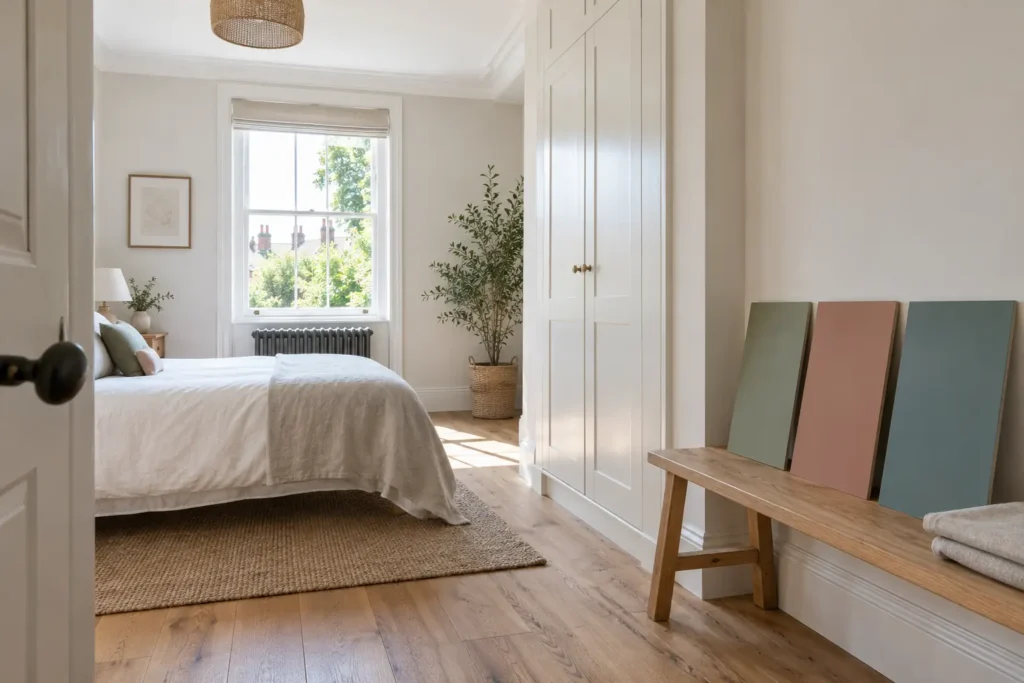
Lay two or three candidate shades next to that fixed surface, not just beside a clean white sample card. Hold a fabric swatch next to the sofa or bed, and move the sample to the darkest corner. Farrow & Ball’s guide to changing light explains why a color can read differently as daylight and artificial light change. Leave the sample in view for a normal day before ordering a large quantity of anything.
Choose a Route That Matches Your Permission
When you can paint walls, ceiling, and trim
A true color drench is possible when you have permission to paint the walls, ceiling, and trim. If you rent, get the scope in writing, including whether you must restore the original shade. Confirm doors, built-in cabinets, and radiators separately; a general ‘painting allowed’ clause does not automatically include them.
Once you pick a shade, choose the right coating for each approved surface. The same color can look slightly different in a flatter ceiling finish and a tougher trim finish, so sample it in each sheen you plan to use. Follow the paint manufacturer’s preparation guidance; use a radiator coating only if it is rated for that surface and its operating temperature.
Decide where the color ends at each doorway before opening the can. A clean transition at the room side of a doorway looks considered; an arbitrary painted edge that leaves part of the door frame in the old color can make the result look unfinished.
When only the walls can be painted
Work with the white ceiling and trim instead of trying to disguise every edge. A muted wall shade can still surround the main view, while curtains, a rug or existing furniture repeat its undertone. This is a coordinated color scheme, not a full drench.
In a small bedroom, paint behind the bed if that wall dominates the view. White trim can create a crisp outline or cut the room into strips; decide from the room’s actual proportions, then repeat the wall color in a curtain or rug.
The small bedroom layout guide is useful here: color is easier to judge once the bed, walking route and storage have sensible positions.
When you cannot paint any fixed surface
Build a portable color envelope around one part of the room. Use two or three large surfaces that can leave with you: existing curtains in the chosen color, a generous bedspread or sofa cover, a sizable rug if it fits safely, and a movable screen or substantial piece of art. Let smaller pieces echo the shade rather than adding ten matching accessories.
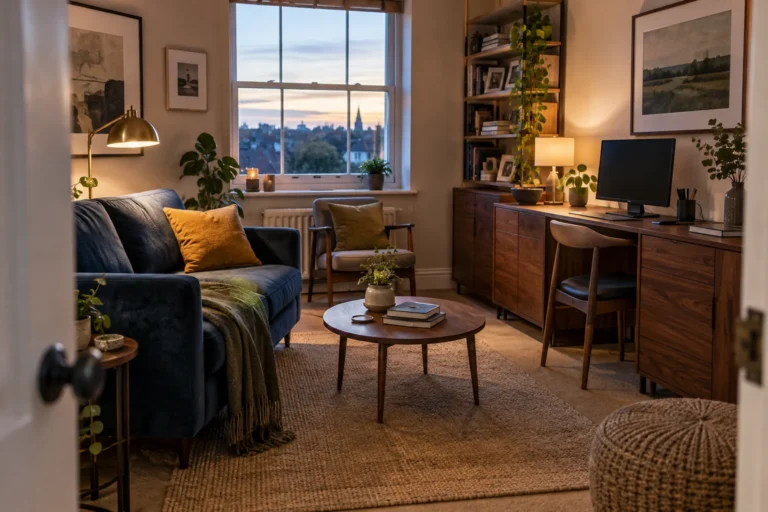
In a rental bedroom, a headboard, quilt, and curtains can occupy most of what you see without touching the walls. In a living room, one large sofa cover and full-length curtains do more than a row of matching accessories. The result is a portable color scheme, not painted color drenching.

Use existing curtain rods if possible. A freestanding screen should stand securely and not block a door, heater or walking route. Do not improvise a ceiling-hung fabric canopy or cover a heat source just to continue the color.
Make One Sample Survive Three Different Views
Daylight and lamp light change the same paint sample. A pale green that looks fresh by the window can turn gray in the darker corner. Hold the sample at the window, in that corner, and beside the furniture you plan to keep.
Check the shade again at the hour you use the room. If the bedroom matters most at night, judge it under the bedside lamp. A color that only works at noon is a poor fit for an evening room.
For a lighter continuous look, try clay, soft olive, or muted blue-green. Deep burgundy or forest green gives a small evening room a more enveloping mood; add task lighting where you read, work, or get dressed. Matching color cannot replace usable light.
Notice the furniture, too. A room where the walls, sofa, rug and curtains are identical in value can feel flat. Wood, woven fabric, a different texture or one quietly contrasting object gives the eye somewhere to rest. You do not need to introduce a second accent color.
Three Small-Room Plans That Respect the Actual Room
The rental bedroom with a white ceiling and built-in closet
With a fixed white ceiling and built-in closet, make the movable pieces do the work. The plum headboard, quilt, and curtain panels in this plan carry color across the bed and window while the closet stays white. Keep a strip of floor visible so the scheme feels deliberate in a compact room.
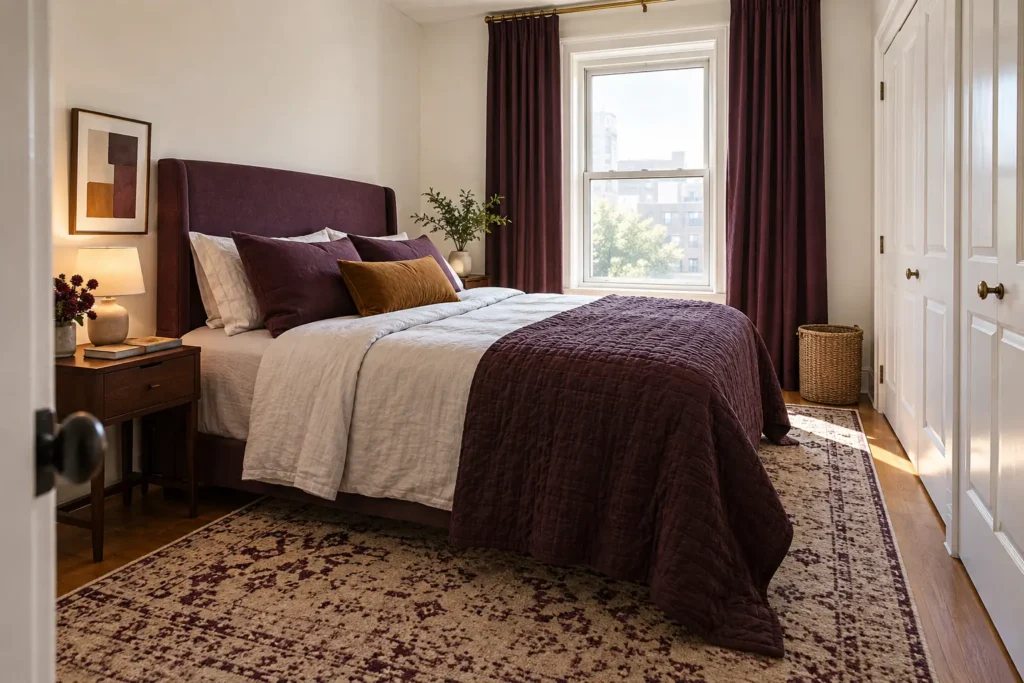
If the bed and curtains already read as one composition, stop there. A dark peel-and-stick panel behind the bed will not hide the white ceiling or closet doors, and it adds removal risk. Test any wall finish before taking that step.
The small living room with one paintable wall
Paint the wall behind the main seat only if it anchors the room. If doors and shelves break that wall into narrow strips, skip the paint and let the sofa and curtains carry the color. A narrow accent stripe draws attention to the room’s limits.
Keep a clear route around the furniture and a useful lamp by the seat. Our room-first budget decor guide makes the same practical point from another angle: decide what the room needs before buying the decorative layer.
The narrow hallway where full painting is allowed
This is where a genuine drench can be especially coherent: the ceiling, walls and trim meet repeatedly in a small footprint, so matching them reduces the stop-start effect of contrasting edges. Test the shade in the hallway’s weakest light, and choose suitable finishes for the surfaces you are painting.
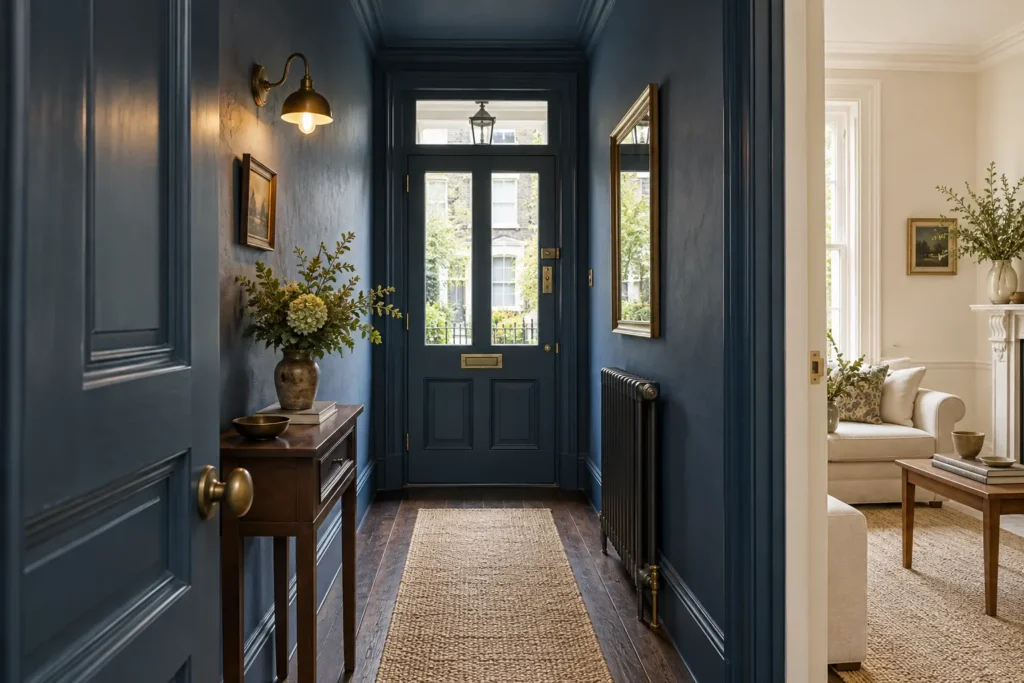
Work out the boundary at the adjoining room’s doorway. Keep adequate lighting at the entrance and a clear path for coats, shoes and bags. An elegant paint job still fails if the hall is difficult to move through.
Why Peel-and-Stick Is Not the Automatic Rental Answer
‘Removable’ describes how a product is intended to come off; it is not a promise about the condition of the paint underneath. Chasing Paper’s installation guidance recommends smooth walls and particular paint finishes, warns that matte paint can pull away with the adhesive, and asks for a curing period after fresh paint. Tempaper’s instructions likewise favor smooth, sound, fully cured satin or semi-gloss surfaces and advise against textured and low-sheen finishes.
That does not make every removable product unsuitable. It means the specific wall, finish, product and removal method matter. Check the manufacturer’s current instructions, your lease, and the condition of an unobtrusive test spot before considering a larger application. If the existing paint is fragile, textured or matte and the maker excludes it, skip that wall.
A movable surface avoids putting adhesive on the property itself. A freestanding screen, replaceable artwork inside an existing frame or a removable textile cover can carry color with less dependence on the wall finish. These are still objects to secure and use sensibly; none is a substitute for permission where fixtures or alterations are involved. The renter apartment guide goes deeper on planning changes around move-out.
The Test Before You Spend on the Whole Scheme
Make a one-evening mock-up before ordering a full set of textiles. Drape a fabric sample over the sofa or foot of the bed, move a lamp to the place you will use it, and set the rug where it would actually sit. If the route through the room closes up, edit the layout before buying color.
The mock-up has three jobs: work with the fixed floor and trim, keep the darkest spot usable, and fit the lease’s repainting or removal terms. If it fails one, change the plan while the cost is still a sample.
Do not buy the curtains, rug and new chair at once just to complete a mood board. One large, useful colored surface is enough to reveal whether the direction suits the room. The smaller echoes can come later.
Questions People Ask Before Color Drenching
Will color drenching make a small room look bigger?
Matching the ceiling and trim can soften visible breaks, especially with light or medium shades. Deep shades create a more enclosed feeling. Paint changes the room’s mood; it cannot add physical space.
Can a renter color drench without painting?
Only if the lease permits another way to change the fixed surfaces and the material is compatible. Otherwise, you can make a portable tonal scheme with curtains, textiles, a rug and movable furniture. It can feel immersive, but it is not the same finish as walls, ceiling and trim painted together.
Does the ceiling need to match the walls?
In a full drench, taking the color onto the ceiling helps remove the contrasting line at the top of the walls. If the ceiling must stay white, treat that white as a planned boundary and let your textiles connect the other surfaces. Do not call the result a seamless, whole-room drench.
Is peel-and-stick wallpaper safe for every rental?
No. Compatibility depends on the wall texture, paint finish and cure time as well as the manufacturer’s instructions. A small test and landlord permission can reduce uncertainty, but they cannot guarantee that removal will leave weak paint untouched.
Let the Room Decide How Far the Color Goes
The strongest small-room scheme starts with the floor and fixed fixtures. Give the color a clear boundary, then let the larger surfaces do the work.
Color drenching in small rooms works best when the palette respects the surfaces that must stay. If you can paint the whole room, a true drench is a striking choice; if not, connect the larger movable pieces instead. Decide which surface stays untouched before you buy samples.
Editorial note: This guide combines designer and manufacturer guidance from the sources cited above with practical small-room planning. Paint, adhesives and wall coverings behave differently on every surface, so follow the manufacturer’s instructions for your exact product, and check your lease or property rules before painting or applying anything removable.