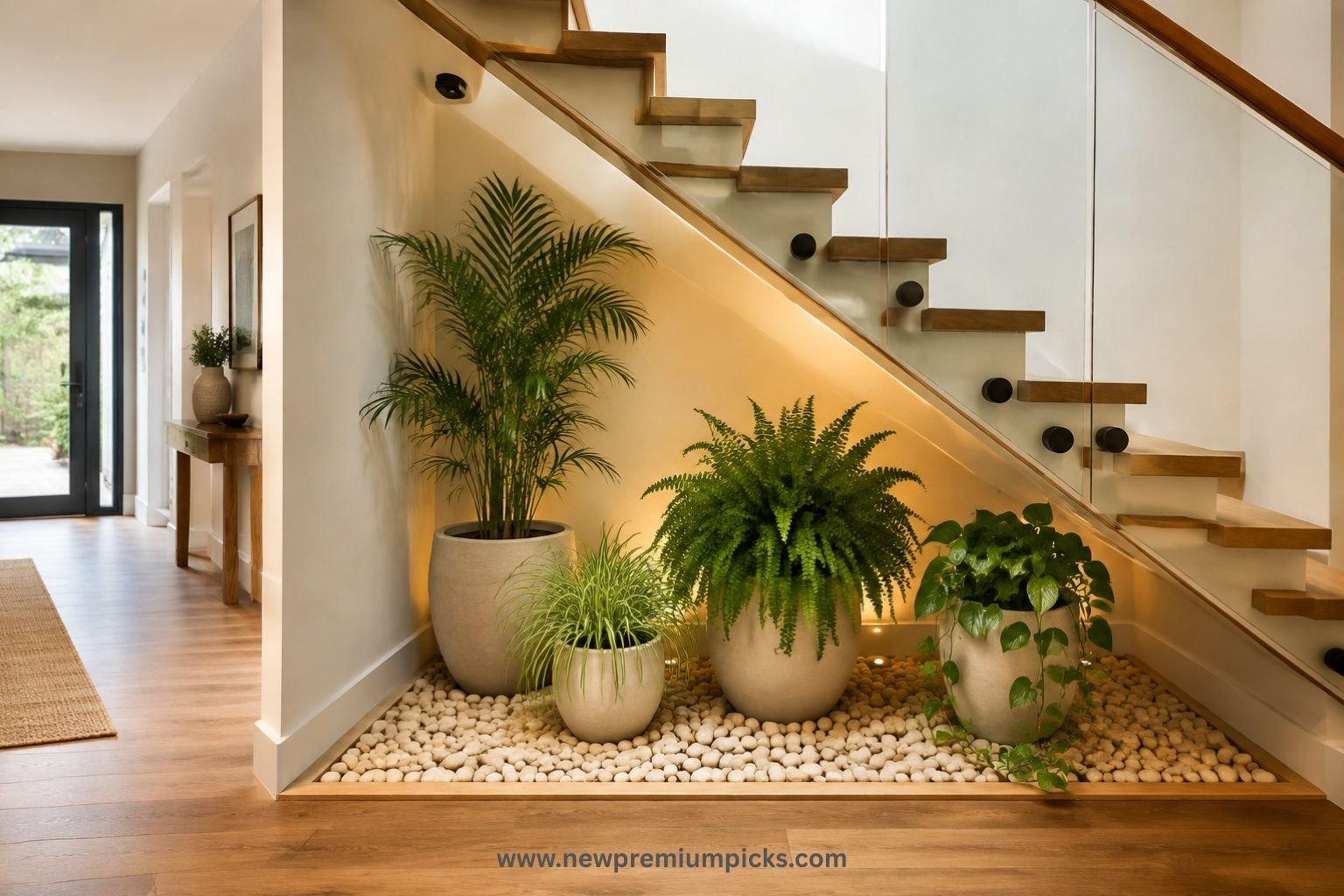
9 Indoor Staircase Garden Ideas That Make an Awkward Corner Feel Special
The space under a staircase rarely stays empty for long. Shoes, delivery boxes and other things without a proper home slowly take over, leaving the hallway looking unfinished. It is too visible to ignore, too awkward for most furniture, and somehow becomes home to the things you meant to put away later. One pair of shoes becomes three. A delivery box waits there for a week. Before long, the first view of your hallway feels unfinished.
An indoor staircase garden changes that without forcing the corner to become something it is not. The slope already gives the space movement. Plants soften the hard lines, pebbles add texture, and a little warm light can make the whole area feel calmer in the evening.
The best part is that you do not need a permanent garden bed or an expensive renovation. A few healthy plants in removable pots can create the same effect while being much easier to water, clean, and change later.
This guide includes nine indoor staircase garden ideas for different homes, light levels, budgets, and routines. It also covers the practical details that polished inspiration photos often leave out.
First, Choose the Version That Fits Your Home
| If this sounds like your space… | Start with this idea |
|---|---|
| The area is narrow | One statement plant or a slim plant stand |
| There is very little daylight | A container garden with a proper grow light |
| You rent your home | Removable pots on a waterproof tray |
| You have cats or dogs | Verified pet-safer plants in heavy, stable pots |
| You want minimal upkeep | Three plants with similar care needs |
| Children use the staircase | A simple floor-level display without loose stones or cords |
Before You Buy a Single Plant, Spend One Day Watching the Light
This small step can save you from replacing unhappy plants a month later.
Look at the area in the morning, around midday, and again in the late afternoon. A corner can feel bright because the hallway lights are on while receiving almost no useful daylight. The Royal Horticultural Society’s advice for shady rooms gives a simple rule of thumb: if there is enough natural light to read a book comfortably, some shade-tolerant houseplants may grow there.
If the space remains dark all day, you have two honest options: use a suitable grow light or choose good-quality artificial plants. There is no shame in the second option. A realistic faux fern that always looks fresh is better than a living plant slowly struggling in the wrong place.
Light is only the first check. You also need:
- A clear walking route
- A waterproof surface below the pots
- Enough room to lift each plant out
- No hidden cords or inaccessible sockets
- Plant choices that suit any children or pets in the home
Here is the part worth remembering: an indoor garden should make the house feel easier to live in, not create a beautiful new problem.
1. Create a Removable Pebble-and-Planter Garden
This is the closest you can get to the built-in look without planting directly into the floor.
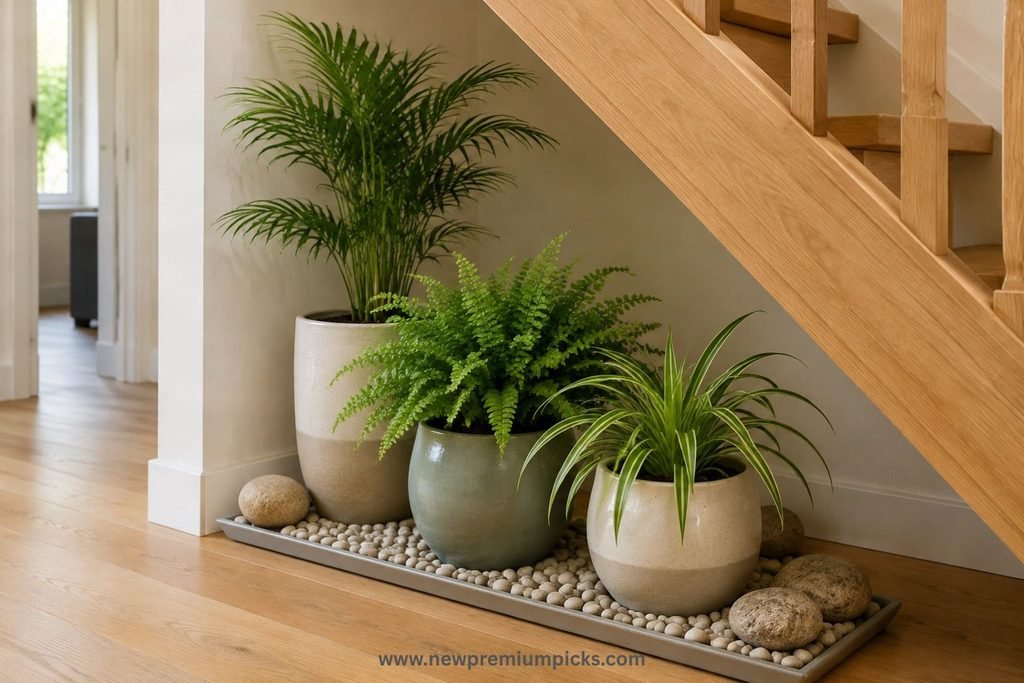
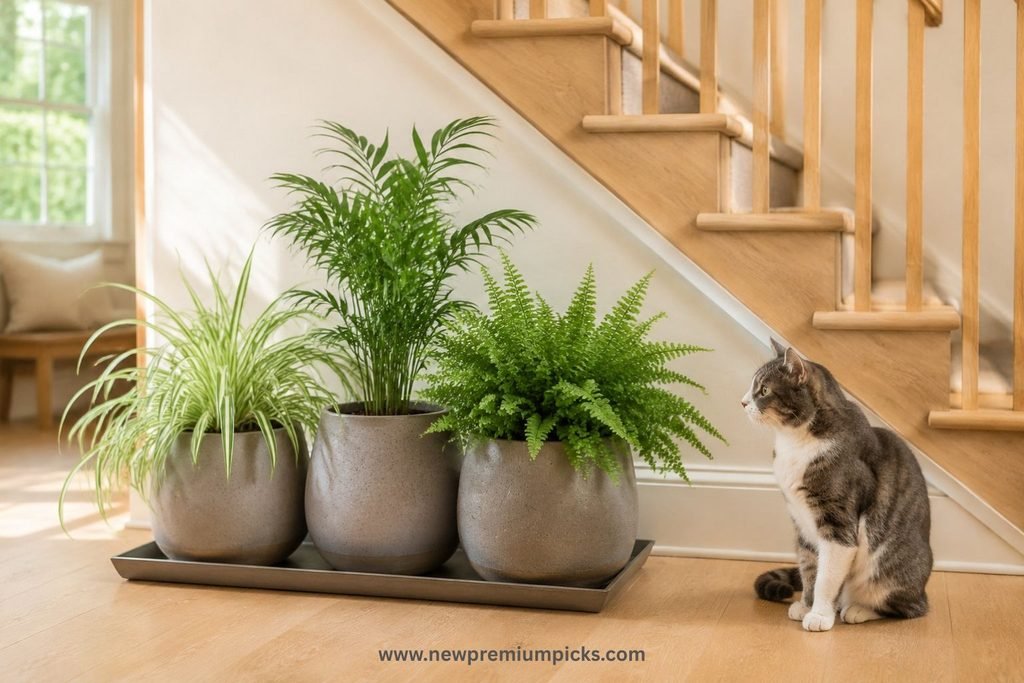
Begin with a shallow waterproof tray or sealed base. Arrange three to five plants in their own pots, placing the tallest at the back and the smallest near the front. Add a thin layer of clean pebbles around the pots, then place two or three larger river stones between them.
The mix of heights matters more than the number of plants. If every leaf finishes at the same level, the display can look flat. A taller palm, a rounded fern, and one low spider plant create a softer, more natural shape.
Keep the pots easy to remove. You will be grateful for that the first time one plant needs more water than the others or when a few fallen leaves disappear behind the stones.
It looks permanent from a distance but behaves like a normal collection of houseplants when it is time for maintenance.
2. Let One Beautiful Plant Hold the Whole Corner
Small spaces often look better when they are not asked to hold too much.
Choose one generously sized plant and give it a pot with enough visual weight to balance the staircase. A parlor palm can bring height without looking rigid. A calathea adds patterned leaves and a softer, more decorative feel when the space has suitable indirect light.
Then stop. You do not need pebbles, tiny ornaments, three lanterns, and a sign telling everyone to relax. Leave a little empty space around the planter. That breathing room is what makes a simple arrangement feel finished.
For a more connected look, repeat a material already present nearby: warm ceramic beside a wood staircase, a matte black planter near dark railings, or a softly textured pot in a neutral hallway.
The eye has one clear place to rest, so the corner feels calm rather than decorated for the sake of it.
3. Build a Soft, Layered Fern Corner
If you want the garden to feel lush but not heavy, ferns are a lovely place to begin.
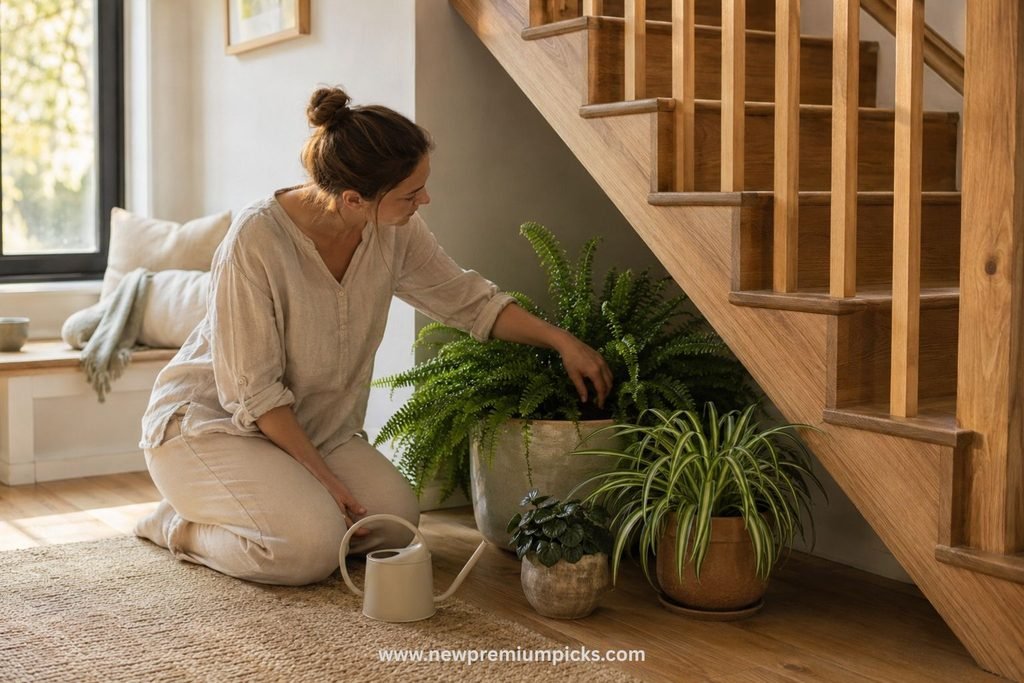
A Boston fern provides the main volume. Add a spider plant for lighter, arching leaves and a smaller peperomia near the front. The shapes are different enough to feel layered, but they still belong together.
Ferns usually need more attention to moisture and humidity than a parlor palm, so place them where you can reach them easily. Do not tuck the fullest plant into the deepest part of the staircase just because it fits perfectly on day one. It still needs to be watered, turned, checked, and occasionally trimmed.
The ASPCA lists the Boston fern as non-toxic to cats and dogs. Always confirm the botanical name, because several unrelated plants are sold with “fern” in their common name.
Soft leaves balance the straight lines of steps, rails, and walls without making the area feel crowded.
4. Use a Grow Light Without Losing the Cozy Mood
A grow light solves a practical problem, but it does not need to make your hallway look like a greenhouse shelf.
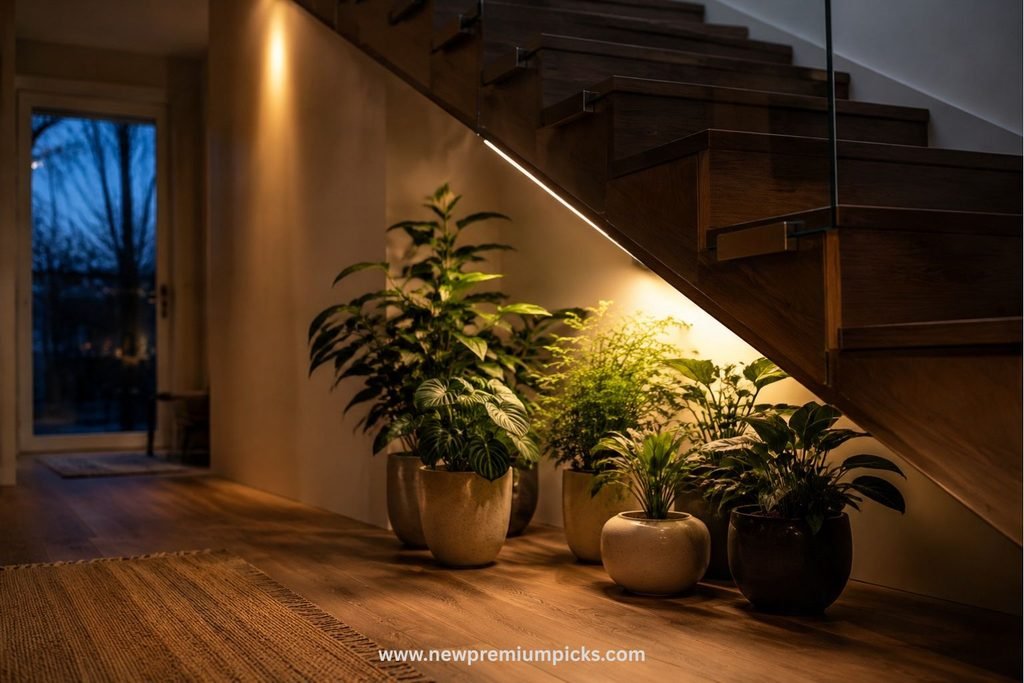
Choose a slim full-spectrum fixture that can direct light toward the leaves. Follow the manufacturer’s recommended distance and use a timer so the plants receive a consistent routine. Decorative LED strips can add a warm evening glow, but they are not automatically suitable for growing plants.
Keep the two jobs separate: the grow light supports the plants; the warm accent light creates atmosphere.
Wiring should remain tidy, dry, and outside the walking route. Avoid permanent extension-cord arrangements or hiding connections where damage and leaks would be difficult to notice. If the setup needs new mains wiring, use a qualified electrician.
The plants receive the light they need while the room still feels warm and restful after dark.
5. Try a Freestanding Plant Stand in a Rental
Not every staircase has a deep open area beneath it. Sometimes the only usable space is a narrow triangle of wall and that can still be enough.
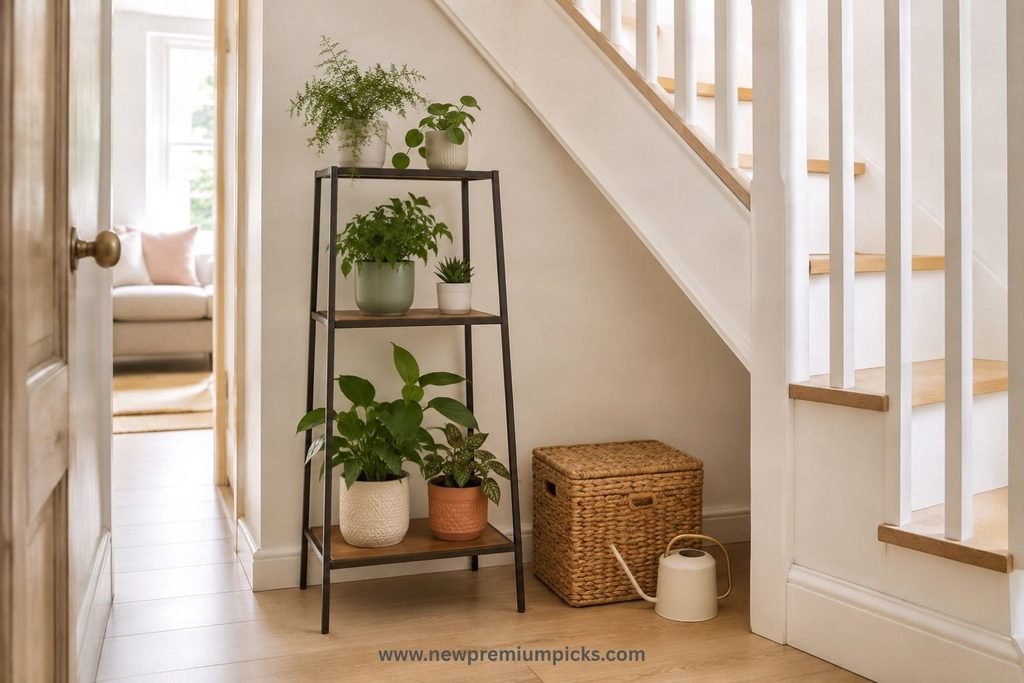
A slim freestanding plant stand uses height without drilling into the wall or attaching weight to the staircase. Put the heaviest pots on the lower shelves and lighter plants above. Keep trailing leaves away from the steps so they are not brushed every time someone walks past.
This is one of the easiest indoor staircase garden ideas to live with because the entire display can move. You can pull it closer to a window for a few days, rotate the plants, or take it with you when you move.
It also leaves room for a practical basket beside it, which is useful when the hallway needs to work as hard as it looks. For more flexible ideas, see these renter-friendly apartment decor tips.
It gives an awkward wall vertical interest while keeping the setup removable and budget-conscious.
6. Make the Garden Safer for Cats and Dogs
“Pet-friendly” should never be decided by how high a pot sits. Curious cats climb, determined dogs investigate, and fallen leaves rarely stay exactly where they land.
Several popular houseplants including snake plants, peace lilies, pothos, philodendrons, and ZZ plants should not be presented as safe choices for an accessible pet area. Start with plants whose exact species you have checked.
These three options are listed by the ASPCA as non-toxic to cats and dogs:
| Plant | Best position | What to know |
|---|---|---|
| Spider plant | Medium indirect light; some shade | Easygoing, with arching leaves that soften the edge of a display |
| Parlor palm | Low to medium indirect light | Adds height without the sharp form of a snake plant |
| Boston fern | Medium indirect light | Beautiful and full, but appreciates steady moisture and humidity |
Non-toxic does not mean “ideal for chewing.” Use heavy pots, keep fertilizer out of reach, remove standing water, and contact a veterinarian if a pet eats a plant and becomes unwell. The ASPCA plant database is useful for checking an exact species before you bring it home.
The design begins with the household that lives there, instead of treating safety as a note added later.
7. Keep a Family Garden Simple and Secure
For homes with young children, skip loose gravel, glass bowls, sharp metal borders, and anything that turns the space beneath the stairs into an obstacle course.
Use two or three wide, heavy planters on a closed waterproof base. Keep cords, fertilizers, and plant-care products out of reach. If the staircase is busy during the morning rush, leave more clear floor space than you think you need.
A closed basket nearby can hold a small watering can, cloth, and pruning scissors when they are not being used. It keeps the pretty part visible and the maintenance part safely put away. These home organization ideas can help the rest of the hallway feel just as settled.
A simpler garden is easier to supervise, clean, and enjoy in a home that is already full of movement.
8. Add a Small Water Feature Only If the Space Allows It
The gentle sound of water can be calming, but this is one feature that deserves more thought than it usually receives in inspiration photos.
Choose a fountain made specifically for indoor use. Place it on a level waterproof base, away from the walkway, and keep every plug connection well away from splashes.
Follow the manufacturer’s instructions. UK guidance from Electrical Safety First emphasizes reputable equipment, suitable RCD protection, and correct installation when water and electric pumps are combined. US readers should follow local electrical codes and ask a licensed electrician whether GFCI protection is required.
If the nearest outlet requires a permanent extension cord, the floor becomes slippery when water spills, or a child or pet can reach the basin, leave the fountain out. The garden can still feel peaceful without it.
Used in the right space, gentle sound adds another layer to the garden; used in the wrong space, it adds maintenance and risk.
9. Refresh the Display with the Seasons, Not Every Trend
You do not need to replace healthy plants whenever the season changes. Keep the living part of the garden stable and update one or two removable details instead.
In autumn, try a warm-toned planter or a rust-colored textile nearby. In winter, add a small ceramic house or soft battery-operated lights. Spring might be as simple as changing one pot cover to a lighter tone.
Avoid open candles beside leaves, dried flowers, wood, or fabric. A warm LED glow gives the same cozy feeling with far less worry.
This is also kinder to your budget. The plants keep growing while the mood shifts around them. The same principle appears throughout these budget home decor ideas.
The corner changes gently without becoming another place that needs to be completely restyled every few months.
A Simple Weekend Plan You Can Follow
If the finished rooms online feel intimidating, begin with the version below. It is enough to make a visible difference without turning the weekend into a renovation project.
- Measure the usable area and mark the walking route that must stay clear.
- Watch the natural light at three times during the day.
- Choose three plants that suit the light and have similar care needs.
- Place each plant in a pot with drainage and a saucer.
- Set the group on a waterproof tray.
- Arrange the tallest plant at the back, the softest shape in the middle, and the smallest at the front.
- Add a light pebble layer around the pots if you like the built-in look.
- Live with the arrangement for two weeks before adding more.
That last step matters. Once you see how the light moves, where leaves drop, and how easily you can water the plants, you will know whether the corner needs anything else.
Common Mistakes That Make an Under-Stairs Garden Hard to Live With
- Buying every plant in one trip before checking the light
- Treating “low light” as “no light”
- Planting directly into decorative stones without drainage
- Hiding pots so deeply that they cannot be removed for watering
- Mixing plants with completely different moisture needs
- Using decorative LED strips as a substitute for a grow light
- Letting leaves, pots, or cords enter the walking route
- Hanging planters from stair components without confirming a safe fixing point
- Calling a display pet-friendly without checking every species
- Adding so many accessories that the plants become the least noticeable part
Frequently Asked Questions
Can plants survive under a staircase?
Yes, if the area provides suitable natural light or a correctly positioned grow light. No living houseplant will thrive indefinitely in complete darkness, even if it is sold as a low-light plant.
What is the easiest under-stairs garden to maintain?
Start with three plants in separate removable pots on one waterproof tray. Choose plants with similar light and watering needs. This is easier to manage than a permanent bed or a large mixed collection.
Which plants are safer around cats and dogs?
The ASPCA lists spider plants, parlor palms, and Boston ferns as non-toxic to cats and dogs. Always check the exact botanical name, secure the pots, and discourage pets from chewing any plant.
Can I create an indoor staircase garden in a rental?
Yes. Use freestanding pots, a waterproof tray, and a removable plant stand. Avoid drilling, permanent irrigation, or electrical changes unless the landlord has approved them.
Should the pebbles go inside the plant pots?
No. Use proper potting mix inside pots with drainage holes. Pebbles are best treated as a decorative layer around removable pots, not as a replacement for drainage.
Do I need a contractor?
Not for a basic freestanding arrangement. Ask a qualified professional before altering the staircase, adding built-in planters, installing mains-powered lighting, or combining electricity with a water feature.
The Best Staircase Garden Is the One You Can Care For
It is easy to fall in love with the most dramatic version: a wall of greenery, hidden lighting, water moving over stone. But the garden that stays beautiful is usually the one that fits the light, the household, and the time available to care for it.
For most homes, three healthy plants in removable pots are enough to turn an awkward corner into a part of the room that feels calm and considered. Start there. Let the plants settle. Add more only when the space asks for it.
And if you walk past the stairs tomorrow and the corner makes you pause for a second instead of reminding you about the shoes and boxes that used to live there the change has already done its job.