Budget Home Decor Ideas That Look Expensive: The Room-First Edit (2026)
A room rarely looks inexpensive because it is missing a decorative bowl. More often, it looks unresolved because the eye is being asked to notice everything at once: a short curtain, a small rug, five separate objects on a console, one harsh ceiling light and a piece of art that seems to be apologizing for the empty wall around it.
None of those problems calls for a decorative haul. Before spending anything, the room needs a clearer order.
The most effective budget home decor ideas create order before they add objects. They decide what the room is about, correct the scale of the most visible elements and make ordinary materials look intentional. “Expensive” in this guide does not mean pretending something is marble or filling the room with gold. It means calm, proportion, useful detail and a sense that someone made choices here.
This room-first edit works in a US apartment, a UK flat and an owned home because it starts with what is already present. You can stop after the no-buy stage, spend on one small correction or save for the single piece that will do the most visual work. These budget home decor ideas follow the order in which a room is actually experienced: from the doorway, from the usual seat and after sunset.
Start With the View You See Every Day
Do not begin by searching for “luxury home decor.” Stand in the doorway you use most and take one photograph without tidying first. Then sit in the seat you use in the evening and take another.
The doorway image shows the room’s first impression. The seated image shows whether the room actually supports the life happening inside it.
Look at both photographs and finish these three sentences:
- My eye lands first on…
- The room loses its shape where…
- After sunset, this area disappears…
The first answer identifies the current focal point, whether you chose it or not. The second usually reveals a scale problem: a rug floating between furniture, a row of tiny frames, curtains ending awkwardly or objects spread evenly across every surface. The third tells you where lighting not more decor may be missing.
Write one room sentence before buying anything. For example: “I want the living room to feel warm and settled, with the window as the main feature.” If an item does not help that sentence, it is not a bargain for this room.
Budget Home Decor Ideas That Begin With What You Already Own
Removing visual static is not the same as removing personality. The goal is to stop every small object from competing for the same amount of attention.
Empty one visible surface a coffee table, mantel, console or chest then return only what has a reason to be there. Build one loose group rather than spacing objects along the entire length. A lamp, two stacked books and a small personal object can read as one moment. Seven unrelated accessories read as seven decisions waiting to be made.
Take one slow lap around the room with an empty laundry basket. Anything that belongs elsewhere goes into it; do not disappear into another room and start organizing halfway through. Bring daily objects closer to the activity that creates them the remote near the usual seat, charging cables near a suitable outlet and incoming mail near the door. Move the lamp you already own into the darker corner, and borrow a throw, frame or tray from another room if you want to test a color or material. Clear one patch of each crowded surface, leave the room for ten minutes, then come back through the main door. That short break makes it easier to notice whether the room feels calmer or merely emptier.
If paperwork, chargers, toys or daily bags return within a day, the room does not need stronger styling. It needs a home for that category. These home organization ideas can help you solve the returning clutter without covering the room in extra baskets.
Spend on Visual Acreage, Not Decorative Confetti
The most useful budget home decor ideas begin with the largest and most repeated surfaces, because they establish the room long before a visitor notices a candleholder. Floors, windows, walls, upholstery and light occupy the visual acreage. When one of those feels out of scale, several small purchases will not compensate for it.
Let the rug belong to the furniture
A rug should describe a usable zone, not sit like an island beneath the coffee table. In many living rooms, allowing at least the front legs of the main seating to meet the rug creates a clearer group. That is a visual principle, not a rule for every floor plan: door swings, vents, fireplaces and safe walking routes come first.
Before ordering, mark the proposed dimensions with painter’s tape and live with the outline for a day. Check it from the doorway and while walking through the room. A discounted rug in the wrong size is still an expensive mistake.
Give curtains enough fabric to look deliberate
Curtains often look weak because the panels cannot close with any fullness, not simply because the pole is too low. Measure the window and wall before choosing panel width and length. Hanging above the frame can make many standard windows feel taller, but forcing every treatment against the ceiling can look awkward when coving, radiators, deep sills or existing fittings say otherwise.
Choose the position that makes the window look complete and allows the fabric to hang cleanly. In a rental, use existing hardware where possible and check the tenancy or lease before drilling. Our apartment decor guide for renters explains why “removable” should be treated as a claim to test, not a guarantee.
Match the art to the wall, not the price tag
One properly scaled print with a generous mat can have more presence than several small frames bought to fill space quickly. Test the outer size with paper first. If you already own smaller pieces, group them closely enough to read as one composition rather than scattering them across the wall.
An awkward corner may need a layout rather than a larger purchase; use these corner wall gallery ideas to plan the full shape before making holes.
Build a Finish Family Instead of Buying a Matching Set
Matching furniture can make a room look newly purchased without making it look considered. A more natural room repeats a few finishes across pieces collected at different times.
Choose one finish already fixed in place: the warm wood floor, black window frame, chrome kitchen fitting, oatmeal sofa or aged brass handle. Repeat its temperature or color in two smaller places at different heights. A walnut table might connect to a dark wooden frame and a small box on a shelf. A chrome lamp may relate to a silver-toned frame and one metal detail across the room.
The repeats should be visible, not identical. Near-matching fake wood can look less convincing than an intentional contrast between dark wood and painted furniture. The room needs a relationship, not a furniture suite.
This approach also makes current trends easier to use without turning the room into a 2026 time capsule. Recent design coverage is leaning toward lived-in rooms, darker characterful woods, layered textiles and vintage details rather than sterile perfection. Vogue’s 2026 interiors forecast describes that broader move toward authenticity and tactile materials, while House Beautiful’s burrowcore coverage emphasizes low light, worn wood and meaningful secondhand pieces.
The useful takeaway is not to buy a named aesthetic. It is to let one aged, tactile or personal element interrupt a room that feels too flat.
For visual references, save rooms that share your actual floor, sofa or wall color not only rooms you wish you owned on the New Premium Picks Pinterest boards. A reference is far more useful when it solves the room in front of you.
Light the Lower Half of the Room After Sunset
A room can be well decorated and still feel unfinished at night. One bright ceiling fixture flattens texture and leaves corners without purpose.
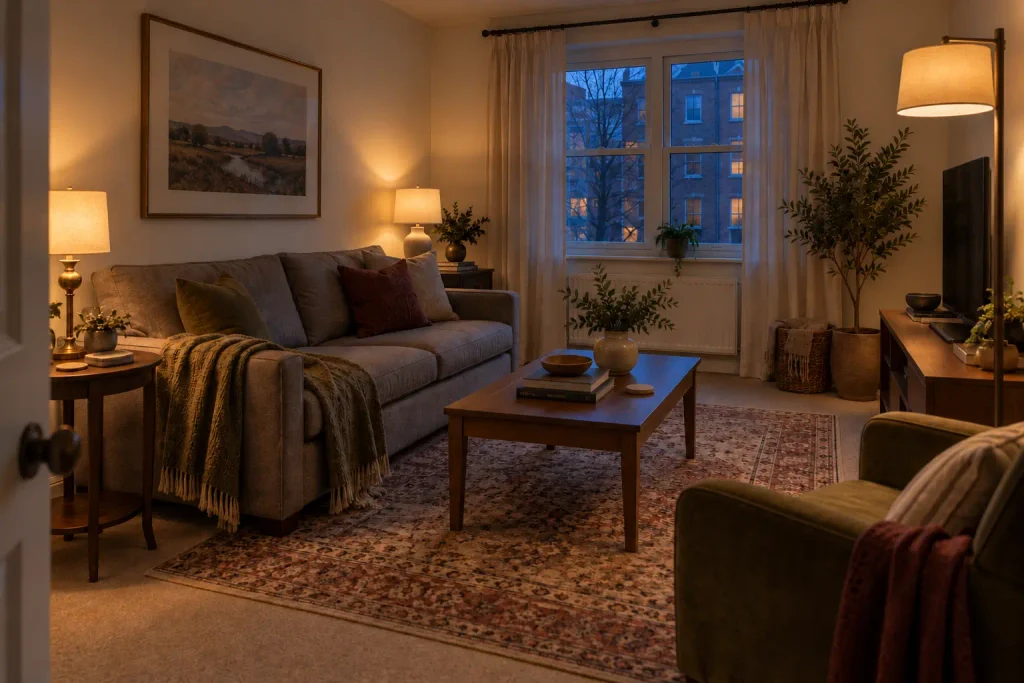
Turn off the overhead light and notice where evening activities happen. A reading chair needs useful light beside it. A console can carry a small lamp that gives the wall behind it a soft glow. A dining corner may feel more intimate when light sits closer to seated eye level rather than only above the center of the room.
Shop the house first. Moving an existing lamp, changing a harsh or damaged shade, or using compatible bulbs with a consistent warm-white appearance may be enough. Always follow the fixture’s instructions and maximum rating. Keep cables out of walking routes and never conceal a cord beneath a rug; the U.S. Consumer Product Safety Commission’s extension-cord guidance warns against running cords under carpets, through doorways or where they can be damaged.
If a layout only works with permanent extension leads or unsafe cable routes, the lamp is in the wrong place. Hard-wired changes belong with the appropriate permission and a qualified professional.
Upgrade the Places Where the Eye Meets the Hand
Some details are powerful because they are seen repeatedly and touched every day: a lampshade, drawer pull, switch plate, frame, curtain heading or tray beside the door. Improving one repeated weak detail can sharpen the whole room.
Start with the easiest reversible layer. Replace a dented lampshade with a shape that suits the base. Add a mat to art you already own. Put loose entry items on one washable tray. Change cushion covers before replacing sound inserts. If existing cabinet handles use standard holes and the property is yours or the rental agreement allows the swap store every original part in a labeled bag.
Do not turn this into a room-wide hardware haul. One finish repeated with restraint will look more convincing than changing every visible object to “luxury gold.” Paint, plumbing, electrical fittings and anything fixed to the building need the correct permission and, where required, a qualified professional.
Put One Old Thing Beside One Clean Line
A polished room needs a little friction. If everything is smooth, new and from the same collection, there is nothing for the eye to remember.
Try pairing one older or handmade object with something simple: a weathered wooden stool beside a clean-lined sofa, a small piece of studio pottery on a plain shelf, an old landscape print in a crisp mat, or a woven textile over a modern chair. The contrast makes both pieces more visible.
Secondhand shopping works best with a brief. Take the measurements, a photograph of the room and the one-sentence plan. Look for the missing role a sturdy side table, a solid frame, a lamp base not “anything that looks expensive.” Inspect structure, odor, damage and materials before buying. Older electrical items should be appropriately checked or rewired before use, and unknown finishes should stay away from food contact and children’s play areas.
Personal history can do the same job without a purchase. A framed postcard, a family photograph, a book that is actually read or an object brought home from a meaningful place gives the room evidence of a life. That is difficult for a matching accessory set to imitate.
Make One Color Travel Across the Room
A room does not need a rigid color formula, but a single accent stranded in one corner can look accidental.
Find a color that is already unavoidable: the blue in a rug, olive in a chair, rust in an artwork or burgundy in a book spine. Let a related version appear in two other sightlines perhaps a textile near the sofa and a small object across the room. They do not need to match exactly. Slight shifts in shade usually feel more natural than a coordinated set.
Keep the largest surfaces calmer if the room already contains several strong colors. That same restraint is useful in bedrooms; the quiet luxury bedroom edit shows how broad, quiet surfaces can make modest materials feel more intentional without stripping away character.
Colour should lead the eye around the room, not make it bounce between unrelated purchases.
A Budget Living-Room Edit, Worked Through in Order
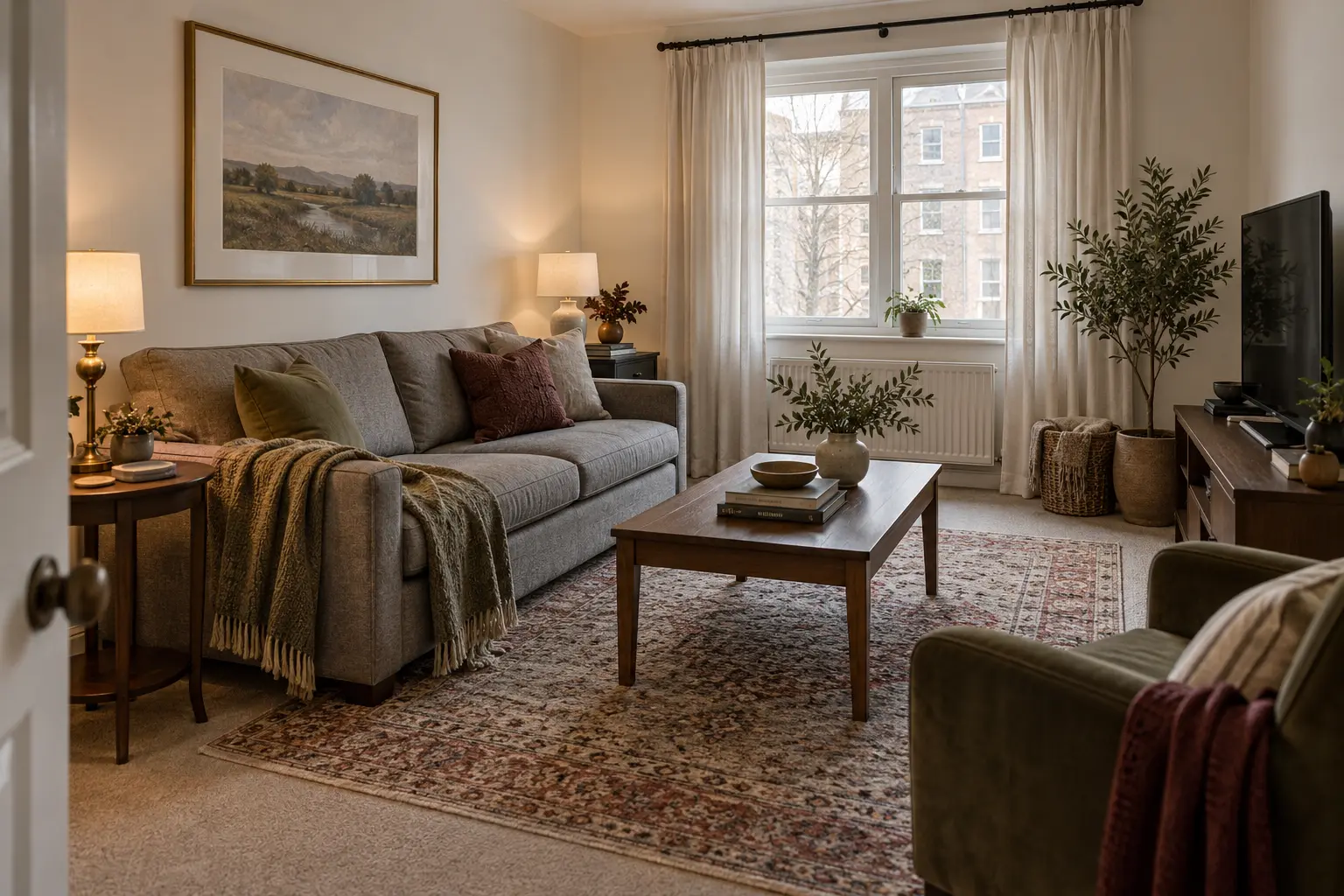
Imagine a typical rented living room with white walls, beige carpet, a gray sofa, two unlike side tables and a black television. Nothing is broken, but the room feels temporary.
The no-buy pass: Remove the small decor lined along the television unit. Move the taller side table beside the sofa where its height is useful. Place the existing lamp there. Group the books and one personal object on the lower table, then leave part of its surface clear. Coil and secure visible cables without hiding them beneath the carpet.
The small-spend pass: Replace one tired lampshade or choose two cushion covers that pull a warmer tone from an existing print. Mat that print so its outer dimensions suit the wall. Add only the item that corrects the clearest weakness revealed by the doorway photograph.
The one-anchor pass: If the furniture still appears to float, save for the right rug size rather than buying several accessories. If the window dominates instead, prioritize full curtains that work with the existing fittings. If both are adequate, one appropriately scaled piece of art may become the anchor.
Notice what the plan does not include: replacing the sofa, disguising every rental finish or buying seven objects because they share a label. Each spending stage is allowed to be the last stage.
Use the Receipt Test Before You Check Out
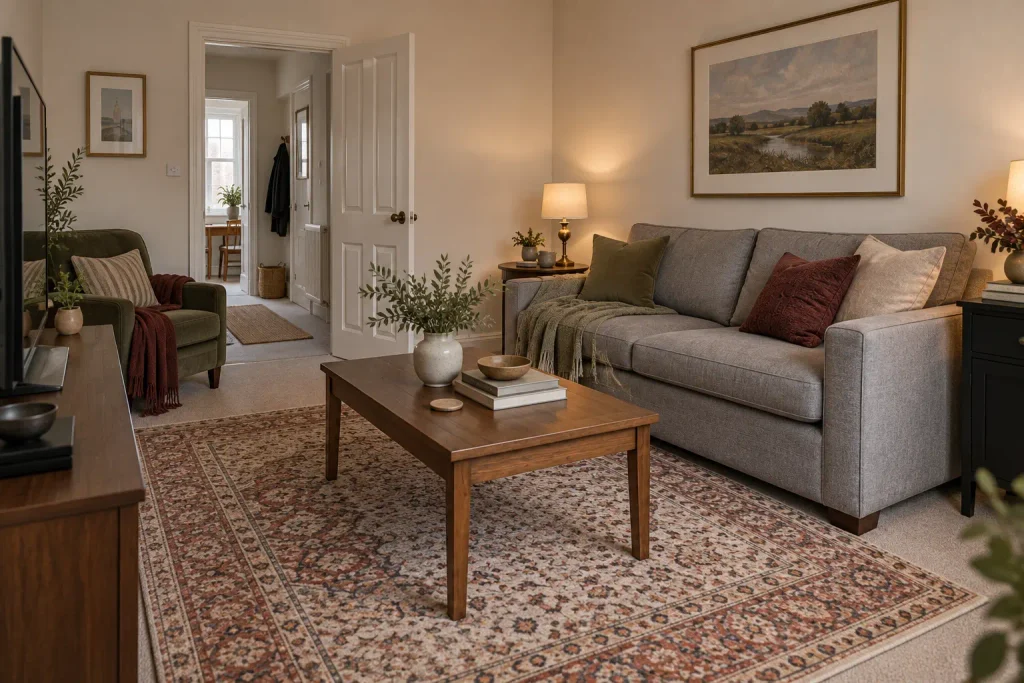
Before paying, be able to say exactly what the item fixes, where it will sit and what it replaces or reorganizes. A useful answer sounds like this: “The larger lamp fixes the dark end of the sofa, fits the measured side table and replaces the small lamp doing nothing on the console.”
Then look beyond the product photograph. Measure the exact spot and the delivery route. Check the item from the doorway and from the seat you actually use. Think about how it will be cleaned, moved and powered, and whether it makes a cable or walkway safer rather than more awkward. If its only convincing feature is the sale price or a currently popular color, leave it in the cart for 48 hours. A tight budget works better when every purchase ends a visible problem instead of starting another styling job.
Stop While the Room Still Has Somewhere to Rest
Give the room a normal week before adding anything else. Let the cushions shift, let laundry pass through, use the lamps and see which surface begins collecting things again. A room that only works while it is being photographed is not finished.
By the following weekend, the answer will be clearer than it was in the cart. Perhaps the room still has mismatched side tables and the same beige carpet. That is fine. If walking through it is easy, the evening light reaches the seat and the things you care about are easier to notice, the edit has done its job.
Leave it there. The small stretch of empty surface beside a favorite object is not waiting to be filled; it is the reason the object can be seen.