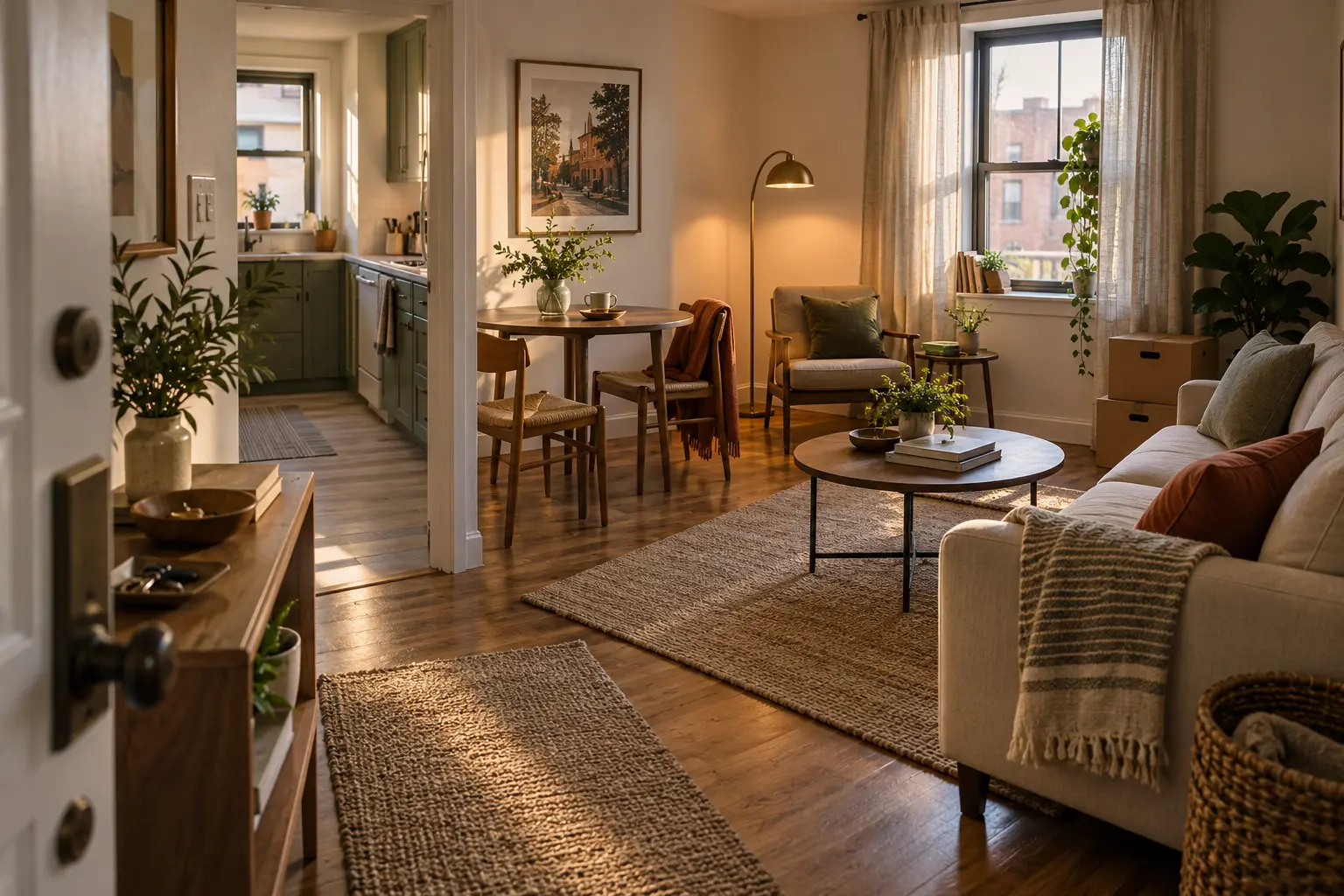
First Home Decor Ideas: A 30-Day Plan for Your First Apartment
The first evening in a new apartment can make every empty wall feel urgent. The sofa is not here yet, the lighting feels harsh, boxes are stacked where a dining table might go, and it is tempting to solve everything with one large shopping order.
That is usually when expensive mistakes begin.
Most first apartment decor ideas begin with a shopping list. This one begins with a pause.
The most useful first home decor ideas are not a list of objects to buy. They are a sequence: learn the apartment, make daily life comfortable, notice what keeps going wrong, and decorate only after the room has shown you what it needs.
This 30-day plan gives you that sequence. It works for a small rental, a first apartment shared with a partner or roommate, or a starter home where the budget has to cover more than decor. By the end of the month, the goal is not a “finished” home. It is a home that works, feels considered, and still has room to become yours.
Editorial note: For extension cords, heaters and tall furniture, follow the manufacturer’s instructions and the safety guidance linked in the safety section of this guide.
Start With the Buy, Bridge or Delay Rule
Before measuring a wall or choosing a color, divide every possible purchase into one of three groups.
| Decision | What it means | Typical examples |
|---|---|---|
| Buy | It solves a daily need, fits the measured space and is likely to remain useful after the first month. | A mattress, privacy covering, task lamp, comfortable chair or correctly sized table |
| Bridge | It solves a problem cheaply while you learn what permanent solution will work. | A borrowed side table, folding table, open basket, temporary garment rail or basic floor lamp |
| Delay | Its size, color or purpose depends on a layout or routine you have not confirmed yet. | A large rug, matching furniture set, media console, gallery wall, extra storage unit or decorative bundle |
“Bridge” is the part most decorating advice skips. A temporary piece is not a failed design decision. It is a low-cost way to avoid making the wrong permanent one.
Save a simple note on your phone with those three headings. When something catches your eye, give it a category before giving it a place in your cart.
Days 1–3: Map the Apartment Before You Decorate It
Do not begin with a mood board. Begin with the parts of the apartment that cannot be negotiated: dimensions, doors, outlets, windows, heaters, fixed finishes and the route furniture must travel to reach the room.
Measure the delivery path as carefully as the final wall. A sofa that suits a living room is still the wrong sofa if it cannot clear the stair turn, elevator door or narrow hallway.
Your first-home measurement sheet
| Record this | Why it matters |
|---|---|
| Narrowest doorway, hallway and stair turn | Confirms whether large furniture can reach the room |
| Useful wall length, excluding door swings | Prevents furniture from blocking circulation |
| Window width, height and opening direction | Guides privacy treatments and furniture placement |
| Outlet locations and light switches | Keeps lamps and chargers out of walking routes |
| Radiators, vents and baseboard heaters | Protects airflow and reduces unsafe placement |
| Ceiling height and any sloped sections | Prevents tall storage from overpowering or missing the space |
| Fixed colors: floor, cabinets, counters and tile | Gives the future palette something real to respond to |
If you are renting, check the lease before planning paint, drilled hardware or other permanent-looking changes. The existing no-regret apartment decor guide goes deeper into reversible choices and move-out planning.
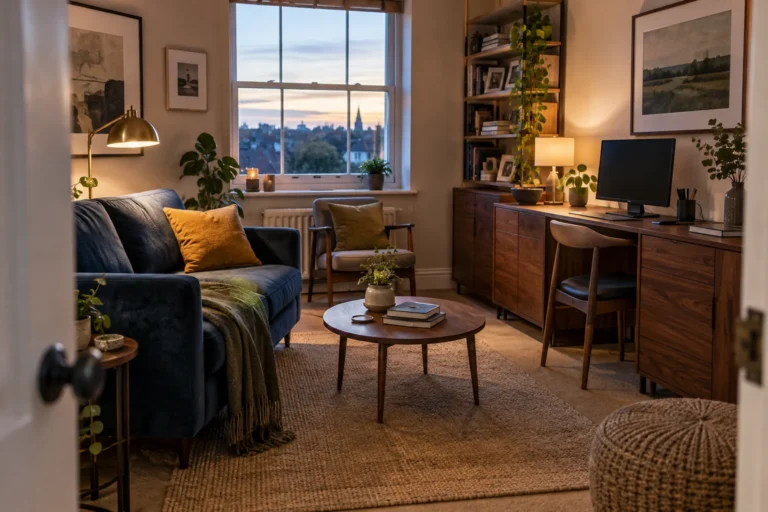
Next, write down what the apartment must support. “Living room” is too vague. Does it need to handle two people eating dinner, one person working from home, friends visiting twice a month, or quiet reading every night? A room planned around its actual jobs is easier to furnish than one planned around an online aesthetic.
For the first three days, buy only what is necessary for sleep, privacy, hygiene and basic meals. Let the empty floor remain visible. It is useful information.
Days 4-7: Build a Minimum Viable Home
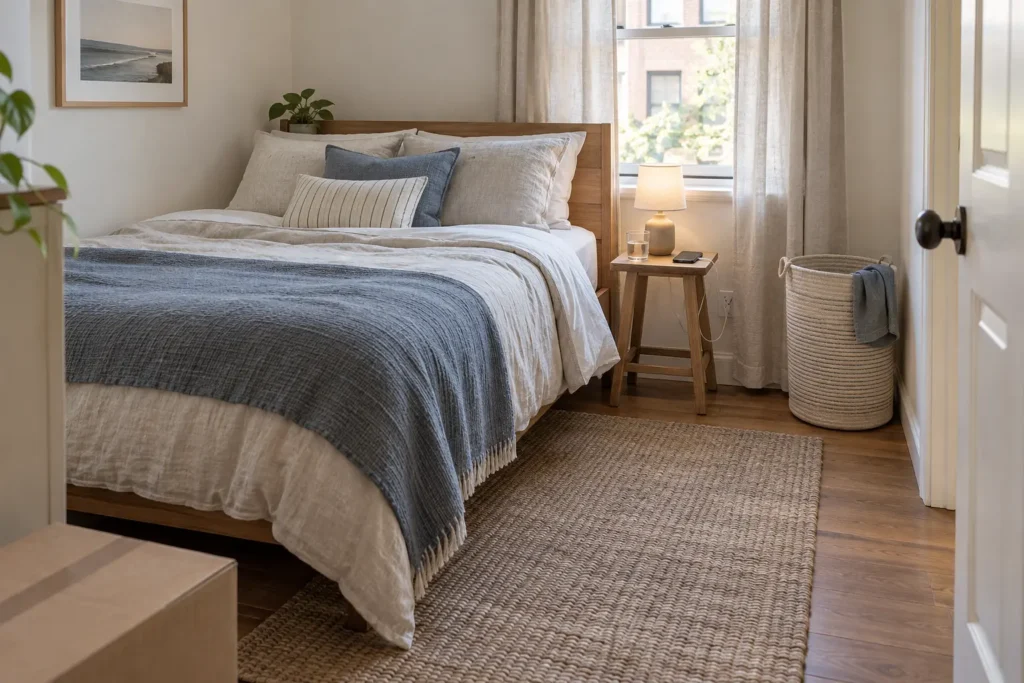
The first week is about completing one small routine at a time. A room begins to feel settled when ordinary actions stop requiring improvisation.
Make sleep work first
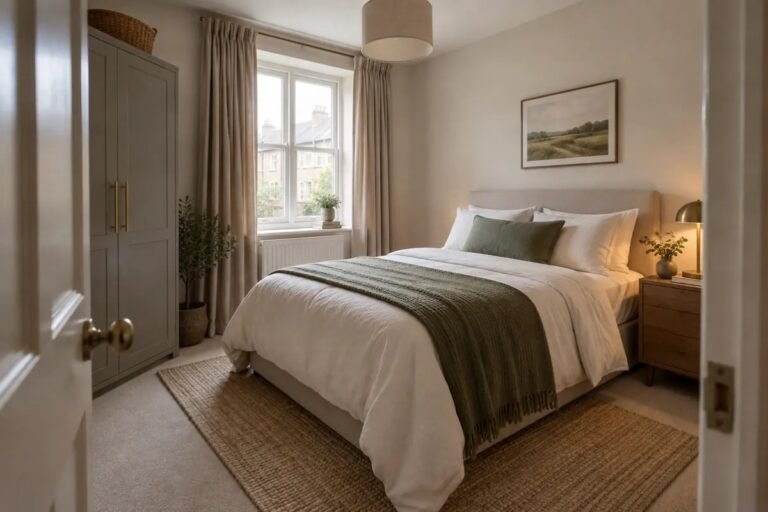
Set up the mattress or bed, comfortable bedding, window privacy and a reachable light. Add one stable landing place for a phone, water and glasses. It can be a stool or small box for now; it does not need to be the final nightstand.
Create one dependable surface
Choose one surface for eating, work or paperwork and keep it clear enough to perform that job. In a small first apartment, the same table may do all three, but it should not also become permanent storage.
Give arrivals a stopping point
Keys, shoes, bags and mail need a place close to where they enter. Start with a tray, a basket and only the number of hooks you genuinely need. A full entryway unit can wait until you know whether coats, packages or footwear create the bigger problem.
Finish the after-shower route
Put the towel, bath mat, laundry basket and daily toiletries where they are used, not wherever an organizer happens to fit. This keeps a small bathroom calmer without adding decorative containers to every surface.
At the end of day seven, you should have one comfortable sleeping zone, one usable seat or work surface, basic privacy and a clear route through the apartment. That is a stronger foundation than a room full of coordinated accessories.
Days 8-14: Treat Clutter as Information
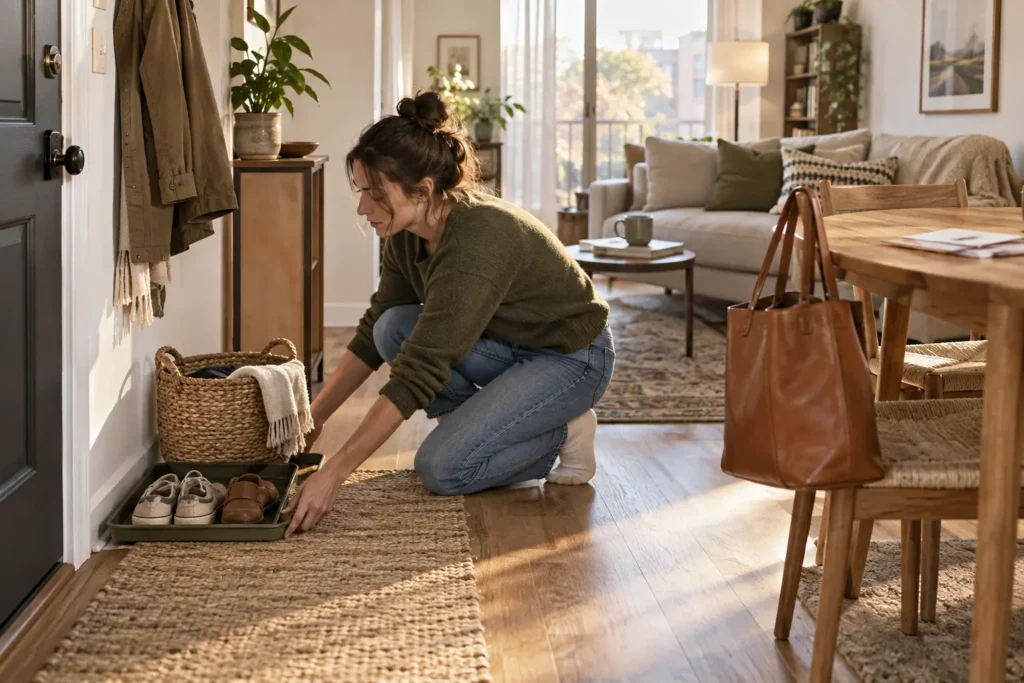
The second week is when the apartment starts telling the truth. Shoes appear beside the door. A bag takes over the dining chair. Clean clothes wait on the bed because the closet routine is inconvenient. A mug keeps landing on the floor beside the sofa.
Do not hide these patterns immediately. Record them for three ordinary days.
| Repeated friction | What it may actually need |
|---|---|
| Bags collect on a chair | One strong hook or a designated basket near the arrival route |
| Clothes form a pile beside the bed | A hamper or re-wear hook where clothes are removed |
| Mail spreads across the table | A small inbox plus a weekly paper-clearing habit |
| Mugs and remotes land on the floor | A compact side table within arm’s reach |
| Shoes block the doorway | A shallow tray or rack sized to the pairs used that week |
| Chargers cross the walking path | Furniture repositioning or a safer outlet plan, not a rug placed over a cord |
This is the point to add storage, but only for a repeated behavior. Buying containers before you know what they must contain often creates a second kind of clutter: empty organizers, mismatched bins and furniture with no clear job.
Choose flexible pieces when the routine is still changing. A lidded basket can move from the entry to the living room. A narrow cart can serve a kitchen, bathroom or desk. For a fuller room-by-room method, use these home organization ideas built around real routines. Built-in-looking furniture should wait until you know the exact dimensions and long-term need.
Days 15–21: Choose a Look From What Is Already There
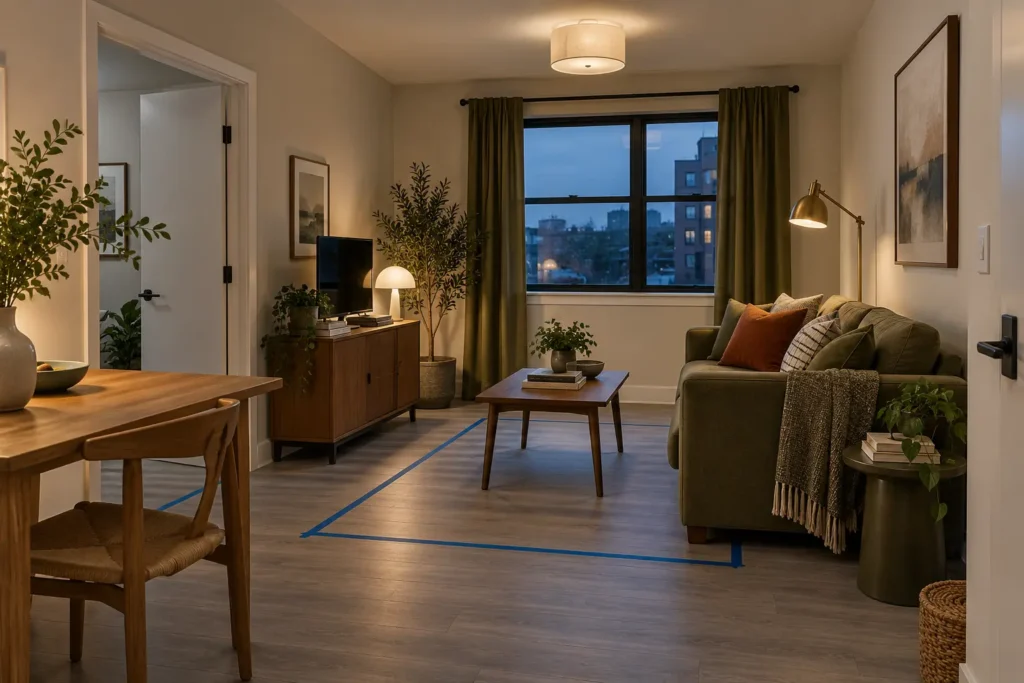
By the middle of the month, you have enough evidence to make the apartment feel intentional.
Start with the fixed surfaces and the largest item you already own. Then build a simple three-part palette:
- Anchor: the dominant fixed or existing tone, such as warm oak flooring, cream walls or a charcoal sofa.
- Bridge: a color or material that helps unlike elements belong together.
- Accent: one smaller, more expressive note used with restraint.
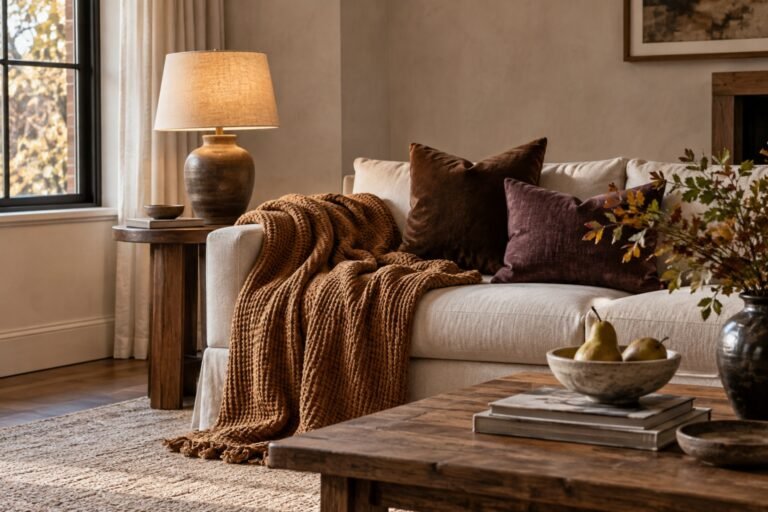
For example, if the apartment has cool gray flooring but you already own a warm oak table, do not try to disguise either one. Repeat the oak once in a frame or lamp base, then use olive, rust or another muted bridge color in a textile. The room begins to look deliberate without requiring a complete replacement of what you own.
Add light before adding more decor
Overhead lighting rarely handles every part of apartment life well. Use light according to the job:
- General light for moving around and cleaning
- Task light beside a reading chair, desk or food-preparation area
- Lower evening light that makes the room comfortable after work
Place lamps near real outlets. Extension cords are intended as temporary solutions, not substitutes for permanent wiring, and they should not be overloaded, hidden under rugs or chained together, according to the Electrical Safety Foundation International.
Wait until now to choose the rug and curtains
Once the furniture footprint is stable, mark a possible rug size on the floor with removable painter’s tape. Walk around it, open nearby doors and sit in each seat before ordering. This is more reliable than choosing a rug from a styled product photo.
For curtains, measure the actual window and check how it opens. Decide whether the room needs privacy, light filtering, room darkening or simply softness. Those are different jobs, and one inexpensive panel is unlikely to perform all of them.
Days 22–26: Add Evidence of Your Life, Not Filler
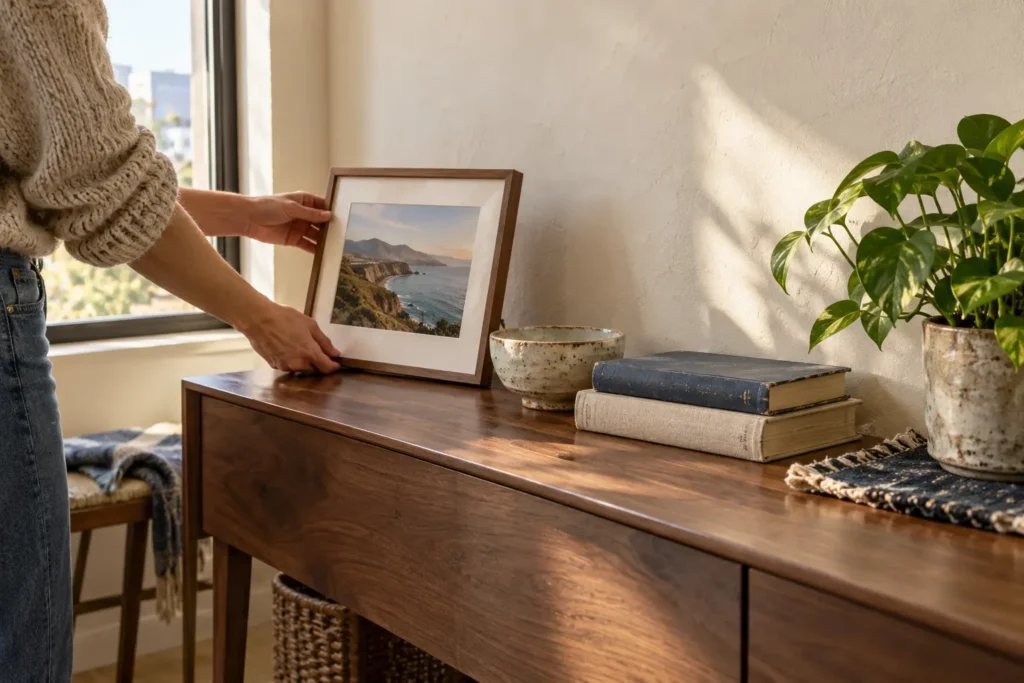
A personal home does not need many decorative objects. It needs a few things that could not have been selected for just any room.
Look for four kinds of evidence:
- Something connected to a person, place or memory
- Something you read, make, collect or use
- A material that feels good in the room, such as wood, linen, wool or ceramic
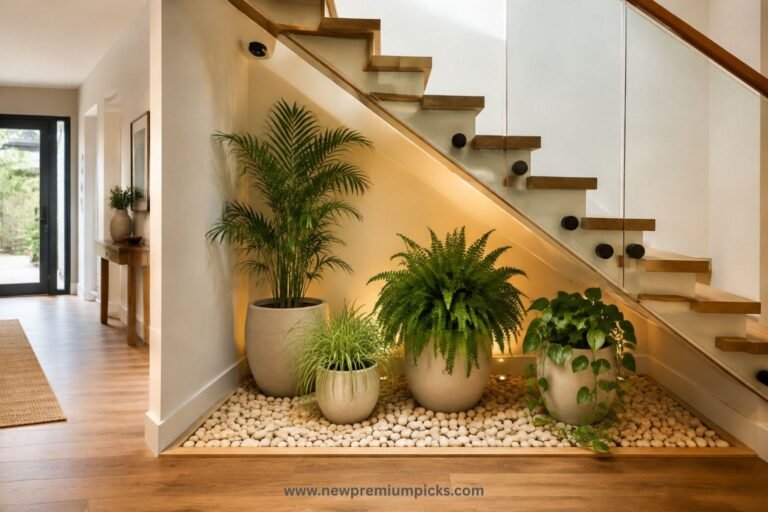
- One living element that suits the available light and the care you can give it
A framed concert ticket, a photograph from a familiar place, two books you return to, or a handmade bowl says more than a coordinated pack of shelf accessories. If you do not own the right art yet, leave the wall open. Empty space looks more confident than filler bought to remove it.
Use one strong focal point instead of scattering small objects across every surface. It might be a textile above the sofa, one generous artwork, a lamp with a distinct shape or a chair in the palette’s accent color.
Before adding an object, ask what it contributes: memory, function, material or contrast. If the answer is only “it fills the gap,” move it to the Delay list.
Days 27–30: Run the Ordinary-Day Audit
The final step is not a styling session. It is a normal evening followed by an honest reset.
Come home, put down your things, prepare food, use the main seat, charge your devices, get ready for bed and leave the apartment as you naturally would. The next morning, check five things:
- Can every main route be used without moving a stool, basket or decorative object?
- Does each seat have suitable light and a place for what you use there?
- Can the main surface be reset in less than ten minutes?
- Is any item being moved every day just to use the room?
- Is there a purchase you still want even though no daily problem requires it?
The fourth question is especially useful. If a basket must be moved before a door opens, cushions are removed before anyone can sit, or a coffee table is pushed aside every evening, the layout is asking for an edit.
Return, sell or relocate what failed. Move unresolved purchases back to Bridge or Delay. Your final shopping list should be shorter than the one you had on move-in day, and far more accurate.
First Home Decor Ideas That Are Worth Buying First
Spend your early budget on use, fit and comfort rather than visual completeness.
Buy thoughtfully
- The sleep setup you use every night
- Seating that is comfortable and correctly scaled
- Privacy and light control where they are genuinely needed
- Lamps placed for real tasks
- Storage designed around a measured, repeated problem
- Hardware or restraints required to use furniture safely
Save, borrow or buy secondhand
- Side tables and stools
- Small bookcases and open shelving
- Frames, mirrors and decorative vessels
- Dining chairs that do not need to match
- Temporary surfaces while the layout is still changing
Check secondhand furniture for stability, damage, odors and signs of pests before bringing it indoors. Large mirrors, shelves and tall storage also need an appropriate installation plan rather than being casually leaned where they can fall.
If the budget needs to stretch across several rooms, the room-first budget decor guide can help you decide where one visible change will do the most work.
Delay without guilt
- Matching bedroom or living-room sets
- A rug chosen before the furniture layout
- Extra storage purchased “just in case”
- Trend-led colors that do not connect to the apartment’s fixed finishes
- Multipacks of generic wall art
- Furniture bought for an imagined hosting routine rather than your real one
The 30-Day Result, Room by Room
| Area | A successful first month looks like this |
|---|---|
| Entry | Keys, shoes and the most-used bag have a clear home without narrowing the route |
| Living area | The main seat is comfortable, properly lit and paired with a reachable surface |
| Bedroom | Sleep, privacy, clothing and charging work without creating a nightly pile |
| Kitchen or dining zone | One clear surface supports meals and can be reset quickly |
| Bathroom | Towels can dry, toiletries stay off the busiest surface and laundry has a destination |
| Decor | A small number of personal pieces establish a direction without filling every wall |
This is enough. A first home should not look as though it was completed in one delivery window. The best rooms hold space for objects found later, routines that change and taste that becomes clearer with use.
First-Apartment Safety Checks That Belong in the Decor Plan
Safety is part of furniture placement, not an extra subject to consider after styling.
- Check your lease or ask the property manager before painting, drilling or installing wall hardware.
- Keep heaters, vents, exits and frequently opened windows clear.
- Use the correct bulb type and maximum wattage listed on each light fixture.
- Do not run cords under rugs or through doorways, and do not use a damaged or hot cord.
- Anchor furniture with drawers, doors or shelves using the correct hardware and an approved method. The U.S. Consumer Product Safety Commission’s Anchor It! guidance emphasizes securing this type of furniture to help prevent tip-overs.
- In a UK rental, use products and electrical accessories suitable for UK standards; in the US, use products listed for the local supply and follow local requirements. Ask a qualified professional when permanent electrical or structural work is involved.
Frequently Asked Questions
What should I decorate first in my first apartment?
Start with the routine that affects every day: sleep, privacy, lighting, one useful surface and a clear arrival zone. Decorative objects should come after you know the furniture layout and where clutter naturally gathers.
How can I decorate a first apartment on a small budget?
Use the Buy, Bridge or Delay rule. Buy the correctly sized essentials, bridge temporary gaps with borrowed or inexpensive flexible pieces, and delay large rugs, matching sets and filler decor until the apartment has been lived in for at least a few weeks.
How long should I wait before buying major furniture?
Measure immediately, but wait long enough to confirm the room’s real job and traffic pattern. A bed may be urgent; a sofa, dining set or storage wall deserves enough time to verify the dimensions, delivery route and daily use.
How do I make a rental apartment feel like home?
Repeat materials and colors you already own, add lighting for your evening routine, and display a few objects tied to your life. Personal meaning creates more identity than covering every surface with new decor.
What should I avoid buying for a first apartment?
Avoid unmeasured furniture, complete matching sets, storage without a defined purpose, oversized multipacks of decor and anything that blocks outlets, heaters, door swings or walking routes. Delay pieces that depend on a layout you have not confirmed.
Final Thought
Your first apartment does not need to prove that you know your style on day one. It needs to support your mornings, make evenings easier and give the things you care about a visible place.
Measure first. Complete the basic routines. Let clutter reveal the missing function. Then add color, texture and personality with purpose.
The best first home decor ideas leave enough space for real life to shape the room. Thirty days is enough time to move past the pressure to fill it and begin creating a home that actually belongs to you.