Black Accent Wall in a Small Bedroom: Which Wall Should You Paint?
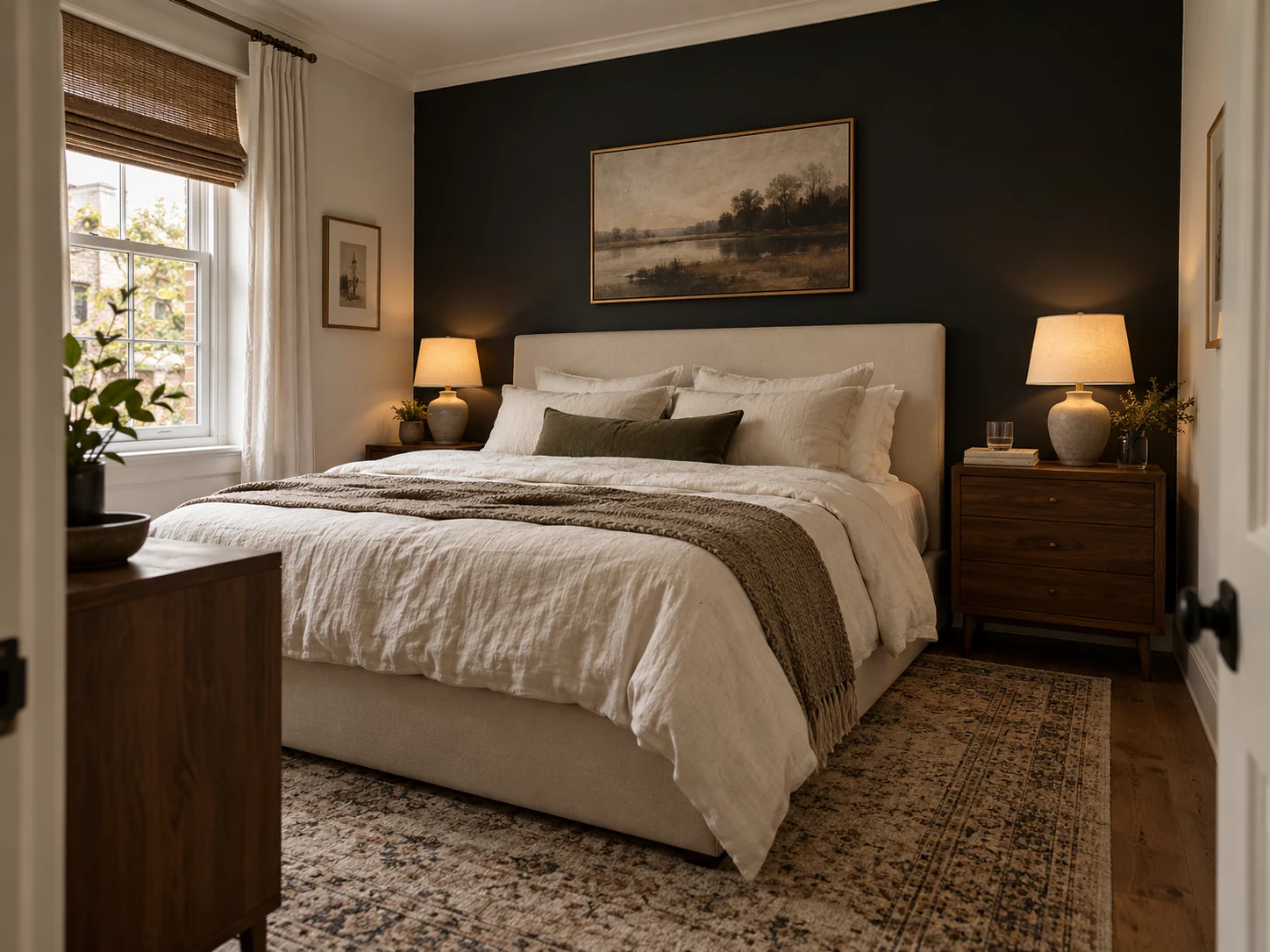
Start by considering the wall behind the bed. You can judge the black backdrop against the headboard, bedding and bedside furniture together. If a window or fitted wardrobe leaves little wall visible, compare another surface before choosing.
Look at the proposed wall from the doorway and while sitting in bed, both in daylight and under your usual evening lighting. Before buying a full tin, assess the colour and the finish. A colour sample may help with one without settling the other.
Choose the wall around your existing furniture
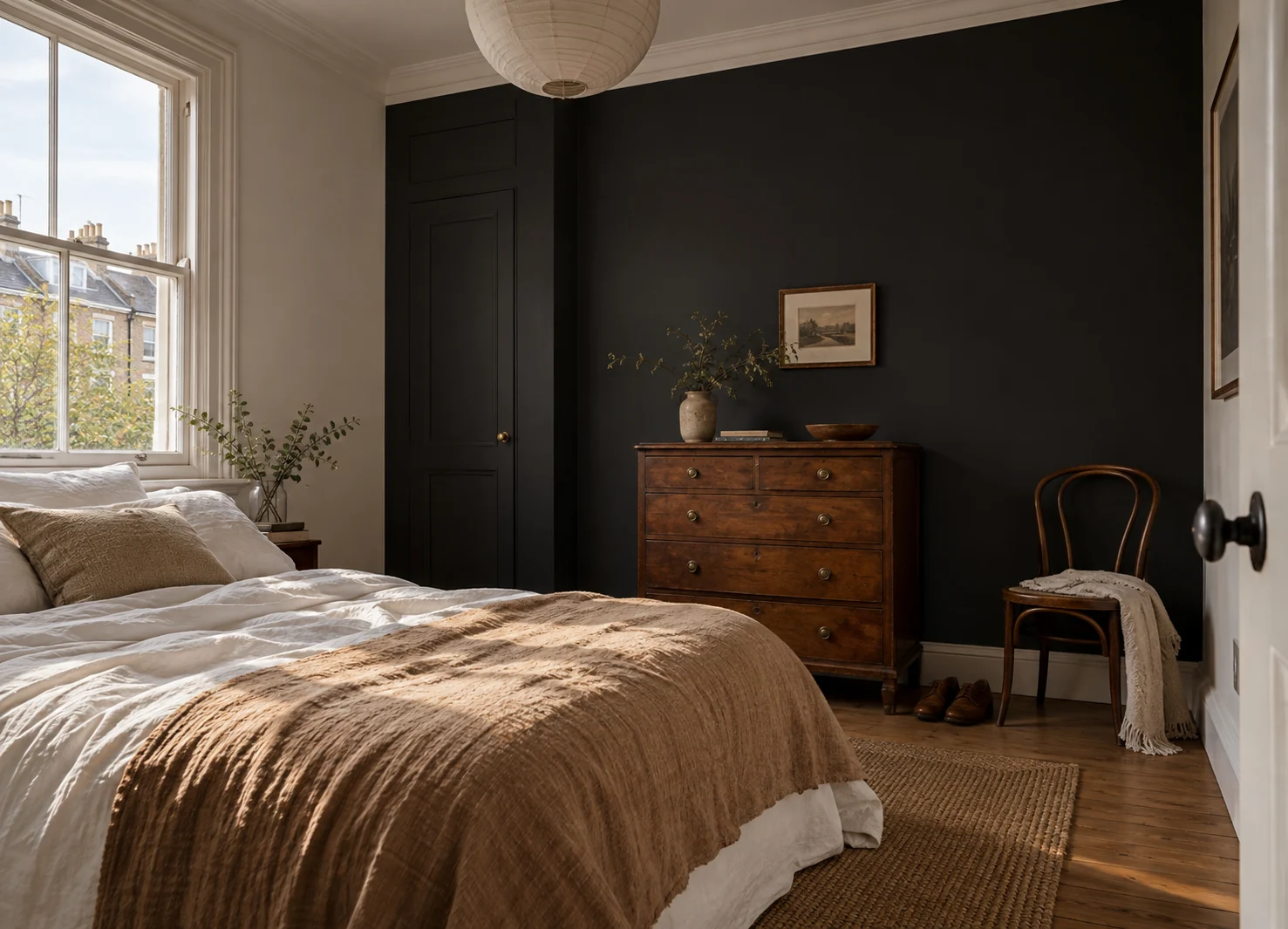
Make the bed as usual and look at how much painted surface would remain visible. A tall headboard may hide most of the bed wall. Painting a different wall might give you more of the dark backdrop you want without moving furniture.
| Wall to consider | What to check |
|---|---|
| Behind the bed | How much black would show above and beside the headboard? |
| Opposite a window | View the sample in daylight with the curtains open, then under your usual evening lighting. |
| Beside the bed | Do you like looking towards the dark surface while lying down? |
| Around a doorway | How would the colour sit around the frame and nearby furniture? |
A wall that contains a door can still work as an accent wall. Check whether you prefer the door to remain a separate feature or sit within the darker backdrop.
If two walls seem suitable, compare the same movable sample on both. Keep your furniture and bedding in place during the comparison so you can judge the change against the room you actually use.
Check what your paint sample represents
Suppose you approve a black sample and then order the colour in matte. Have you seen how that final finish will look?
Benjamin Moore’s US liquid colour samples illustrate the distinction. They come in eggshell and are intended for colour representation. Its sampling guide recommends at least two sample coats and suggests using a movable painted board. The sample is not intended to establish the final coating’s performance.
Follow the sample’s application and drying instructions. Place it beside the headboard and flooring, then check it under the lamps you use at night. Leave your usual bedding in place.
Once you settle on a colour, ask the retailer how to assess it in the product and sheen you plan to buy. An eggshell colour sample cannot confirm the appearance or cleanability of a matte coating.
Choose sheen by appearance and maintenance
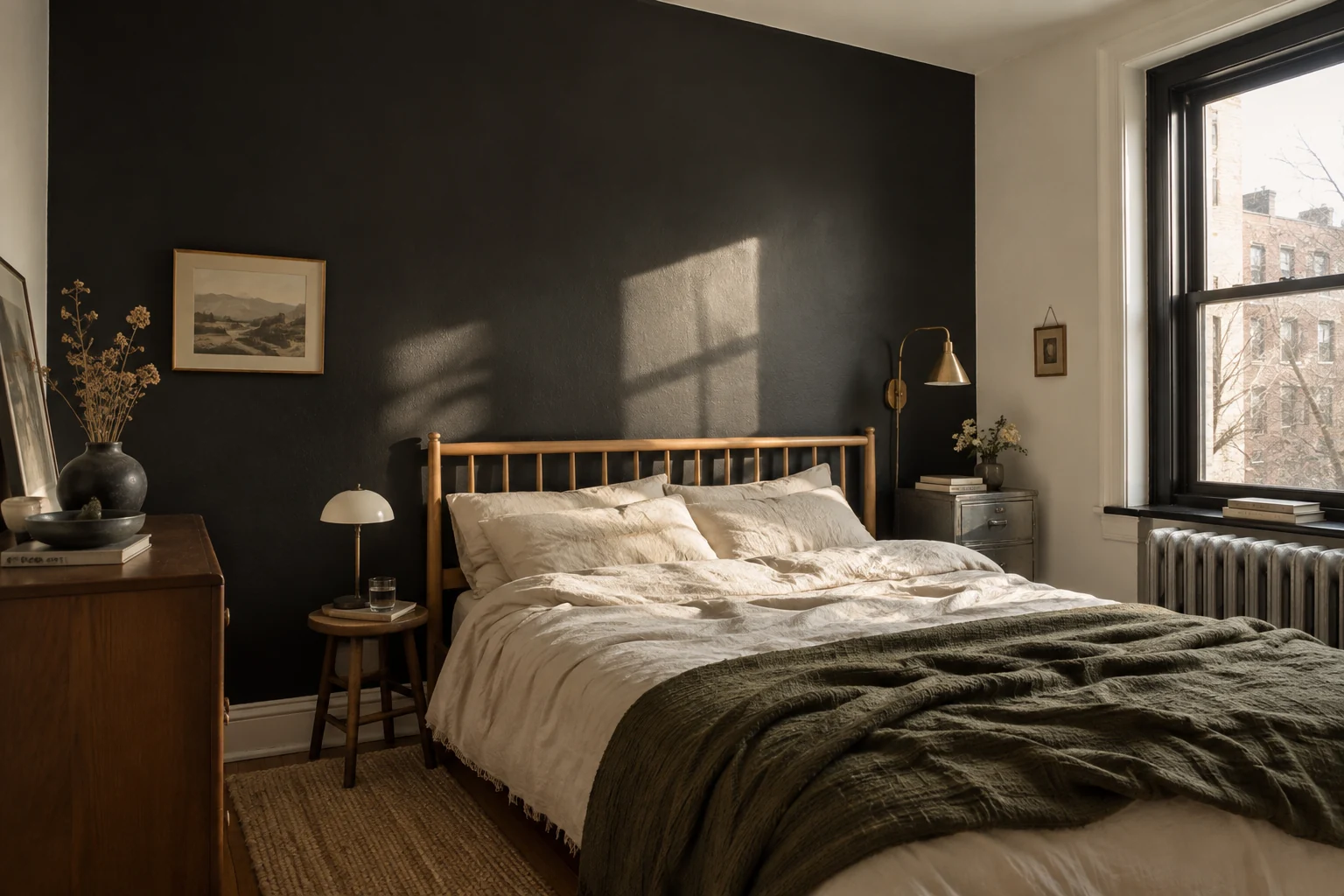
Compare the reflection you prefer with the cleaning requirements of the selected paint.
Sherwin-Williams’ guidance on gloss and sheen explains that viewing angle and light direction affect how a finish appears. It also identifies washable flat formulations, so sheen names alone do not establish how easily every product can be cleaned.
Eggshell has a slight sheen. If you prefer that appearance, compare its cleaning instructions with the matte option in the paint range you are considering. Avoid choosing either finish solely because the bedroom is bright or dark.
Account for contact around the bed, too. If the headboard rubs against the wall, mention that when discussing products with the retailer. If your reading lamp reveals uneven repairs, include surface preparation in the project.
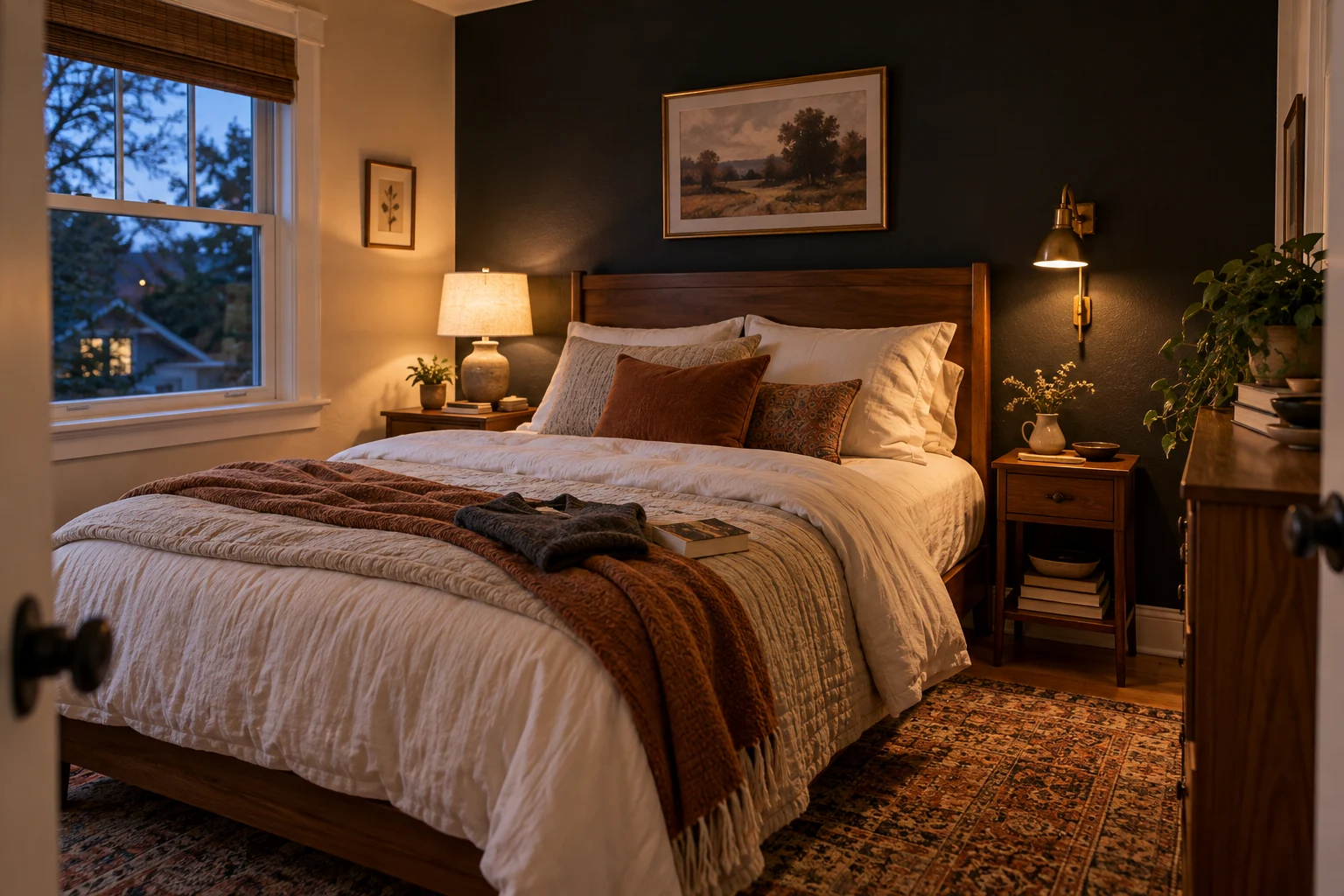
Check the selected paint’s instructions for primer, recoating and cleaning. Keep the existing lamps and furniture during the trial; assess whether the colour works before budgeting for replacement accessories.
For removable wallpaper, check the paint underneath
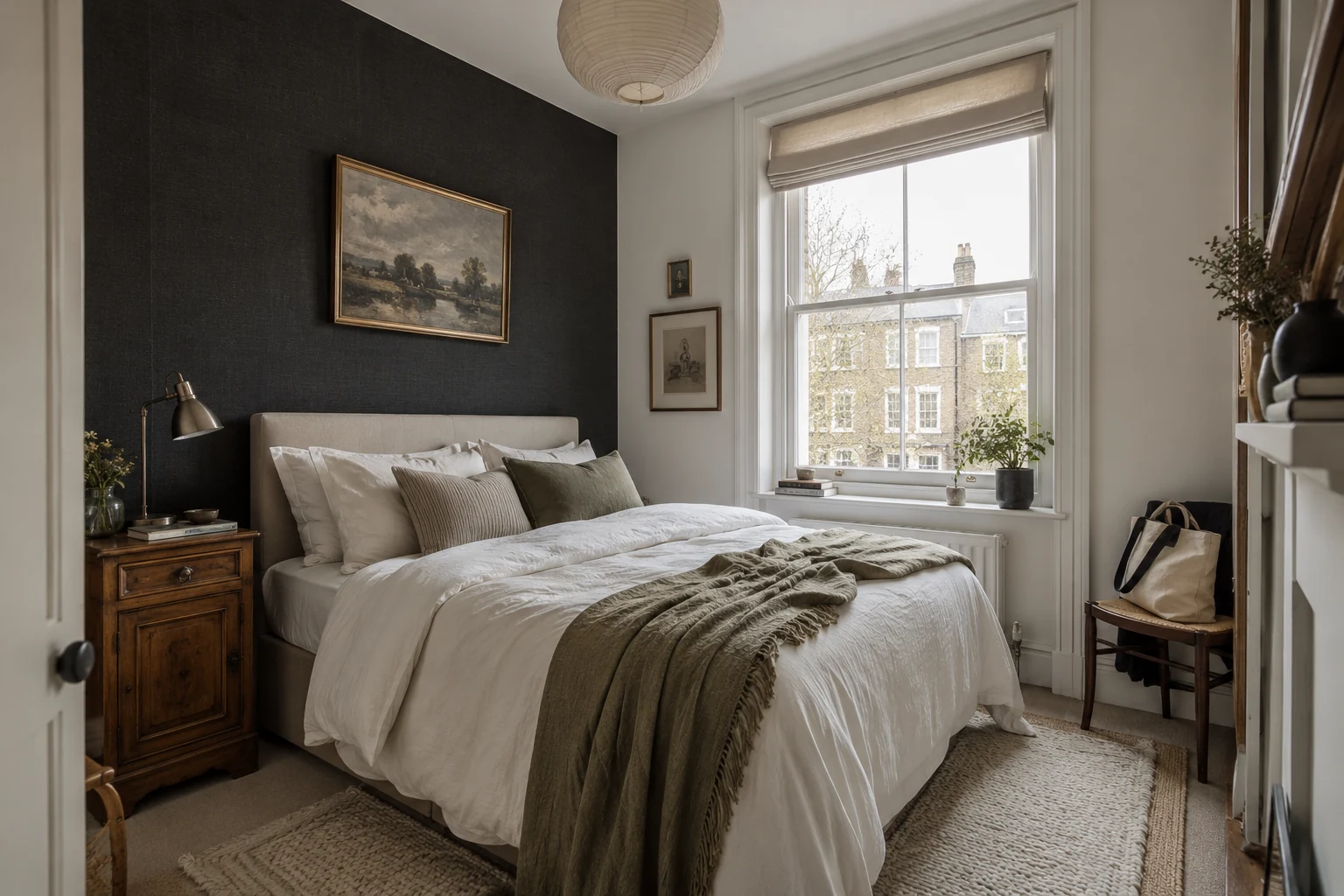
If you rent, check the relevant tenancy requirements and obtain permission where needed before changing the wall.
A wallpaper that looks matte black may still be unsuitable for a wall painted in matte. The visible wallpaper finish and the coating underneath are different things.
For example, Tempaper’s surface guidance recommends smooth surfaces in good condition and warns against matte, flat and low-sheen paints and textured surfaces. It also says freshly painted surfaces must fully cure according to the paint instructions before application.
Check the requirements of the wallpaper you choose rather than applying one brand’s instructions to every product. Follow its testing and removal directions.
A successful test in a discreet area cannot guarantee damage-free removal across an entire wall. If the existing surface is unsuitable or permission is unavailable, consider a dark bedding accent while keeping the wall unchanged.
Calculate the paint before comparing tin prices
Measure the chosen wall and use the coverage rate and coat requirements for the exact paint.
This hypothetical example shows the calculation:
| Step | Example calculation |
|---|---|
| Wall width × height | 3.0 m × 2.4 m |
| Wall area | 7.2 m² |
| Total coverage across two coats | 7.2 × 2 = 14.4 m² |
| Assumed coverage per coat | 10 m² per litre |
| Calculated paint quantity | 14.4 ÷ 10 = 1.44 litres |
The result excludes primer, waste and surface allowances. It is an illustration, not a recommendation to buy a particular tin size. Your chosen paint may specify a different coverage rate or require a different coating system.
Add preparation materials, tools and protection to the budget. Include delivery if applicable.
Before ordering, write down the wall measurements, colour name, paint product and finish together. Confirm the preparation requirements and suitable pack size with the retailer.
Room images illustrate styling ideas; the paint products, finishes and wallpaper specifications shown have not been verified.