
Build a Fall Bedding Combo Around the Bedroom You Already Have
A saved bedroom can make you want to replace everything. Then the parcels arrive, the bed is made, and something still feels wrong. The rust quilt that looked rich on a screen fights with the cool grey wall. A handsome plaid competes with the rug. An extra row of decorative cushions makes the bed feel busier than the room around it.
The bedding was not necessarily a bad choice. It was simply chosen for a different room.
A better fall bedding combo starts with the things that are staying: the wall color, headboard, floor and largest pattern already in the space. Once those fixed elements have made the first decisions, the seasonal part becomes smaller, clearer and usually less expensive.
This guide is not a shopping list or a gallery of unrelated beds. It is a way to build one combination that belongs in your bedroom and to change its warmth without rebuilding the whole look when the weather shifts.
Before You Shop, Read the Room
Look at the bedroom in daylight, with the bed stripped back to its everyday base. Ignore small objects for a moment and identify the four things carrying most of the visual weight.
First, look at the wall behind the bed. Is it crisp white, creamy, greyed, earthy or dark? Next, notice the bed frame or headboard. Upholstery usually reads softer; black metal creates a sharper outline; pale oak feels light; walnut and mahogany bring warmth before a single autumn color is added.
Now look down. Flooring and rugs are easy to overlook, but they occupy a large area. A faded red rug, for example, has already introduced a strong warm note. Adding rust, mustard, burgundy and orange to the bed would not make the room more seasonal; it would make every color compete for attention.
Finally, find the strongest existing pattern. It may be a striped curtain, floral wallpaper or geometric rug. If the room already has one confident pattern, the bed does not need another of equal size.
Use this quick room reading before choosing any bedding:
- Dark wall and warm wood: bring in a light base and one rich accent; avoid making every layer dark.
- Cool white or pale grey shell: add warmth through cream, moss or chocolate; avoid piling on several bright autumn colors.
- Oak floor and beige upholstery: introduce definition with navy or a dark stripe; avoid letting every layer blend into the same tan tone.
- Floral wallpaper or a patterned rug: keep most of the bedding quiet instead of adding a second large-scale print.
The goal is not to match everything. It is to give each visible element a reason to be there.
The Four Pieces of a Fall Bed
A useful fall bed can be built from four visual jobs: base, bridge, pattern and contrast. These are roles, not four compulsory purchases.
The base is the largest quiet area. It might be the duvet cover, comforter, sheet or neutral quilt you already own. Cream, oatmeal, flax, soft white and muted taupe are easy to carry beyond one season. If your room leans minimal, use the same restrained approach as a quiet luxury bedroom: keep the broadest surface calm and let the smaller layers carry the season.
The bridge connects the bed to the room. A caramel coverlet can pick up the warmth of walnut. A moss quilt can soften a cool white rental. A faded navy bedspread can give pale oak some definition. This is often the one piece worth adding because it makes the existing room and existing bedding feel intentional together.
The pattern brings personality in a smaller dose: a plaid throw, ticking stripe, faded floral or two patterned pillowcases. If the curtains or rug already fill this role, leave the bed’s pattern slot empty.
The contrast is the deepest note in the composition. Plum, oxblood, chocolate, bottle green or navy can do more in one cushion or narrow throw than five different “fall” colors spread across the bed.
This is where many seasonal rooms go off course. Autumn is treated as a color collection rather than an edit. Rust, orange, mustard, brown and green all arrive together, and the room loses the character it had before September. One deeper note is usually enough.
Four Rooms, Four Different Fall Bedding Combos
These are not four trends to copy exactly. Each combination answers a different room condition. Start with the description closest to your bedroom, then adjust the accent rather than borrowing every item.
Fall Bedding for a Dark Wall and Walnut Furniture
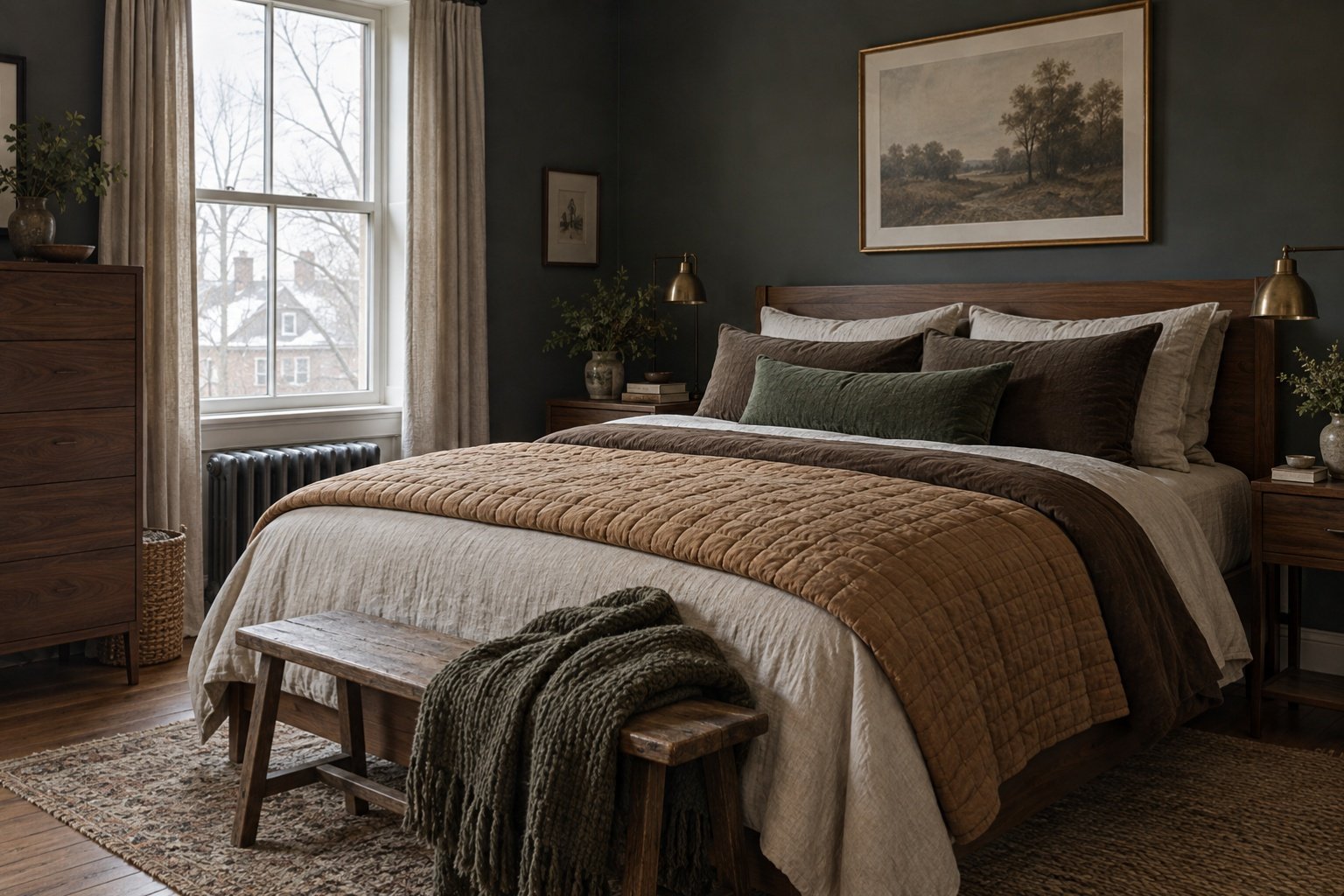
A dark wall has already created the mood, so the bed does not need to prove it again. Begin with an oatmeal or warm ivory base. The lighter area around the pillows keeps faces, bedside lighting and the headboard from disappearing into the background.
Use caramel as the bridge layer. It sits comfortably beside walnut, aged brass and warm floorboards without turning the whole room orange. Fold the quilt or coverlet across the lower third of the mattress, leaving enough of the light base visible to separate it from the wall.
Then introduce plum or muted oxblood in one small place a lumbar cushion, a pair of pillowcases or a narrow blanket edge. Finish with a classic plaid containing at least one color already present in the room. A plaid made from cream, brown and a restrained plum will look connected; a new mix of yellow, red, green and black will start a second color story.
The resulting combination is moody without being dim: oatmeal base, caramel quilting, plum contrast and one familiar plaid.
A Fall Bedding Combo for a Cool White or Grey Rental
A white or pale grey rental is often called a blank canvas, but cool light can make standard beige bedding look dull rather than warm. Instead of trying to cover the shell with lots of color, change the temperature gently.
Start with warm cream rather than brilliant white. Add a moss or grey-green quilt as the bridge. Green has enough earthiness to signal the season, but it can remain in the room after autumn decor has been packed away.
Chocolate works well as the narrow contrast: piping on a cushion, a slim stripe or a small throw at the foot of the bed. If the room needs pattern, choose one muted botanical or fine stripe. Keep the print small enough that it reads as texture from the doorway.
Skip the botanical if the curtains are already leafy or floral. In that room, let the moss quilt carry the natural note and use a plain chocolate cushion instead. The restraint is what stops a temporary rental bedroom from feeling like a themed display.

Layered Fall Bedding for Warm Wood and Beige Rooms
Warm wood, beige upholstery and cream walls can create a comfortable base, but adding more tan, camel and brown may flatten everything into one sepia-colored surface.
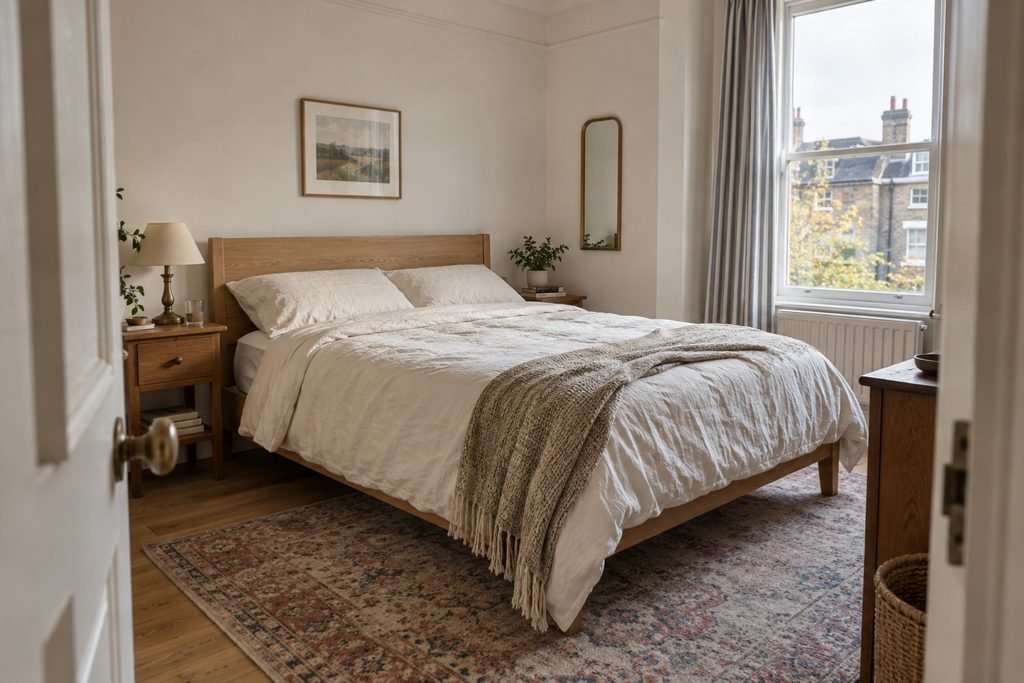
Faded navy is the useful interruption here. It is deep enough to outline the bed against oak or beige, yet quieter than black. Use flax or soft cream as the base, then bring navy into a lightweight coverlet or the underside of a reversible quilt.
Cognac or rust should remain the smaller accent, not the largest layer. One cushion, a stitched border or a throw containing a little rust is enough to connect the blue back to the wood. A narrow ticking stripe can supply pattern without turning the combination nautical.
If the room is small, use the same low-bulk approach that works in these small bedroom ideas: stop at two sleeping pillows, two visible shams and one lumbar cushion. A compact bed looks more considered when its edges and headboard remain visible. More cushions will not add warmth; they will only create somewhere else to put them every night.

Soft Autumn Bedding for a Light, Vintage-Leaning Room
Vintage-inspired bedding is moving away from the untouchable guest-room look. Small florals, embroidered edges and softer colors can make a light bedroom feel personal, but the difference between collected and costume-like is dosage.
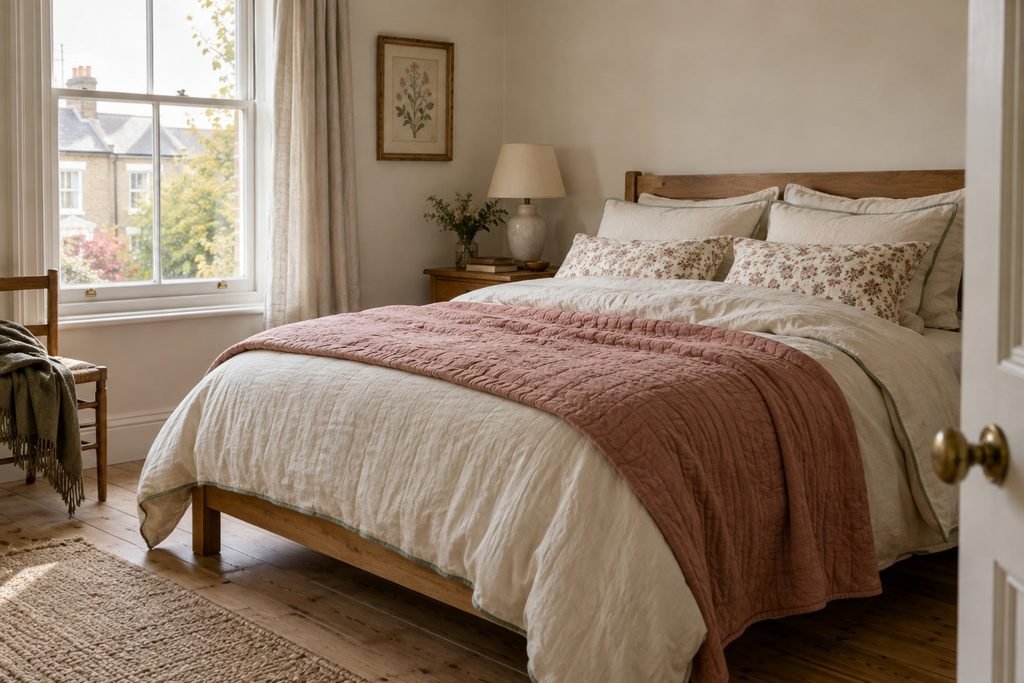
Use warm ivory for the base and dusty rose for the bridge quilt. Bring in sage through piping, a folded throw or a tiny leaf detail. Then choose one small floral preferably in the pillowcases or a single cushion rather than across every visible layer.
The pattern should look as though it joined the room over time, not as though the bed, curtains and lampshade were bought as a matching set. A plain wood bedside table, an unfussy lamp and visible breathing space around the bed will keep the softer textiles from becoming overly sweet.
Skip this combination if the room already has busy floral wallpaper. Keep the ivory and dusty rose, but replace the bed’s floral with a narrow stripe or a plain sage edge. The vintage character is already on the wall; repeating it everywhere weakens it.
Prefer choosing by image? Follow New Premium Picks on Pinterest for room-first bedroom palettes, then save the combination closest to your own walls, wood and flooring.
Dress for the Night Temperature, Not the Calendar
The word “fall” cannot tell you how warm your bedroom will feel at 2 a.m. September in the southern United States, a well-heated city apartment and an older UK bedroom can require completely different layers even when the color palette is similar.
For warm early-fall nights, use a breathable everyday base and a lightweight quilt or coverlet. Fold the extra layer across roughly the lower 30 to 40 percent of the bed so it is available without sitting over your upper body all night. The visual change comes from color and texture; the bed does not need winter weight yet.
On cooler nights, place the duvet or comforter back in the working layer and keep the quilt folded across the lower third. If you are wondering how to layer a duvet and quilt, let the duvet provide the main warmth while the quilt remains an adjustable lower layer that can be pulled up when needed. If the room becomes genuinely cold, upgrade the layer that provides warmth rather than adding several decorative throws.
In the UK, a tog rating is the warmth measure commonly used for duvets. Choose a tog suited to the actual bedroom temperature and the manufacturer’s guidance, not simply the month printed on a seasonal checklist.
Sleep temperature matters more than styling. If you regularly wake hot, skip brushed sheets, faux-fur throws and a heavy quilt stacked over a warm insert. A lightweight fall bedding scheme can still look rich through a woven edge, quilting, a small plaid or deeper pillow color.
The shopping language may also change by region. US retailers commonly use comforter and coverlet; UK retailers are more likely to use duvet cover and bedspread. Search both vocabulary sets when you are looking for a particular weight or finish, but let the care label and material details make the final decision.
Use the One-Buy Rule Before Adding Anything Else
Make the bed once with what you already own, then take a straightforward daylight photograph from the doorway. Photographs flatten a room just enough to expose what the eye has been forgiving: a missing link between the bed and floor, too many equally strong colors, or a pattern that has no visual partner.
Ask one question: What job is missing?
- If the bed feels disconnected from the furniture, the missing piece is probably the bridge.
- If it feels flat, add one pattern or visible weave not three new colors.
- If it feels washed out, introduce one deeper contrast.
- If it looks good but sleeps too warm or cold, change the functional layer rather than the decoration.
Buy, thrift or swap only that piece. A neutral duvet, existing plaid throw and plain pillowcases may need nothing more than a moss quilt. White bedding and a vintage floral pillowcase pair may only need a caramel coverlet. A summer linen base may need one plum lumbar cushion now and the warmer duvet already in storage later.
This rule also protects the room from the most common seasonal mistake: adding items simply because each one looks autumnal on its own. A good combination is a relationship between pieces, not a tally of fall products.
Make the Bed Easy Enough to Live With
There is little value in creating a photograph-ready bed that needs to be dismantled every evening. Keep the daily version close to the version shown in the room.
Let sleeping pillows do most of the work. Add shams only if they create a useful block of color, then choose either one lumbar cushion or one smaller patterned cushion. The bridge quilt can stay folded at the foot on warm nights and pull up when needed. A throw should be easy to reach from the bed, not balanced at an angle that has to be rebuilt each morning.
Before calling the arrangement finished, remove one item and look again. If the palette becomes clearer, leave that item out. Empty space is not unfinished space; it is what allows the oatmeal base, plaid edge or plum accent to register.
Carry the Same Combination Into Winter
A successful autumn bedroom should not expire when the last October decoration is put away. Keep the base and bridge because they are connected to the room, not to a holiday. Change the smallest seasonal signal instead.
If you want to extend the edit beyond the bed, these fall home decor ideas for 2026 follow the same whole-room principle: change a few high-impact details instead of filling every surface with seasonal pieces.
The dark-wall combination can keep its oatmeal and caramel layers while plum gives way to deep evergreen or a quieter chocolate. The pale rental can keep its cream and moss, then gain warmth through the duvet insert rather than more color. Navy can remain beside oak throughout winter; only the lightweight rust accent needs to be changed or stored.
When a warm layer comes out of storage, check its care label and condition before it reaches the bed. Store the pieces leaving the room together, labelled by combination rather than scattered as individual “fall decor.” Next year, the complete palette will be easier to see and less tempting to overbuy.

The Final Check
Stand at the doorway once more. You should be able to name the job of every visible layer:
- the base gives the eye somewhere quiet to rest;
- the bridge connects the bed to the room;
- the pattern adds character;
- the contrast gives the composition depth.
If two pieces are fighting for the same job, remove one. If the combination looks right but feels wrong at night, adjust its weight. And if the room already feels warm and settled after adding a single bridge quilt, stop there.
That is the advantage of building a fall bedding combo around the bedroom you already have. The result does not look copied from a product page or assembled for one month of the year. It looks like your room only warmer, more layered and ready for the season ahead.