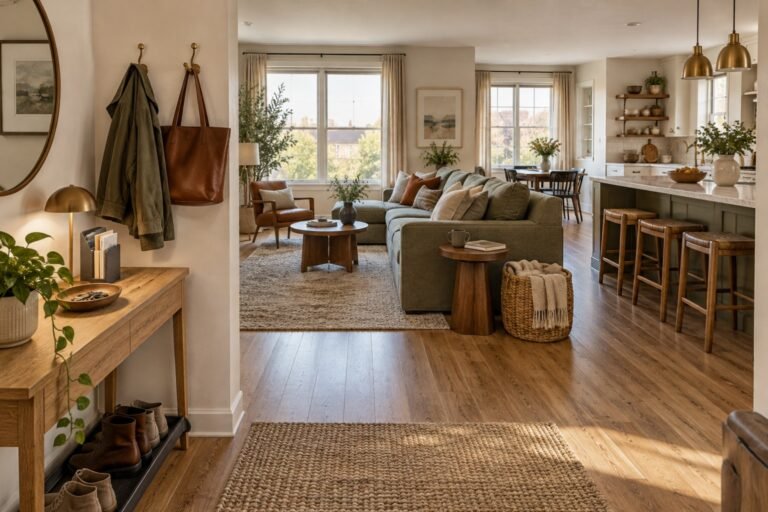
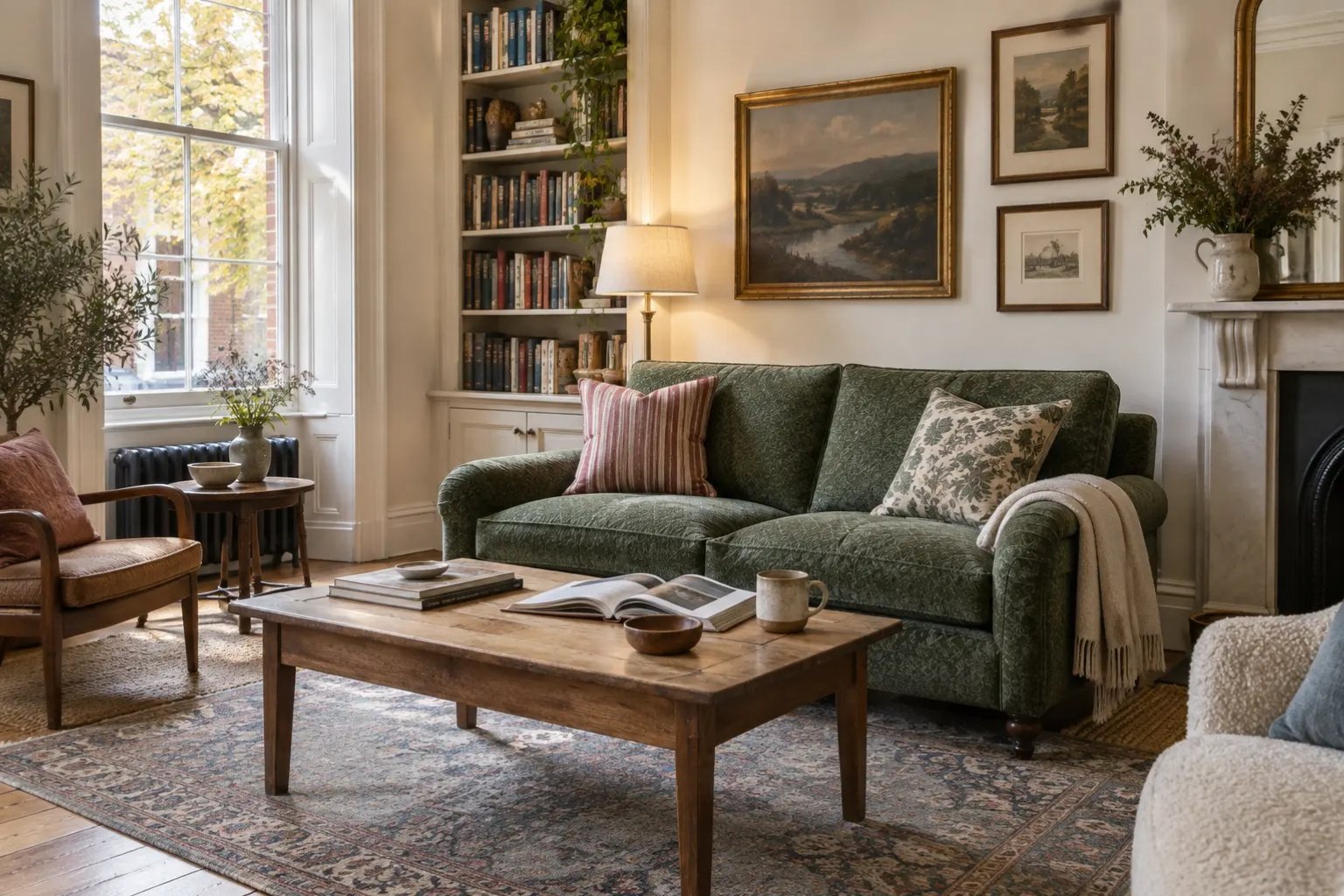
Burrowcore Living Room Ideas: Make One Seat Feel Like Home
A living room can look wonderfully cozy in a photograph and still be oddly unhelpful at nine o’clock. The lamp switch is across the room. A mug has to balance on the sofa arm. The throw slips to the floor, while the phone charger stretches across the only clear route to the door.
Burrowcore earns its place in that gap between how a room looks and how it is actually used.
The best burrowcore living room ideas do not begin with a shopping list of plaid blankets, antique books and mushroom-shaped lamps. They begin with one seat: the part of the sofa, armchair or window bench you naturally choose at the end of the day.
Make that small area warmer, easier to use and a little more personal. The rest of the room does not need to become a themed set.
Burrowcore Living Room Ideas Begin With the Seat
Notice where you sit when nobody is arranging the room for a photograph. It may be the sofa corner closest to an outlet, the chair beside the radiator or the end with the better view of the television.
Sit there for ten ordinary minutes before moving anything. Where would you put a drink? Can you reach a lamp without standing up? Is there somewhere for a book, glasses or the remote? Does cold air reach the seat from a window or doorway?
Those answers are more useful than an online mood board.
Before buying new furniture, borrow a lamp or side table from another room and test it beside the seat. Fold an existing throw over the back rather than purchasing one in a trending colour. The room-first budget decor approach is particularly useful here because it asks what the room is missing before asking what the shops are selling.
The seat itself does not need to look traditionally rustic. A plain grey sofa, modern chair or standard rental loveseat can all support burrowcore when the surrounding choices feel warm, useful and collected over time.
Give the Evening Somewhere to Land
A comfortable seat needs a landing surface. Without one, the coffee table becomes overloaded or everyday objects disappear between the cushions.
The solution may be a small side table, a sturdy wooden stool or a tray placed securely on an existing table. Its size should come from what genuinely lands there. A cup and paperback need less room than a laptop, lamp and pair of glasses.
Leave some of the surface visible. A table packed with decorative objects may look layered, but it has failed if the mug still has nowhere safe to go.
This is also where the room’s least photogenic items belong. A small dish can hold earbuds. A box with an opening at the back can contain charging cables. The book being read can stay on top instead of being hidden among books chosen only for their covers.
When chargers, post, toys or work items repeatedly arrive in the living room, decorating around them will not solve the problem. Use these home organization ideas to give the returning category a practical home before adding another basket.
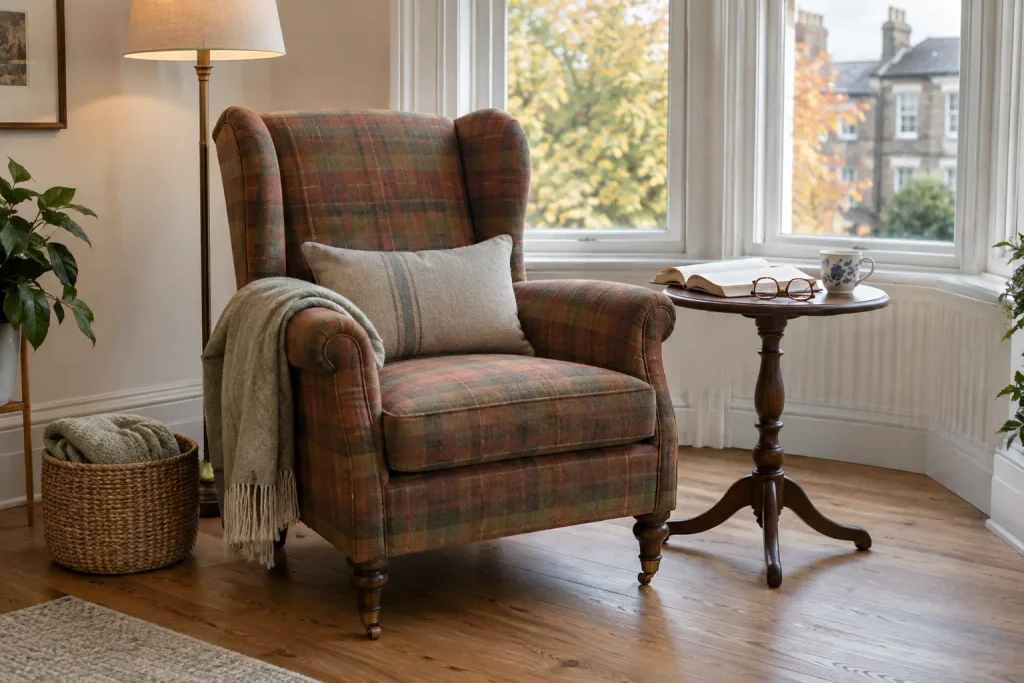
Make a Small Living Room Feel Sheltered, Not Crowded
Burrowcore does not require a large room. In fact, a small apartment or flat already has the closeness that this style tries to create. The challenge is keeping that closeness comfortable.
Build around one sofa corner instead of layering the entire room. A lamp, useful side surface, one tactile textile and an object with character can create enough atmosphere. Three more cushions and a row of tiny tables usually add congestion rather than comfort.
Keep the route between the seat, door and main storage clear. Check door swings, radiators, heat vents and frequently used outlets before placing furniture. A blanket should not trail into a walkway, and a floor lamp should not turn the route around the sofa into an obstacle course.
Renters should favour pieces that can leave with them. Portable lighting, freestanding furniture, textiles and unmounted decorative objects are easier to adapt than changes made to walls or fittings. The apartment decor guide for renters explains how to separate movable decor from changes that require a lease or tenancy check.
The room should feel enclosed when you sit down, not difficult when you stand up.
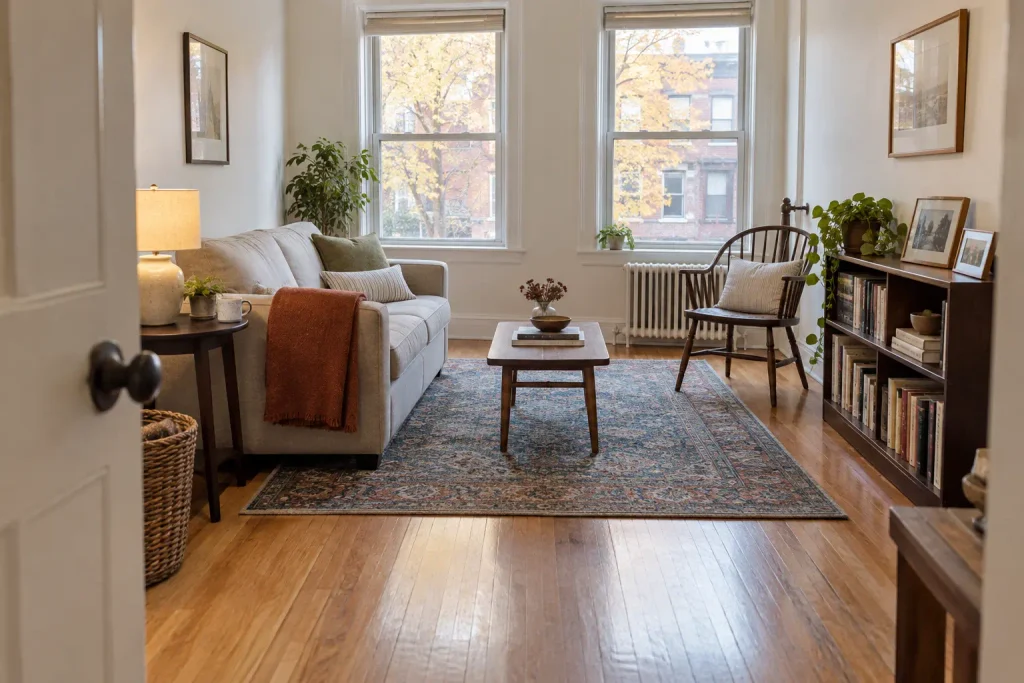
Let the Light Stop at the Chair
A bright ceiling light spreads attention across the entire room. Burrowcore works better when part of the room is allowed to become quiet after sunset.
Place useful light close to the activity. A shaded table lamp can illuminate a book and the surface beneath it. A floor lamp can give a sofa corner its own boundary. A small lamp on a cabinet can soften a wall that otherwise disappears at night.
The aim is not to make the room dim enough to be impractical. You should still be able to read, move safely and find what you need. Look for a warm-white appearance rather than an aggressively orange bulb, and always use a bulb that suits the fixture’s instructions and maximum rating.
Before buying another lamp, switch off the ceiling light and move an existing one around the room. Try it beside the seat, on the opposite side of the sofa and against the darkest wall. The first position may not be the best one.
Keep cables away from walking routes, heaters and places where they can be crushed. Do not hide a cord beneath a rug simply to improve the photograph.
If you are changing more than one seasonal layer, the fall home decor guide can help connect the living-room corner to the rest of the home without repeating identical accessories everywhere.
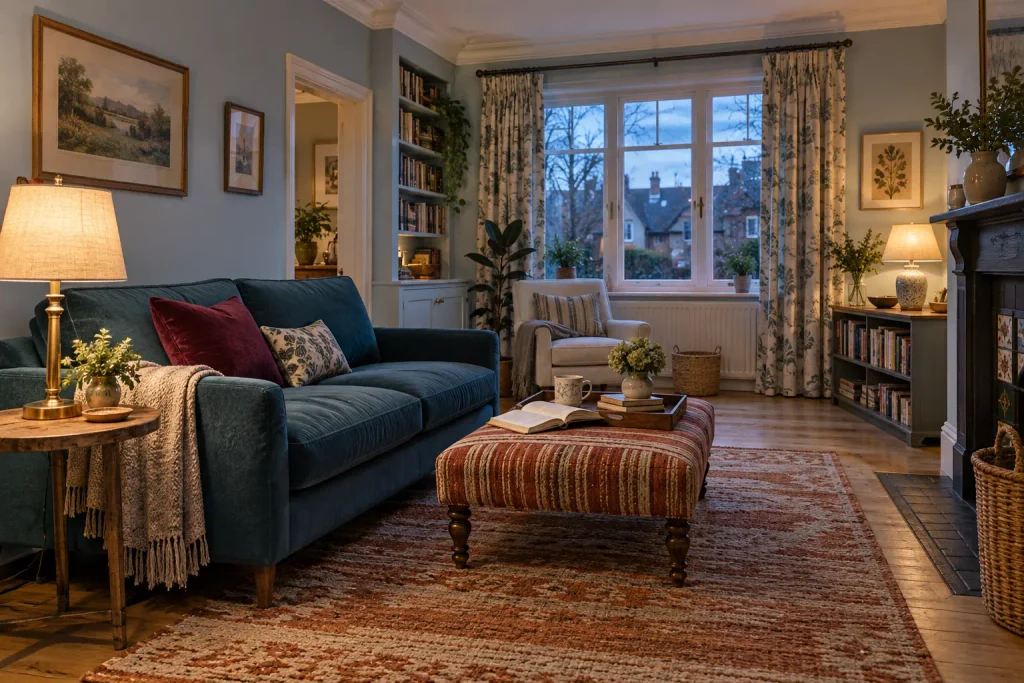
Choose Textiles That Can Survive Tuesday
Burrowcore photographs often contain generous piles of cushions and blankets. Real rooms have people who need to sit down.
Start with one throw that suits the way the seat is used. A washable cotton or wool-blend layer may be more useful in a busy household than a highly delicate fabric. If the sofa already has strong texture, let the throw introduce colour rather than another heavy surface.
A cushion should improve the seat. It might support the lower back, soften a deep sofa or make a wooden chair more comfortable. If it has to be moved every time someone sits down, it is not part of the comfort; it is part of the tidying.
Rugs can make the corner feel settled, but they need to relate to the furniture rather than float beneath a small table. Test the proposed size with painter’s tape. Check that doors can open, chair legs remain stable and no edge creates an awkward route.
Wear is not automatically a flaw in burrowcore. A softened throw or faded rug can add the lived-in quality the style needs, provided it remains clean, safe and pleasant to use.
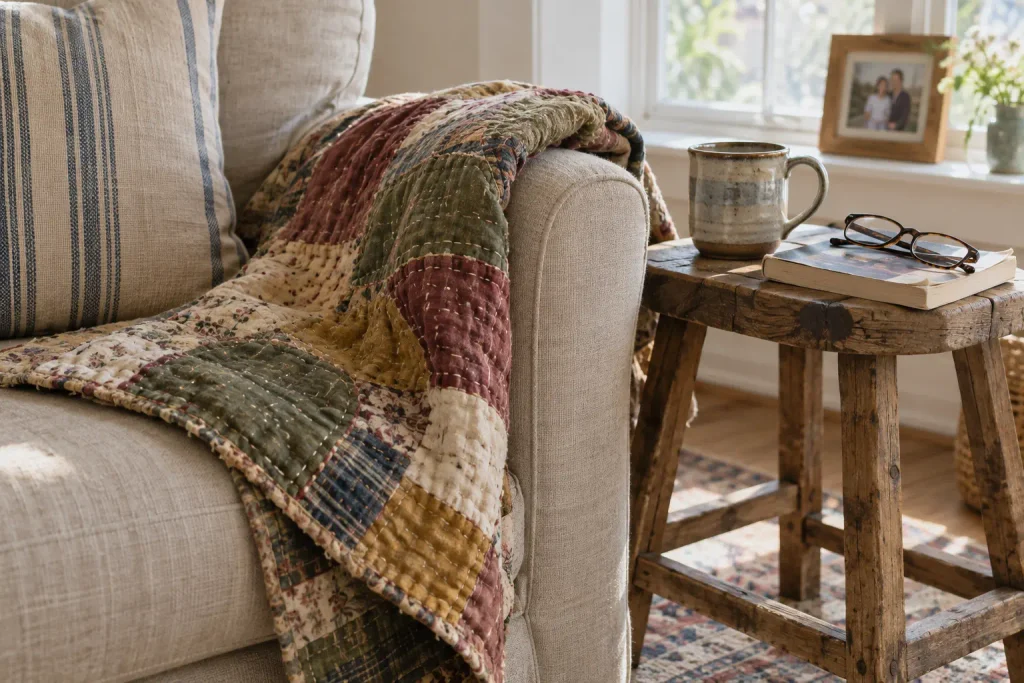
Why Burrowcore Is Appearing Now
Highly polished interiors have dominated social feeds for years: pale rooms, hidden cables, perfect shelves and surfaces that seem to have no daily purpose. Burrowcore moves in the opposite direction.
House Beautiful’s coverage of burrowcore connects the trend with low lighting, worn wood, secondhand pieces and rooms built around comfort rather than photographic perfection. The English Home places it within the autumn 2026 shift toward cocooning interiors, tactile materials and deeper colours.
The useful part is not the trend label. It is the permission to leave evidence that a room is inhabited.
A current book can remain beside the chair. A handmade mug does not need to match the lamp. An inherited table can stay even if its finish differs from the newer furniture. The room becomes memorable through relationships between objects, not through purchasing an entire “burrowcore collection.”
Add Age Without Inventing a History
A newly purchased object made to look old rarely carries the same presence as something that has genuinely been used. Burrowcore becomes more convincing when at least one item has a reason to be in the room.
That might be a secondhand side table with a solid frame, a family photograph in a simple mat, a chipped but decorative vase kept away from food use, or a landscape print found locally. Books work when they reflect real interests rather than functioning as colour-coordinated risers.
Secondhand shopping is most successful with a specific role in mind. Take the available measurements and a photograph of the seat. Look for “a stable table tall enough for the lamp and mug,” not simply “something vintage.”
Inspect furniture for structural damage, strong odours, moisture and signs of pests before bringing it home. Older electrical pieces should not be used merely because their aged appearance suits the room; their condition and suitability matter more than their character.
One honest object is enough. The room does not need an invented family history.
Choose Colours at Eight O’Clock, Not Noon
A colour that looks rich in daylight can disappear under warm evening light. Since burrowcore is largely about the room after sunset, judge the palette when you will actually experience it.
Begin with one darker anchor already present. It might be a brown leather chair, charcoal sofa, olive cabinet, walnut table or burgundy pattern in a rug. Add one warmer supporting tone such as tobacco, rust, ochre or muted berry. Keep a lighter note nearby through parchment, oatmeal or soft cream so the corner does not become visually heavy.
This is not a fixed formula. A cool-toned home may work better with ink blue, forest green and weathered grey. The important point is that the colours become softer together under lamplight.
Repeat the anchor colour once or twice at different heights. A brown table might relate to a frame on the wall and a stripe in the throw. The pieces do not have to match exactly. Slight variation makes the room feel accumulated rather than purchased in one afternoon.
Build a Rental Layer That Leaves With You
A rental version of burrowcore can be both convincing and reversible. Let the atmosphere come from objects you own rather than finishes attached to the building.
Use a portable lamp, textile, freestanding side table and framed artwork resting securely on an existing surface. If the arrangement needs wall hooks, drilling, paint or another fixed change, check the lease or tenancy agreement first. Hooks and strips labelled removable can struggle on old paint, wallpaper or a textured wall, so follow the exact product instructions and test discreetly where permitted.
Store original fittings and written permissions together. Avoid hard-wired lighting or other electrical alterations as a decorating shortcut; those changes require the appropriate property permission and qualified professional help.
A good rental corner should pack into a few boxes and still feel like yours in the next room.
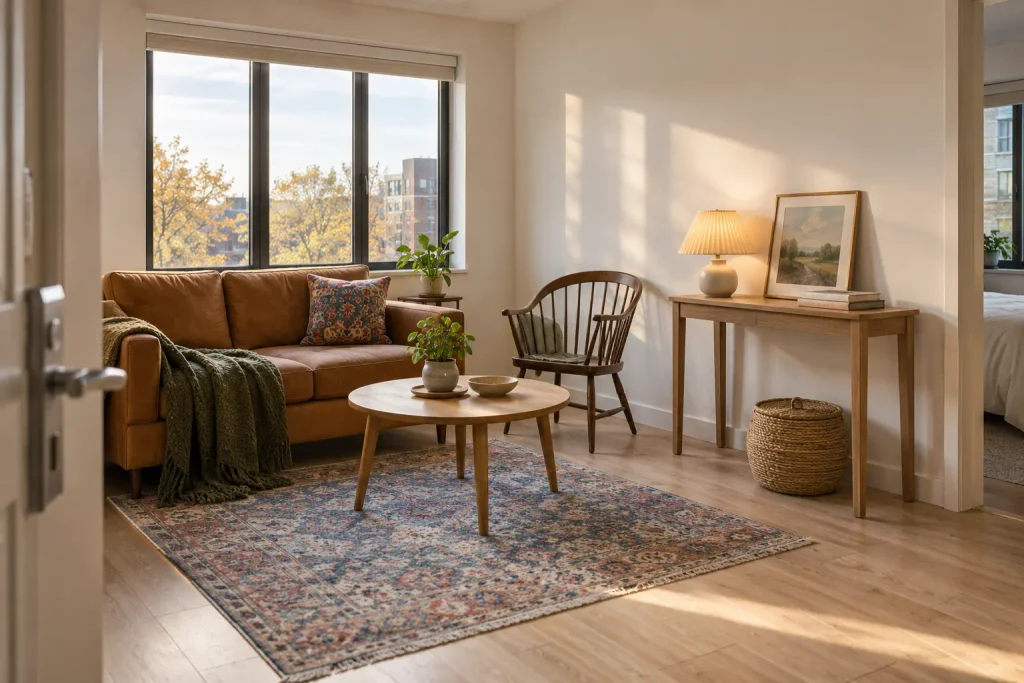
Know When Cozy Has Become Storage
Burrowcore can slip into clutter because both use layers and visible possessions. The difference becomes obvious when the room is used.
Sit down and notice what has to be moved. If cushions are stacked on the floor, remove the one nobody uses. If the side table cannot accept a cup, clear part of it. If the lamp is blocked by decorative foliage, let the lamp do its job. If a basket makes the walkway narrower but holds items used elsewhere, move it closer to the activity that creates them.
Leave one visibly empty patch on the table and some breathing room around the lamp. Empty space does not cancel the cozy feeling. It allows the useful and personal objects to be noticed.
The room can hold evidence of life without holding every object at once.
Leave the Book Where You Will Pick It Up
The final test happens on an ordinary evening, not immediately after styling.
Turn off the main light. Sit in the chosen seat. Put down a drink, reach for the lamp and plug in the device you actually use. Pull the throw over your legs. Then stand up and walk to the door without shifting anything.
If those small movements feel natural, the corner is finished for now.
It may still contain a standard rental sofa, a scratched table and a lamp borrowed from another room. That is not a failed version of the aesthetic. It is a room that has stopped performing comfort and started providing it.
Leave the current book within reach. Tomorrow evening will tell you more than another shopping tab.
Questions Readers Usually Have
What is a burrowcore living room?
A burrowcore living room is arranged around warmth, shelter and everyday use. It commonly includes low-level lighting, tactile textiles, darker natural colours, worn wood, books and personal or secondhand objects. It should feel lived in rather than deliberately cluttered.
Can burrowcore work in a small apartment?
Yes. Concentrate the look around one sofa corner or reading chair instead of filling the entire room. Keep the main walkway clear and use portable pieces such as a lamp, small table and one useful throw.
How is burrowcore different from cottagecore?
Cottagecore often takes visual cues from an idealised rural home, including florals, pastoral details and traditional crafts. Burrowcore is less about a countryside setting and more about creating a sheltered, low-lit place to settle in. The two styles can overlap, but burrowcore can work with modern or urban furniture too.
What should I buy first for a burrowcore living room?
Begin by moving what you already own. If something is genuinely missing, choose the item that fixes the clearest practical problem: useful light beside the seat, a stable landing surface or a textile that improves comfort. Avoid buying several themed accessories before the corner works.